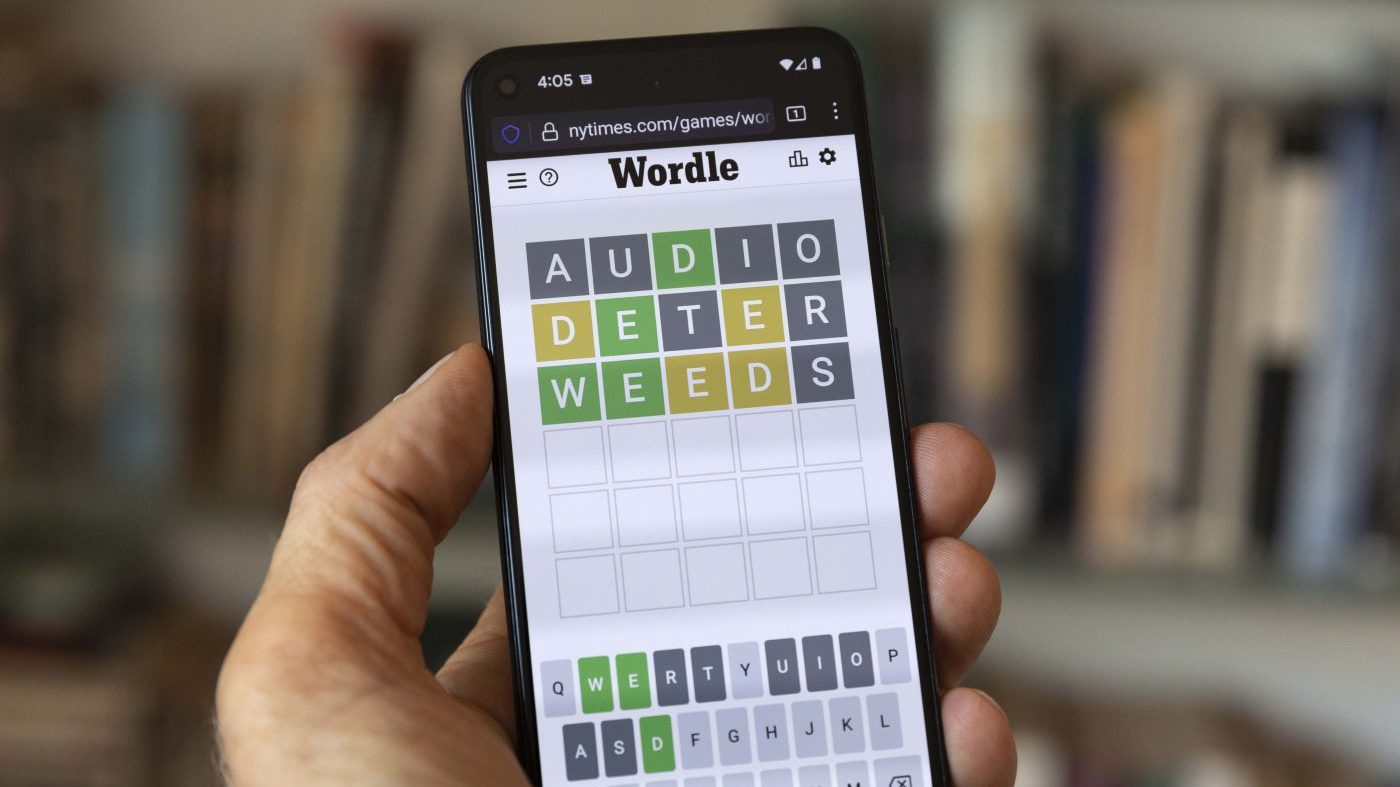
Every day, millions of workers sneak in a quick round of Wordle, the New York Times' addictive word puzzle. But as the game becomes a fixture in morning routines, researchers and neurologists are asking: Does it actually make people more productive at work?
Dr. Doug Scharre, director of the Division of Cognitive Neurology at Ohio State University, says the answer depends on the job. "I think it depends greatly on the type of job that you have whether it's helpful," Scharre told Nexstar. "But clearly, we do have lots of data to suggest that brain stimulation, in general, is useful for brain health."

According to Scharre, the brain responds to mental challenges much like a muscle. Games that require problem-solving, language use, and memory retrieval can "wake up" the brain, potentially boosting focus and productivity. He compared the effect to caffeine, but without the jitters. "It's a way to activate the brain and sort of wake it up if you're doing something of interest," he explained.
Not all brain games are equal. Scharre emphasized that the best ones involve novelty and complex problem-solving, engaging multiple brain regions including language centers and memory storage. Wordle, which combines vocabulary, deduction, and pattern recognition, fits that bill. But he warned against overly difficult puzzles, which can cause frustration and undermine the intended boost.
The sense of accomplishment from cracking a moderately tough Wordle can also fuel motivation, Scharre noted. "You don't want to pick ones that are too hard for you because then you can get frustrated and be upset," he said. "So, you want to get that right mix of it's a little hard, but I can figure it out, right? That increases your endorphins."
Beyond individual benefits, researchers Kim M. Cauldwell and Stephen Bolaji from Charles Darwin University in Australia have drawn parallels between Wordle discussions and traditional "watercooler conversations." They argue that sharing Wordle strategies and scores can enhance workplace collaboration and culture, much like small talk around the office coffee machine. This social aspect may be particularly valuable in an era of remote work, where casual interactions are limited.
However, Scharre cautioned that in-person socialization still holds an edge over digital games. "In socialization, you have discourse, you're letting someone else talk, you're picking up on their facial expressions," he said. "They tell a story that reminds you of a story because you're digging back in your memory." He added that face-to-face conversation uses more of the brain than solitary puzzle-solving.
As political debates rage over issues like affordability dominating campaigns and record defense spending requests, the Wordle productivity question may seem trivial. Yet for millions of workers seeking a mental edge in a demanding economy, the answer matters. Whether a five-minute word game can sharpen focus—or merely serve as a pleasant distraction—depends on the worker, the workplace, and the balance between challenge and frustration.
Ultimately, Scharre and other experts agree: Brain stimulation is beneficial, but it's no substitute for meaningful social interaction. As one neurologist put it, "You're using more of your brain with socialization." So while Wordle may offer a quick cognitive jolt, the real productivity gains might still come from talking to colleagues—whether at the watercooler or over a shared screen.