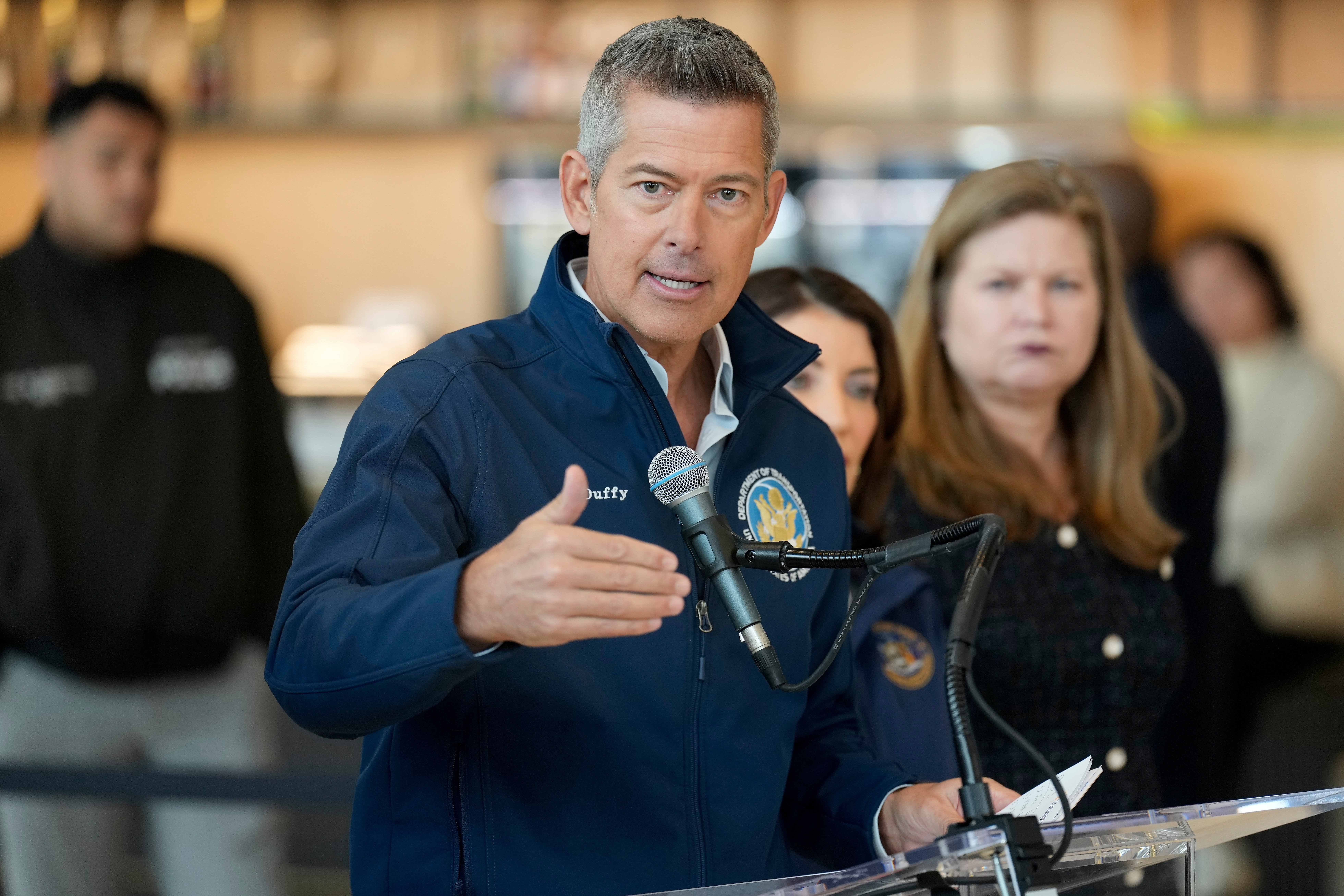
Transportation Secretary Sean Duffy pushed back Saturday against claims that the Iran war triggered Spirit Airlines' sudden shutdown, arguing the carrier was already on life support long before global energy markets were upended by the conflict.
"Spirit was in dire straits long before the war with Iran," Duffy said during a press conference in New Jersey. "Multiple times, they filed for bankruptcy. Their model wasn't working. They couldn't get to fiscal health, so this was not the impetus. The war was not the impetus for Spirit."
The discount airline announced Saturday that it is winding down global operations effective immediately, after two bankruptcy filings in the past year. Spirit CEO Dave Davis told The Wall Street Journal that the company's recovery plan would have succeeded if not for the Iran war and surging energy prices. He warned that other budget carriers are also feeling the heat.
"Everybody burning cash—we just had a smaller pile to start with," Davis said. "They're not that far behind us in the race."
The U.S. military campaign against Iran has sent crude oil prices spiking, with Brent crude briefly hitting a four-year high of $126 per barrel on Thursday. Jet fuel costs have skyrocketed, squeezing airlines across the board. Several low-cost carriers have asked the Trump administration for a $2.5 billion bailout, calling it "a necessary and targeted measure to stabilize operations and keep airfares affordable."
But Duffy made clear that the administration sees no urgent need for such assistance. "If they want to come to the U.S. government, we would be a lender of last resort," he said. "If they can find dollars in the private markets, I think that's better for them." He added that any loan would require congressional approval and "a real need."
President Trump had floated a $500 billion bailout for Spirit, but the plan collapsed after Republican lawmakers opposed it. The failed bailout talks left the airline with few options as fuel costs mounted.
Duffy also noted that the administration is closely monitoring the broader impact of the conflict on transportation. The ongoing closure of the Strait of Hormuz has disrupted global oil supplies, driving up prices for gasoline and jet fuel nationwide.
While Spirit's collapse is the most dramatic fallout yet, the secretary insisted that the government will not step in to prop up every struggling airline. "These requests are based on opportunity, not immediate need," he said.