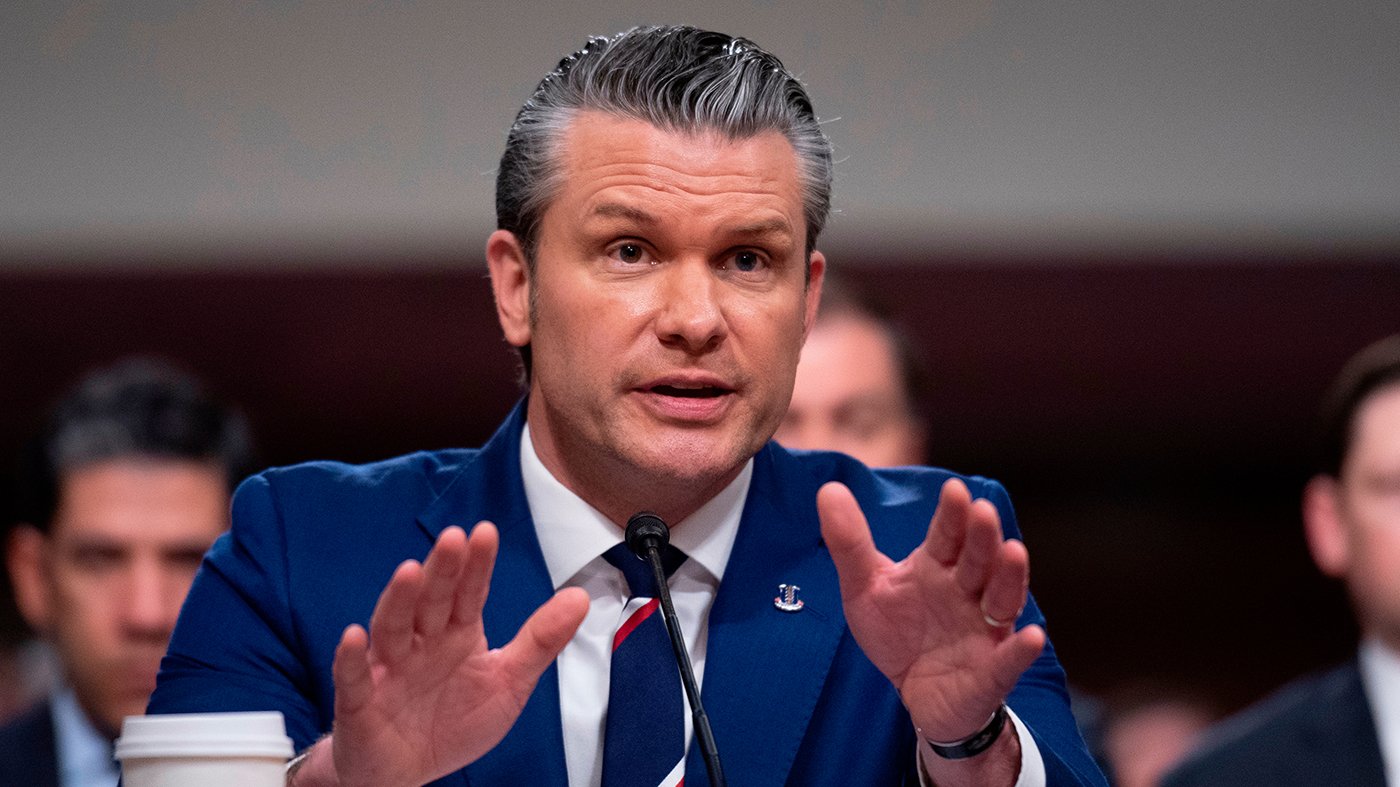
Defense Secretary Pete Hegseth faced off against Senate Democrats for a second straight day on Thursday, defending the Pentagon’s massive $1.5 trillion budget request and the Trump administration’s war with Iran. The Senate Armed Services Committee hearing, which ran nearly three hours, saw Hegseth repeatedly accuse Democratic lawmakers—and some Republicans—of being “reckless naysayers” undermining U.S. security.
Hegseth, joined by Joint Chiefs Chairman Gen. Dan Caine and acting CFO Jules Hurst III, stood by the recent firing of senior military officers, including Army Chief of Staff Gen. Randy George and Vice Chief Gen. James Mingus. Republican senators largely praised Hegseth for boosting recruitment and pushing defense acquisition reform, though Senator Joni Ernst (R-Iowa) expressed disappointment over the accelerated retirements.
Democrats Challenge $25 Billion Iran War Estimate
Senator Richard Blumenthal (D-Conn.) led the charge against the Pentagon’s claim that the Iran conflict has cost just $25 million—a figure Hurst disclosed the previous day. Blumenthal called the number “well below the actual cost” and demanded a more accurate assessment, especially regarding damage to U.S. bases in the Middle East.
Hurst admitted that estimating future base costs is “probably the hardest thing to do right now,” given uncertainty about the U.S. posture in the region. Blumenthal countered that the Pentagon owes Congress a reliable figure, noting that the $25 billion estimate is “probably less than half, maybe less than a quarter of the total cost.”
Senator Jack Reed (D-R.I.), the committee’s ranking member, argued the low estimate undermines the need for a supplemental spending bill of $100 billion or more. Hegseth, echoing his Wednesday testimony, framed the war as a necessary price to prevent a nuclear-armed Iran.
GOP Senators Stick With Hegseth
Despite reports of waning confidence among some Republicans, most committee GOP members offered Hegseth softball questions. Senator Rick Scott (R-Fla.) asked what the secretary was most proud of, to which Hegseth praised the troops for their performance when given “a clear mission.” Senator Tom Cotton (R-Ark.) highlighted how the Iran war exposed weaknesses in the defense industrial base, while Senator Jim Banks (R-Ind.) called Hegseth the best defense secretary in a decade.
Only Ernst pushed back, thanking Hegseth for honoring fallen troops but criticizing the firings of George and Mingus. She entered into the record speeches praising both generals, signaling lingering unease among some conservatives.
War Powers Clock Becomes Flashpoint
The hearing also featured a heated exchange with Senator Tim Kaine (D-Va.) over when the 60-day war powers clock expires for Trump’s Iran operations. Hegseth argued that a ceasefire pauses the timeline, a claim Kaine rejected. Hegseth insists the ceasefire halts the war powers clock, but Democrats are pushing for a sixth vote to curb the president’s authority.
Blumenthal pressed for a more accurate cost estimate, warning that the Pentagon’s lowball figure could affect future appropriations. The showdown over Iran war costs and Pentagon firings underscored the deep partisan divide on defense spending.
Democrats also seized on Hegseth’s refusal to rule out deploying troops to polling sites, a move they called a threat to election integrity. The hearing ended without resolution on several key funding questions, setting the stage for further clashes as the budget process moves forward.