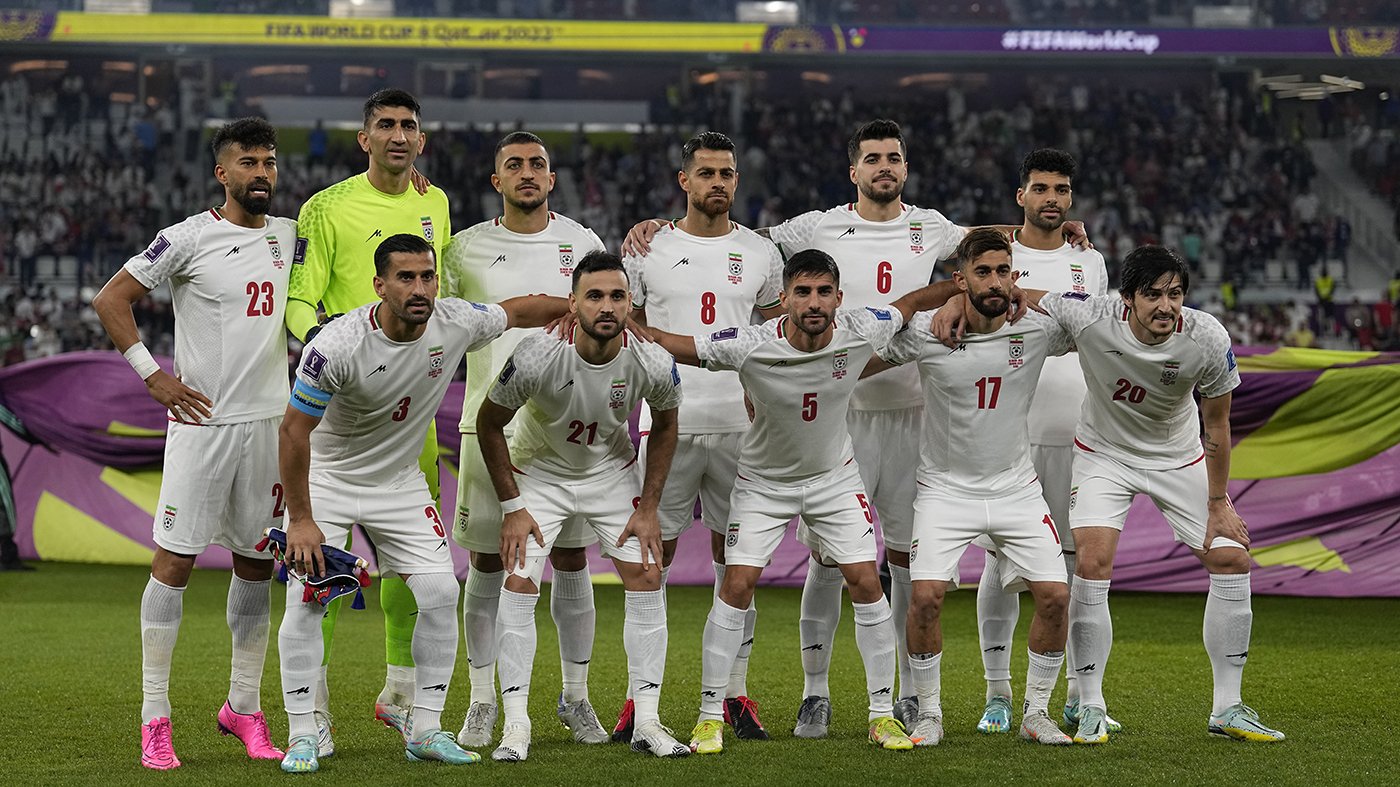
Iran's Ministry of Sports issued a directive Thursday prohibiting the country's national and club athletic teams from traveling to participate in competitions held within nations Tehran designates as hostile. The order, which is effective immediately and remains in place until further notice, explicitly cites security concerns for Iranian athletes and delegation members as the primary justification.
The ministry's statement asserts that the presence of Iranian teams in these unspecified countries cannot be safeguarded. This policy emerges against a backdrop of severe regional instability, including a U.S.-Israeli military campaign that has resulted in significant civilian casualties, widespread displacement, and the reported death of Supreme Leader Ayatollah Ali Khamenei.
World Cup Participation in Question
The sweeping ban introduces immediate complications for Iran's scheduled participation in the upcoming FIFA World Cup, set to begin June 11 across the United States, Canada, and Mexico. Iran's national football team is slated to play two matches in Inglewood, California, and one in Seattle between June 15 and 26.
Mehdi Taj, President of the Iranian Football Federation, amplified these concerns in a statement on social media earlier this month. Taj revealed that federation officials have been negotiating with FIFA to relocate Iran's matches from the U.S. to Mexico. He attributed this request directly to security assurances, quoting former U.S. President Donald Trump as having "explicitly stated that he cannot ensure the security of the Iranian national team." Taj concluded, "We will certainly not travel to America" under such conditions.
Exceptions and Regional Diplomacy
Notably, the ministry's prohibition appears to contain exceptions that reflect the complex geopolitics of the Middle East. According to reporting by The Associated Press, the ban does not apply to an upcoming playoff match in the Asian Champions League Elite. Iran's Tractor FC is still scheduled to face Shabab Al Ahli of Dubai in Saudi Arabia this April, suggesting a nuanced application of the "hostile country" designation that excludes certain regional rivals for specific events.
The travel restriction aligns with a broader pattern of nations adjusting international engagements over security fears. For instance, the U.S. State Department has previously issued its own global travel alerts during periods of heightened conflict with Iran, creating a reciprocal dynamic of travel warnings that now extends into the sporting arena.
This move by Iran also intersects with wider discussions about how geopolitical tensions are reshaping international sports. In a parallel development, U.S. lawmakers have recently advanced bipartisan legislation aimed at banning certain sports-related financial contracts, highlighting the increasing politicization and regulatory scrutiny of global athletics.
The Iranian directive effectively weaponizes sports diplomacy, using athlete mobility as a tool of foreign policy. It places global sporting bodies like FIFA in a difficult position, forced to navigate between host country obligations and participant nation demands. The coming weeks will test whether accommodations can be made for Iran's World Cup schedule or if the team faces potential disqualification.
Domestically, the ban may serve to reinforce the government's narrative of facing external threats while taking proactive measures to protect its citizens abroad. However, it also risks isolating Iranian athletes from international competition and could have significant repercussions for careers and professional development in numerous sports beyond football.