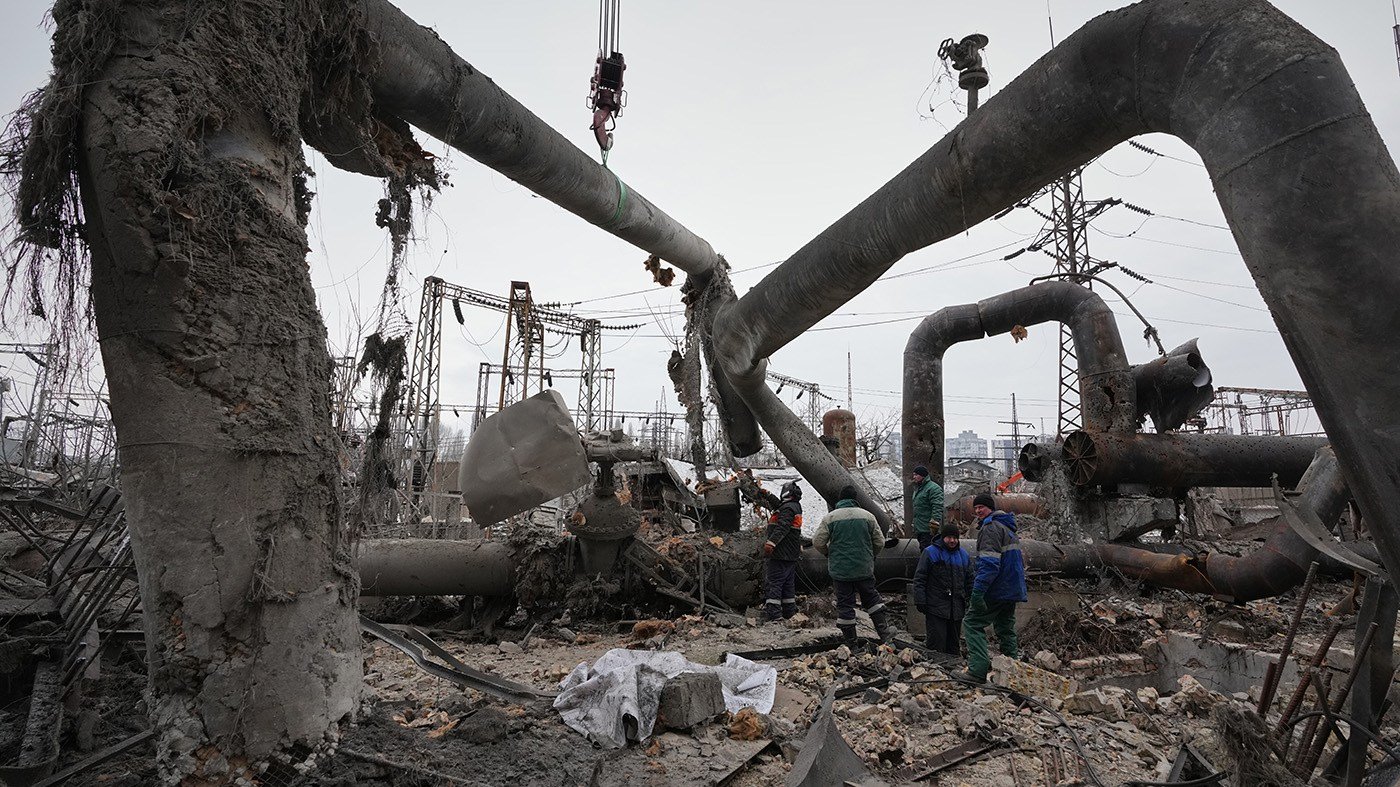
A senior Iranian official has dismissed Washington's latest response to a proposed end to the conflict as “insufficient,” while warning that Tehran could target regional data centers, undersea cables, and AI infrastructure if hostilities resume.
Mohsen Rezaei, head of Iran's Supreme National Security Council and a former commander of the Revolutionary Guard, made the remarks in an interview carried by the state-run IRNA news agency. He said Iran is no longer responding to the U.S. and that Washington must clarify certain issues, without specifying what remained unresolved. According to Rezaei, the U.S. has accepted some of Iran's seven conditions but others are still unclear.

The comments come as diplomatic efforts to fully reopen the Strait of Hormuz and end the broader conflict have stalled. Iran's delegation at last month's U.N. gathering proposed an expedited agreement modeled on the memorandum of understanding that collapsed days after being signed in June. That new offer was rejected, but the two sides have stayed in touch through mediators.
Rezaei warned that if intense fighting breaks out again, Iran would strike “cables, data centers, AI facilities and other sites in the region.” The threat adds a cyber dimension to the ongoing tensions, which have already disrupted global shipping and energy markets. Meanwhile, the Revolutionary Guard's navy said any vessel transiting the strait that turns off its navigation and identification systems would be “identified as hostile,” according to IRNA. Attacks on ships in the waterway have increased since Iran's proposal was rejected, with one reported on Sunday.
Netanyahu corruption trial enters new phase
In Israel, former Attorney General Avichai Mandelblit took the witness stand in Prime Minister Benjamin Netanyahu's long-running corruption case. Mandelblit, who indicted Netanyahu seven years ago on charges of fraud, breach of trust, and accepting bribes, is the first former top prosecutor to testify in the trial. The charges marked the first time a sitting Israeli prime minister had been indicted.
Netanyahu was present in the courtroom to hear Mandelblit's testimony. The prime minister had handpicked Mandelblit, a former Cabinet secretary, for the attorney general post, a role Mandelblit held until 2022. Netanyahu is accused of trading favors with wealthy associates and media moguls for political gain, allegations he denies. The trial is unfolding weeks before Israel's Oct. 27 election, where security is a dominant issue.
Houthis escalate attacks on Saudi targets
In a significant escalation, a projectile struck the same passenger terminal at Riyadh's King Khalid International Airport that was hit on Saturday, when an attack killed 12 people. The airport had been closed after that strike, but Saudi authorities reported injuries in the latest incident. The Iran-backed Houthi rebels in Yemen claimed responsibility for both attacks on the airport, which has been targeted daily since Wednesday.
The latest strike in Riyadh came shortly after the Houthis said the airport in the rebel-held Yemeni capital of Sanaa had been hit again, blaming the Saudis. On Sunday night, the Houthi-run Al-Masirah TV reported further strikes on Sanaa, also blaming Saudi Arabia. Riyadh has not commented on those strikes.
Houthi military spokesperson Brig. Gen. Yahya Saree urged “everyone to take our warnings seriously” about the risks of flying in Saudi airspace. The attacks mark a major escalation in the Houthi-Saudi conflict and complicate efforts to halt the U.S.-Iran war.
Gaza residents return to rubble
In central Gaza, residents returned to their neighborhoods to assess damage from Israeli strikes after being warned to evacuate the day before. Bassam Abed said at least 10 residences housing some 300 families were reduced to rubble, and families were not given enough time to flee. “Women slept outdoors. We did not take clothes,” he said.
Israel's military said it had targeted militant infrastructure, including a rocket launch site and a command center used by Hamas militants to attack soldiers. A year after Israel and Hamas reached a ceasefire deal, Israel continues to launch near-daily strikes.
Prime Minister Netanyahu has also asked the attorney general and the head of the Shin Bet security service to investigate people who participated in the new documentary “NAZA,” in which Israeli military insiders describe what they say was the reckless killing of civilians in Gaza. Netanyahu called the film “a false, misleading and biased story that slanders the State of Israel” and its military. The documentary, which premiered at the Venice Film Festival to a record 25-minute standing ovation, has angered and unsettled Israelis, whose view of the war differs sharply from much of the world.
Lebanon: retired officer killed by Israeli shelling
Lebanon's army said it recovered the body of a retired officer killed by Israeli artillery fire while he was checking on his property in the southern town of Yater. The army said Ali Abdul Hassan Sweidan was “directly targeted by a hostile Israeli tank” and called it “a flagrant violation of existing understandings.” An Israeli military spokesperson said they were not aware of the incident. Israel has occupied a large swath of southern Lebanon since the outbreak of its latest war with the Iran-backed Hezbollah in March.