Former Utah Congressman Chris Stewart is sounding the alarm over the relentless flow of illegal, Chinese-made vaping devices into the United States, urging federal regulators and law enforcement to move decisively before the problem spirals further out of control.
In a sharply worded critique, Stewart—who served on the House Appropriations Committee and the original House China Task Force—points to brands like Elf Bar, Lost Mary, and Breeze Prime, which have become household names among young consumers despite being banned for sale in the U.S. Since 2022, the FDA has prohibited flavored vape products domestically, but that has done little to curb supply. Instead, Chinese manufacturers have pivoted aggressively to the American market, generating an estimated $10.6 billion in export revenue last year alone.

The scale of the problem is staggering. Nearly 7,000 e-cigarette products are currently on sale in the U.S., yet less than 1% have received FDA authorization. That means the overwhelming majority of vapes sold in American stores have never been inspected or approved by federal regulators, leaving consumers—especially teenagers drawn to candy-like flavors and bright packaging—exposed to unknown and potentially dangerous substances.
Stewart frames this not just as a public health failure but as a national security issue, noting that China, America's chief geopolitical rival, is profiting from a billion-dollar illicit industry operating on U.S. soil. He argues that the lack of enforcement is also devastating ethical retailers who play by the rules. Law-abiding convenience stores and small shops, already operating on razor-thin margins, are being undercut by fly-by-night vape outlets that stock the illegal products without consequence.
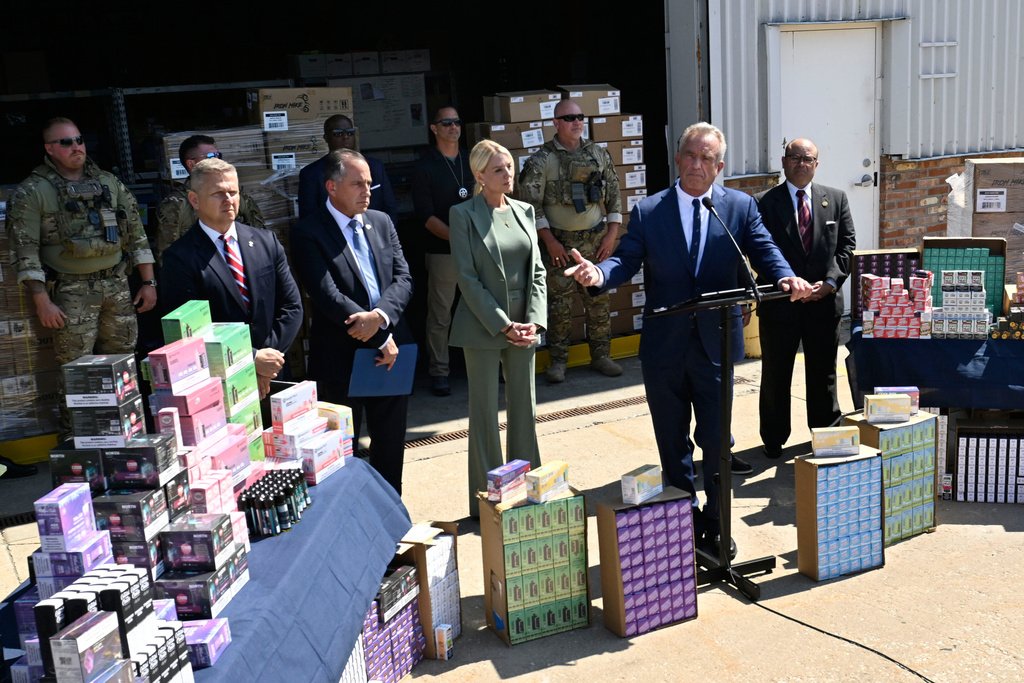
The criminal element is not limited to rogue shopkeepers. Federal investigators have linked cartels and organized crime syndicates to the smuggling of vape products through American supply chains. Last September, the DEA's Operation Vape Trail resulted in the seizure of more than 2.3 million illegal devices, exposing the depth of the problem. But Stewart insists those raids, while welcome, are just a drop in the bucket. For every pallet seized, dozens more slip through undetected.
What Needs to Change
Stewart is calling for a multi-pronged federal response. First, the FDA must clear its massive backlog of pending product inspections and provide clear, public guidance on which vapes are legal and which are not. Without that transparency, retailers say they are left guessing. Second, the agency needs to coordinate with the Justice Department and the Bureau of Alcohol, Tobacco, Firearms and Explosives to ramp up arrests and product seizures. The current calculus—where the odds of getting caught are low and the penalties are modest—offers little deterrent.
The former congressman argues that America already has the legal framework and resources to dismantle this illicit trade. What's missing, he says, is the political will. Every month of inaction means more Americans, particularly minors, become addicted to products that the U.S. government has already deemed too dangerous for its own citizens. Meanwhile, Chinese manufacturers and the criminal networks that distribute their goods continue to rake in profits at the expense of public health and honest businesses.
Stewart's warning comes at a time when trust in institutions is already fragile, and the failure to address such a visible and harmful black market only deepens public cynicism. As he puts it, the products are illegal, the solutions are known, and the question is whether Washington will act.