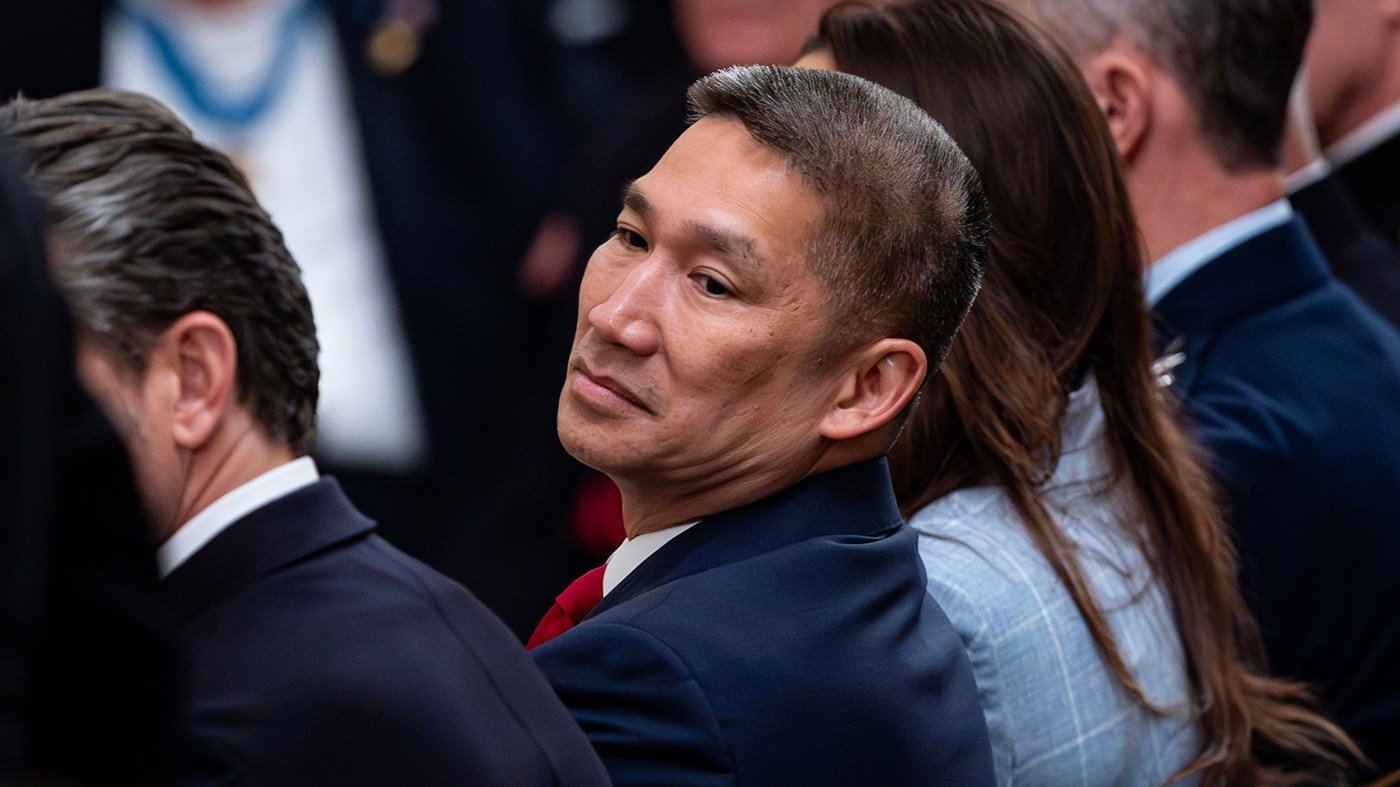
President Donald Trump’s choice to lead the Navy, Hung Cao, is encountering immediate resistance on Capitol Hill, where Democratic senators have signaled they will not support the legislative waiver he needs to assume the post. Cao, a retired captain and Trump loyalist who has been running the Navy as acting secretary since April, was formally nominated on September 1. But federal law imposes a seven-to-10-year cooling-off period before former military officers can hold certain top Pentagon civilian jobs, meaning Cao requires 60 votes in the Senate to bypass that restriction.
Democrats say their objections go beyond the procedural. They point to Cao’s stewardship of the Navy during a grueling nine-month deployment of the aircraft carrier USS Abraham Lincoln, which was extended to support U.S. operations against Iran. The prolonged tour, which began in November 2025 and stretched well past its original May end date, was marked by reports of squalid living conditions and a mental health crisis among the crew.

“Hung Cao has shown he has neither the ability nor the temperament to serve as Navy Secretary,” Sen. Kirsten Gillibrand (D-N.Y.) said in a statement to The Hill.
Sen. Jeanne Shaheen (D-N.H.) blamed the Trump administration for what she called a “botched nomination” that now requires a waiver, and said Cao must answer for the “severe mishandling” of the Lincoln’s deployment. She also raised unresolved questions about funding and workforce issues at the Portsmouth Naval Shipyard, a critical facility for maintaining nuclear-attack submarines that sits on the Maine-New Hampshire border.
Sen. Mazie Hirono (D-Hawaii) expressed doubt about Cao’s capacity to safeguard the Navy amid “dire readiness concerns, depleted munitions stockpiles, and distractions from pacing challenges in the Indo-Pacific.” She criticized what she described as his lack of leadership on the Lincoln matter and his focus on advancing Defense Secretary Pete Hegseth’s ideological campaign against diversity, equity and inclusion programs. “Our Navy needs steady, experienced leadership that will prioritize our national security and the safety of our servicemembers above all else,” Hirono said, adding that she wants to see whether Cao “is prepared to uphold his oath to protect the Constitution and our country.”
Cao’s path to the Pentagon’s top Navy job has been unconventional. He spent 25 years as a special operations officer, deploying to Iraq, Afghanistan and Somalia, and retired in 2021. He then launched two unsuccessful congressional bids in Virginia—a House race in 2022 and a Senate run in 2024. Trump first nominated him as undersecretary of the Navy in February 2025; he was narrowly confirmed that October by a 52-45 vote. When John Phelan abruptly departed as Navy secretary, Cao stepped in as acting head.
Waivers for former military officers are not unheard of. Congress granted one to retired Marine Corps Gen. Jim Mattis to serve as Defense secretary under Trump, and another to retired Army Gen. Lloyd Austin for the same role under President Biden. But Cao brings political baggage that complicates his confirmation. During his 2024 Senate campaign, he said the military needed “alpha males and alpha females who are going to rip out their own guts, eat them, and ask for seconds.” After Trump announced the nomination, Sen. Andy Kim (D-N.J.) seized on that remark, posting on social media: “This is not a serious person who should be leading our servicemembers, especially during a war.”
Cao has defended the Lincoln’s extended deployment, acknowledging the strain on sailors but insisting the mission “demanded” it and calling media coverage “dishonest.” His nomination also exposes the Navy to broader scrutiny at a time of bipartisan anxiety: a strained budget and fleet due to the Iran war, rising mental health issues among troops, Trump’s proposed “Golden Fleet” of new heavily armed ships named after himself, and a costly directive to install outdated steam-powered technology on aircraft carriers. As the waiver process moves forward, the House will also hold hearings and votes, though those are unlikely before the November midterms, with Congress in Washington for only two more weeks.