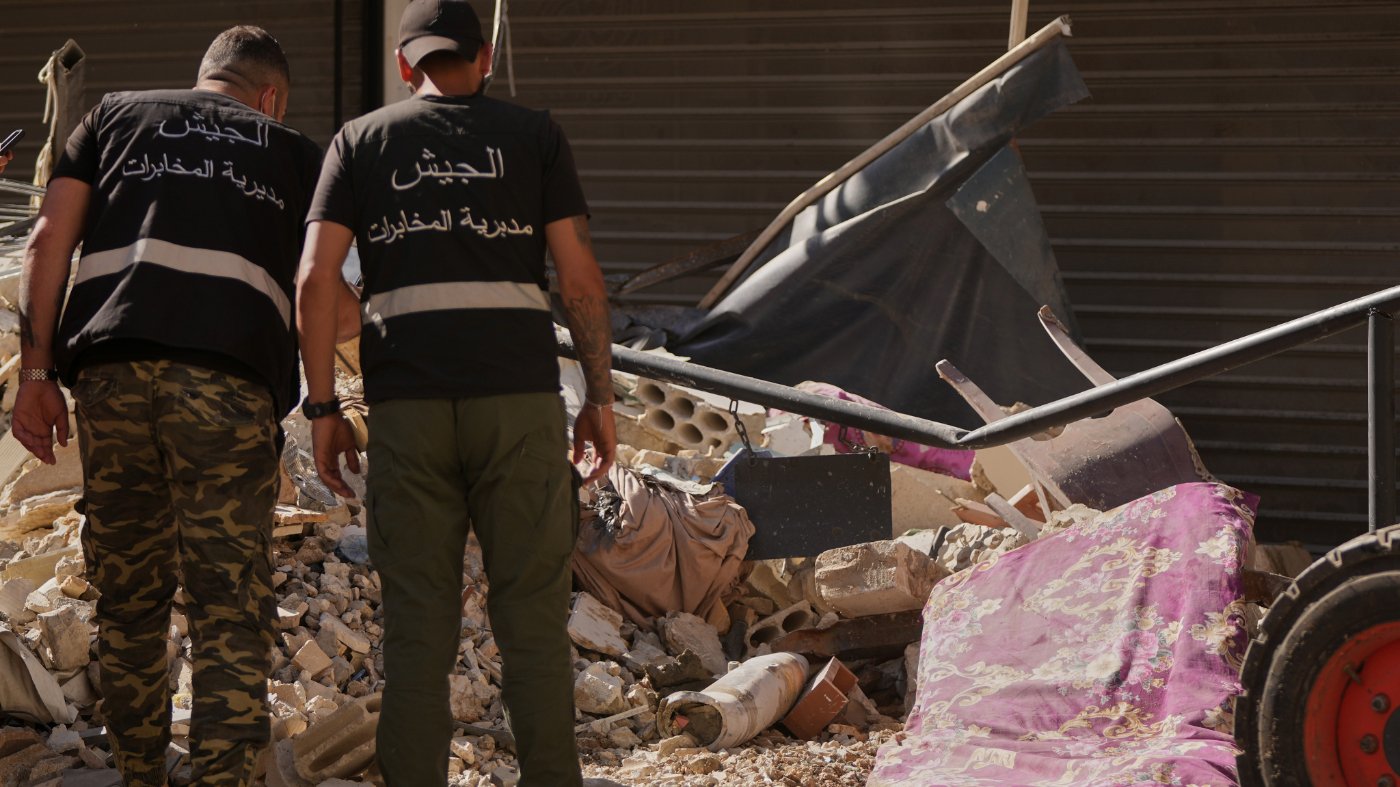
The State Department's much-touted ceasefire agreement in Lebanon lasted less than 48 hours before unraveling into direct military confrontation. Hezbollah's continued rocket fire into northern Israel prompted Israeli strikes on the group's infrastructure in Beirut. Tehran retaliated with a coordinated offensive, launching ballistic missiles alongside long-range drone and missile salvos from Houthi forces in Yemen. Israel responded with direct airstrikes inside Tehran.
This rapid escalation unfolded despite President Trump's warnings to Jerusalem against retaliation, exposing a fundamental misreading of local dynamics. When Washington views regional stability through a transactional lens, it blinds itself to the existential and ideological drivers of its adversaries, failing to see that these distinct proxy networks operate under a single, unified Iranian command.
The core flaw of Washington's approach is the tendency to isolate conflicts that are fundamentally linked. Seeking to preserve a legacy-defining deal with Tehran, Trump pressed Israeli Prime Minister Netanyahu to hold back. 'I call the shots,' Trump told reporters, adding that Netanyahu 'doesn't call the shots.' Yet by striking Tehran under a rain of fire from Lebanon and Yemen, Jerusalem demonstrated that regional actors face existential threats that cannot be settled by external transactional diplomacy.
When American administrations treat localized tinderboxes as minor friction points to be managed for a larger bargain, they inevitably compromise the core security of their closest allies. This miscalculation mirrors the diplomatic failures of the 1982 Lebanon War. Then, President Ronald Reagan pressured Israeli Prime Minister Menachem Begin into an immediate ceasefire, halting the siege of Beirut. Although the PLO was pushed out, Iran exploited the resulting security vacuum to fund and establish Hezbollah, constructing a far more resilient proxy state within a state.
This pattern of compromising long-term security for transient diplomatic breakthroughs was vividly illustrated during the negotiation of the 2015 Iran nuclear agreement. To minimize diplomatic friction with Tehran, top-level Washington bureaucrats deliberately undermined Project Cassandra, a massive counternarcotics initiative spearheaded by the DEA. As a landmark 2017 investigative report exposed, federal officials systematically blocked law enforcement efforts to dismantle Hezbollah's multi-billion-dollar global drug trafficking and money-laundering syndicates, effectively prioritizing political consensus over containing a terrorist organization. This strategic blindness regarding Lebanon is directly linked to Washington's continued failure to contain the Houthi terrorist movement in Yemen, as detailed in our analysis of how Iran turned Lebanon into a nuclear deal veto.
For over two years, Western maritime coalitions attempted to manage the Houthi threat in the Red Sea through defensive policing and localized deterrence, treating international shipping disruptions as an isolated geographic issue. By failing to exact a decisive military cost from the Houthis, Western policymakers allowed this Iranian proxy to transform into a highly capable, long-range strategic threat. The immediate participation of the Houthis in the multi-front barrage against Israeli cities proves that Iran's proxies do not operate on localized grievances; they function as a fully integrated, synchronized military network designed to overwhelm Western defensive architectures simultaneously.
Although Trump initially dismantled the 2015 Iran nuclear deal and established a doctrine of maximum pressure, the framework of the June 3 truce indicates the administration is dangerously close to repeating these precise errors. By engineering a rapid Lebanese ceasefire to protect a broader interim understanding with Iran, Washington once again prioritized transactional diplomatic theater over structural enforcement. This calculation collapsed when Iranian Foreign Minister Abbas Araghchi overtly linked the Lebanese truce to nuclear concessions, even as restricted International Atomic Energy Agency reports confirm that Tehran's enriched uranium stockpiles continue to evade international oversight. The recent incident where Trump pledged retaliation after Iran downed a US Apache helicopter underscores the high stakes.
Centuries ago, Niccolò Machiavelli established an enduring law of statecraft: War cannot be avoided, and attempting to postpone it merely hands the strategic advantage to your enemy. He compared gathering security threats to a severe disease—simple to cure but difficult to diagnose in its infancy, yet entirely incurable once it breaks out for all to see. Washington's modern policymakers routinely violate this law, treating aggressive terrorist proxy networks as short-term friction points to be managed through fragile diplomatic trade-offs, rather than neutralized.
The recent explosions across Beirut, Tehran, and the multi-front escalation from Yemen confirmed Machiavelli's warning. Forcing a tactical pause while Iran's proxy forces retain their primary arsenals does not protect the civilian populations of northern Israel, where 60,000 residents remain displaced by continuous drone and rocket fire. Relying on the Lebanese Army to enforce security is a direct replication of United Nations Resolution 1701, which failed to prevent Hezbollah's rearmament. The rescue of an Apache crew after a crash near the Strait of Hormuz, with Trump blaming Iran, further illustrates the volatile environment.