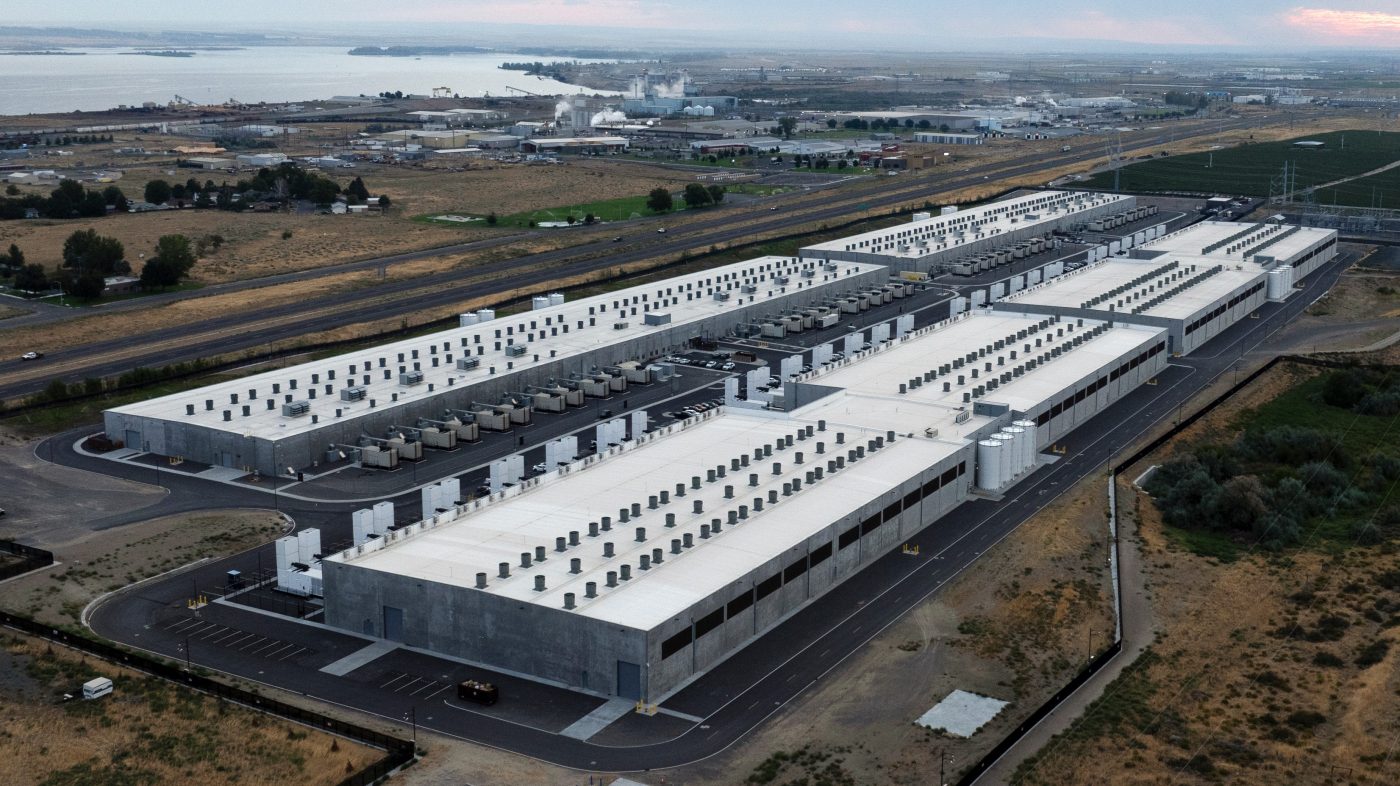
The House Energy and Commerce Committee voted 52-0 on Tuesday to advance the bipartisan Ratepayer Protection Act, signaling mounting bipartisan frustration with the rapid expansion of data centers and their impact on household electricity bills.
The legislation, introduced by Rep. Kathy Castor (D-Fla.), would require state regulators to hold hearings on standards that make large data centers pay for the cost of new power generation, transmission lines, and distribution upgrades tied to their electricity use. It stops short of mandating adoption of such standards, but supporters say it sends a strong signal to states and tech companies alike.
“It has become clear that across the entire industry there is one entity uniquely positioned to stand up for families and communities who are the ones paying electricity bills—and that is this Committee, and our colleagues in Congress,” said House Energy and Commerce Chair Brett Guthrie (R-Ky.) in a statement.
The bill builds on a White House pledge signed by major tech companies earlier this year, which aimed to shield ratepayers from the costs of the artificial intelligence boom. The legislation would codify that commitment by forcing state utility commissions to at least consider cost-shifting rules.
Sen. Jon Husted (R-Ohio) introduced a companion bill in the Senate last week, boosting the measure’s prospects. A spokesperson for Husted said the senator is “encouraged by the bipartisan support and committee passage in the House” and will work with the Senate Energy and Natural Resources Committee to push the bill across the finish line.
While the bill enjoys broad support, some Democrats on the committee described it as a “first step” rather than a complete solution. Rep. Nanette Barragán (D-Calif.) noted that the legislation “recognizes an important principle,” but added, “This is not going to be enough. We need to do more to ensure that families are protected from higher electricity costs while also addressing health and environmental impacts.”
The push comes as public opposition to data center construction has surged. A Politico poll released Tuesday found that 41 percent of Americans now oppose a data center being built in their local area, up from 28 percent in January. Only 24 percent currently support such projects, down from 36 percent earlier this year. Critics point to concerns over electricity prices, water use, air pollution, and broader fears about AI-related job displacement.
Clara Summers, director of the Consumers for a Better Grid Campaign at Citizens Utility Board, said that “having direction from Congress is helpful” even though the bill does not compel states to act. “There are states that are not addressing this issue as proactively,” she said, “so having a message from Congress that says, ‘Hey, you, within this timeline, need to at least take up this issue,’ is a good push.”
Camden Weber, senior climate and energy policy specialist at the Center for Biological Diversity, underscored the broader stakes: “It’s great that the Congress is concerned about price issues. We are living in an affordability crisis. People are really straining to pay their bills, especially their energy bills. But the concerns with data centers are so much broader than just that—environmental concerns, water scarcity issues, air pollution.”
Despite the unanimous committee vote, some lawmakers expressed disappointment that the majority did not go further. Castor lamented that the committee did not take up her separate bill to speed up interconnection of new power sources to the grid, but she praised the ratepayer legislation for telling developers that “if a company wants to build a data center, they should pay for the power and grid upgrades that they need.”
Matt VanHyfte, a spokesperson for House Energy and Commerce Republicans, expressed confidence the bill will continue to advance. The legislation now heads to the full House floor, where its path remains uncertain but momentum is clearly building.