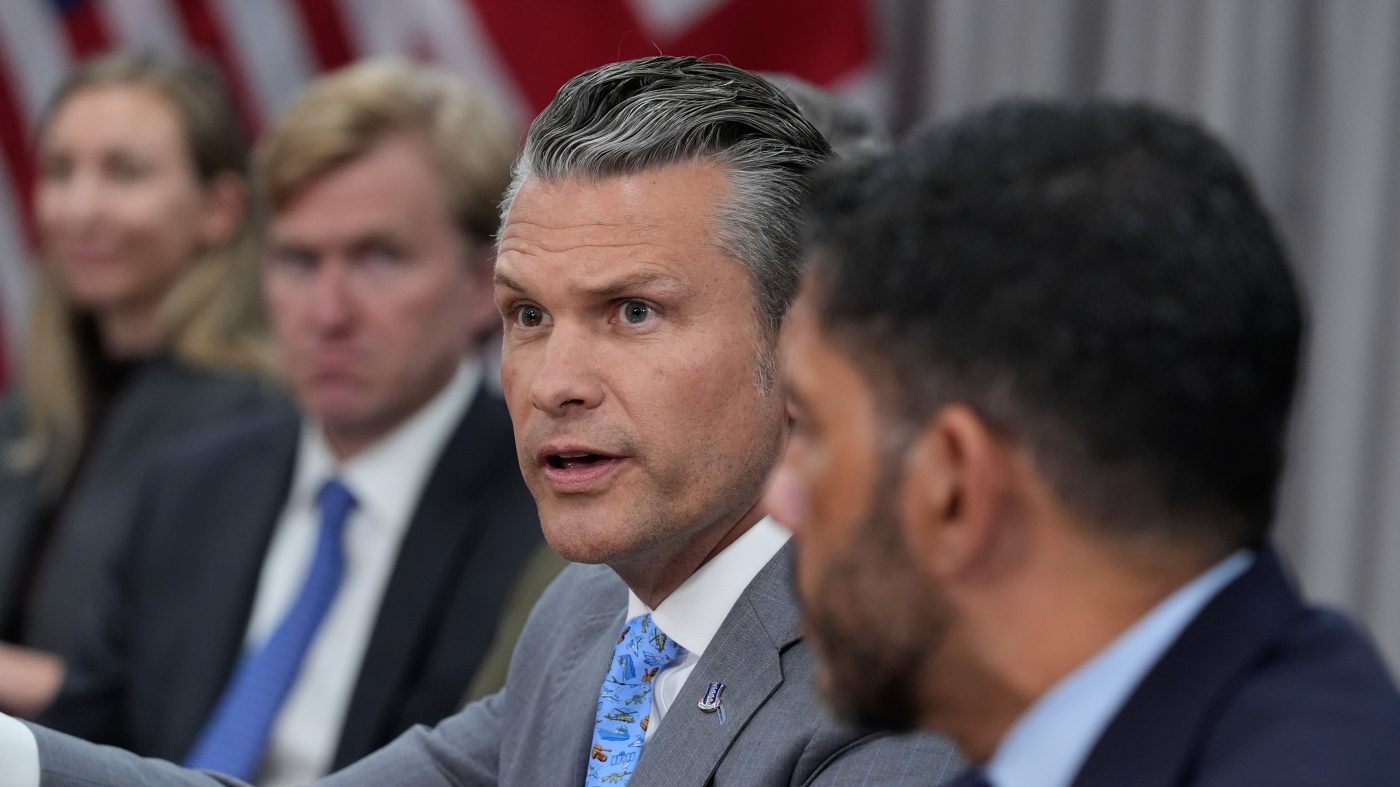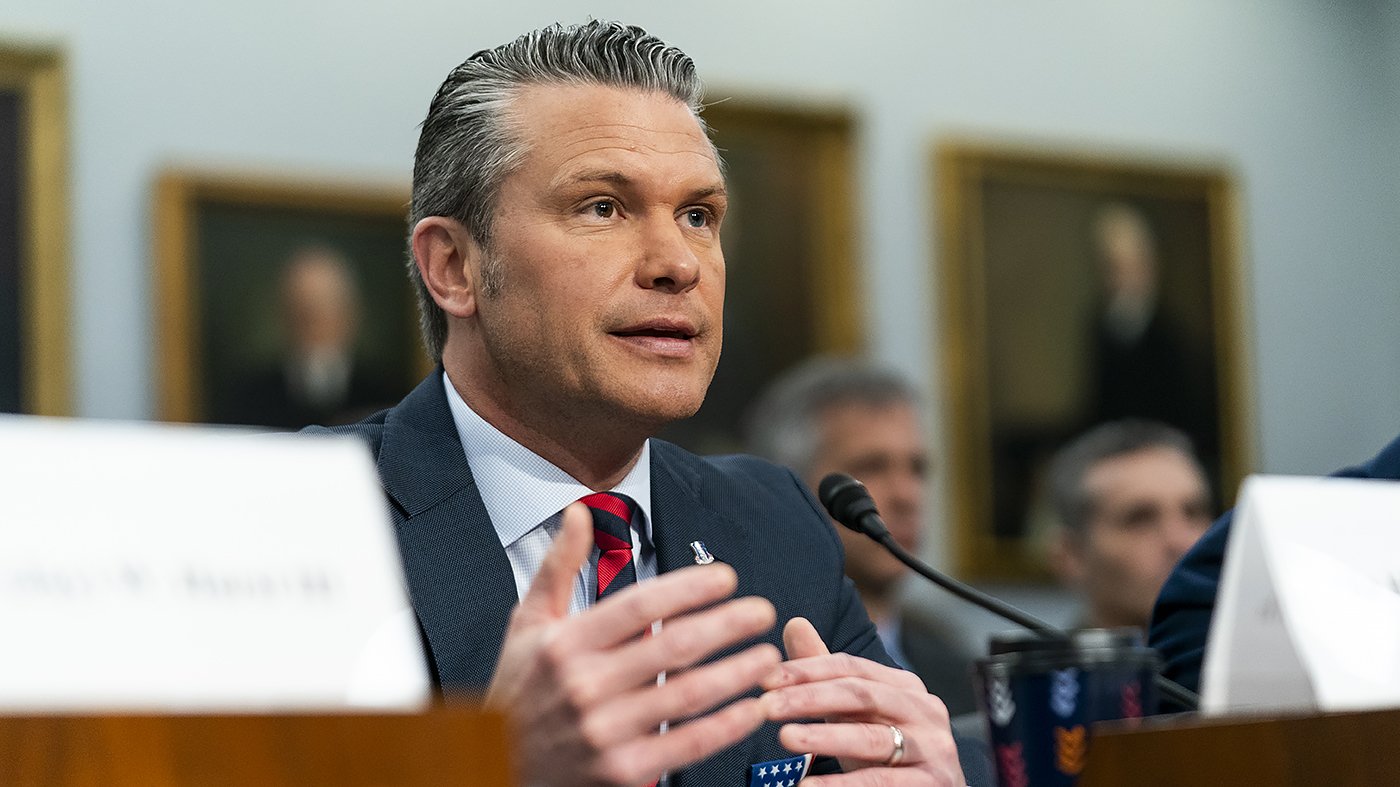
House Republicans are set to receive a classified briefing from Defense Secretary Pete Hegseth at the Pentagon on Tuesday evening, as Speaker Mike Johnson (R-La.) confirmed the meeting ahead of a critical budget reconciliation push. The session comes as GOP leaders finalize a framework for a third reconciliation bill designed to bypass a Democratic filibuster in the Senate, with a markup expected in the House Budget Committee on Thursday.
The bill combines a major defense funding boost with provisions from the Safeguard American Voter Eligibility (SAVE) America Act, a Trump-backed effort to encourage states to adopt voter ID and other restrictions. It also includes measures targeting what Republicans describe as fraud in federal programs.

“Secretary Hegseth and his team will go through and outline a lot of this. Much of that is going to be classified for us,” Johnson said during a press conference on Tuesday. He framed the request as a response to global threats, adding, “You heard the president talk about how he wants to effectively double the funding for national defense. Look, we live in dangerous times. We’re fighting communism on our own shores, and we’re fighting evil terrorists and tyrants around the world, and we have to be able to protect our national security.”
The White House’s separate $87 billion defense supplemental request includes $67 billion for the Iran war, funds to combat the ongoing Ebola outbreak, and aid for farmers. The proposal allocates $1.7 billion for Pentagon readiness, $17.3 billion for operational costs, $1.5 billion for fuel, $1.2 billion for administration priorities, $21 billion for munitions, $5.1 billion for cybersecurity and autonomy, $2.4 billion for drones, $800 million for National Guard backing, and $12.1 billion for other departments’ classified programs.
Senate Democrats quickly expressed skepticism after the supplemental’s public release on June 24. Sen. Tim Kaine (D-Va.) noted during a Senate Armed Services Committee hearing that his colleagues are weighing the supplemental alongside President Trump’s push for a $1.5 trillion defense budget—a more than 40 percent increase from last year. “Not all supplementals are exactly the same, and one of the issues that we’re sort of grappling with… with the supplemental is the supplemental is on top of a presidential budget request that increases the Pentagon’s budget by 40 percent in one year, and so we’re sort of grappling with the 40 percent in one year increase, and then the supplemental on top of it,” Kaine said.
Sen. Dan Sullivan (R-Alaska) pushed back, urging Democrats not to reject the supplemental outright. “People wanted to talk about munitions, and so this is a munitions supplemental, and I really would be really disappointed if my Democrat colleagues say out of hand we’re going to reject the supplemental,” Sullivan said. “We didn’t do that when Biden was president, Schumer was majority leader, and it would be really disappointing if you guys did that and if you guys voted against cloture on the NDAA today.”
The meeting with Hegseth underscores the GOP’s focus on defense spending as a unifying priority, even as internal divisions persist on other issues. Johnson’s leadership has faced challenges from hard-line conservatives, as seen in recent standoffs on the House floor. The Pentagon briefing is expected to provide classified details that could shape the final reconciliation package.
As the administration tightens secrecy around defense operations, including through a Pentagon-DOJ task force targeting media leaks, the briefing offers lawmakers a rare behind-the-scenes look at the military’s needs. The White House’s request also comes amid broader debates over federal spending, with the Supreme Court recently requesting a $225 million budget increase for the judiciary, a topic that has drawn scrutiny from both parties.