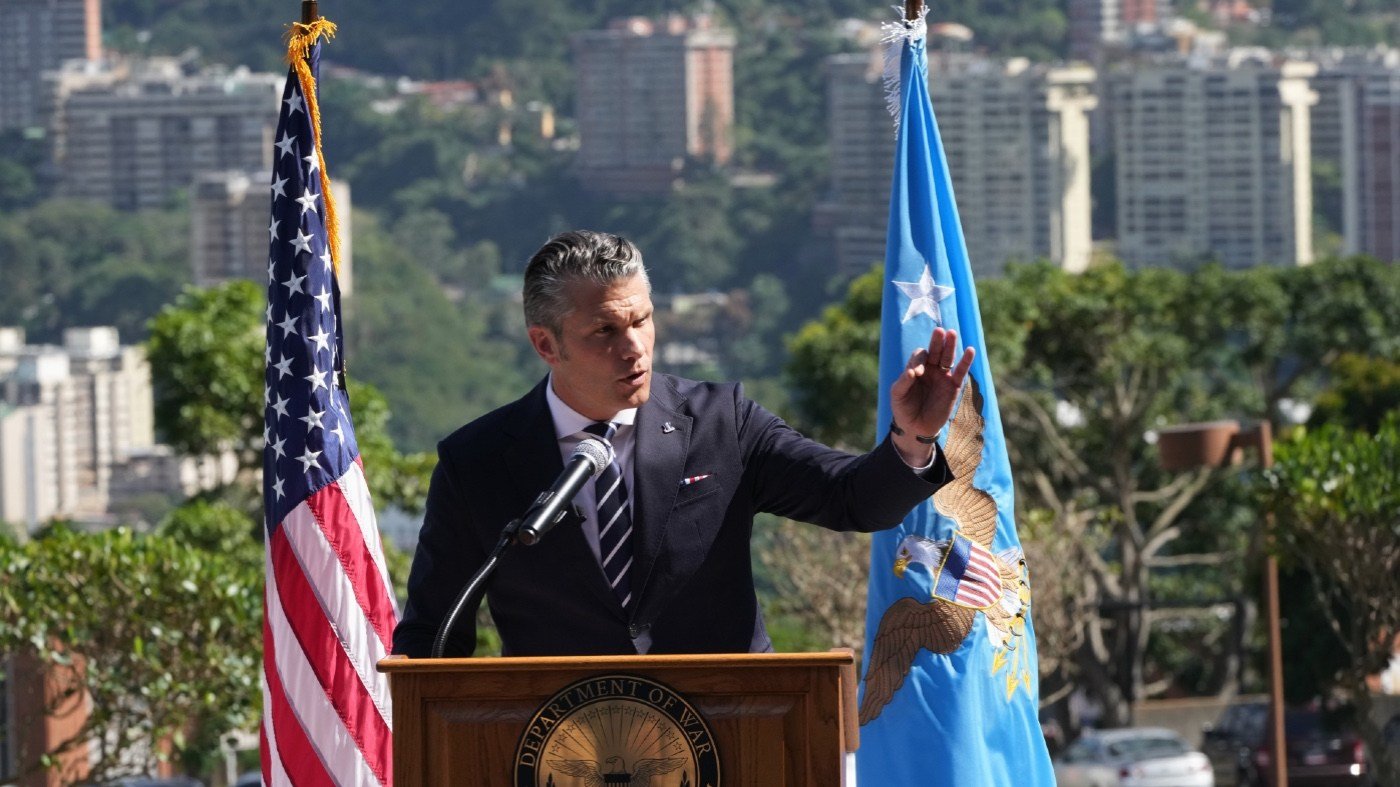
Secretary of Defense Pete Hegseth's recent visit to Venezuela has delivered a major setback to China's ambitions in the Western Hemisphere. The visit, which included the signing of a military cooperation agreement, signals a reassertion of U.S. power in a region where Beijing had spent two decades building influence.
The pact, part of what the administration calls Operation Absolute Resolve, grants the United States military access, intelligence sharing, and training cooperation with Venezuela's armed forces. Most critically, it explicitly excludes China and other extra-regional powers from key strategic assets and activities.
This move undercuts Beijing's foothold in infrastructure, oil, minerals, and its primary geopolitical ally in the region. China's loss is a gain for Washington, which is now positioned to counter Chinese influence in America's own backyard.
Monroe Doctrine Reasserted
The 2025 National Security Strategy explicitly outlines a return to the Monroe Doctrine, stating that the United States will “reassert and enforce the Monroe Doctrine to restore American preeminence in the Western Hemisphere.” It also introduces a “Trump Corollary” to deny non-hemispheric competitors the ability to position forces or control strategically vital assets.
Hegseth is the first U.S. defense secretary to visit Venezuela in the 21st century, underscoring the significance of this shift. The agreement follows the capture of Nicolás Maduro on January 3, which the administration credits to U.S. military superiority, noting that neither Russian air defenses nor Chinese radar systems detected or repelled the operation.
Strategic Gains
Beyond the military pact, the United States has achieved other key objectives, including the seizure of highly enriched uranium, the capture of a Hezbollah operative, the elimination of a Tren de Aragua leader, the reestablishment of consular relations with Israel, and the release of hundreds of political prisoners.
Venezuela's realignment also gives Washington oversight of Chinese space satellite facilities, such as El Sombrero and Luepa, two of Beijing's 11 installations in Latin America. This trend is reversing, with China's expansion in the region stalling under the Trump administration.
Military Transformation and Political Future
The agreement paves the way for a long-overdue transformation of Venezuela's National Armed Forces, focusing on modernization, professionalization, and respect for human rights. Hegseth emphasized the renewed military partnership, saying, “Training together, partnering together, sharing intelligence.”
Formalizing ties with Venezuela's military ensures that political accords aimed at democratization are not undermined by Chavismo-aligned forces. While progress has been rapid, challenges remain, including the release of all political prisoners and the holding of credible elections.
This development is part of a broader U.S. strategy to counter Chinese influence, as seen in recent actions on China's economic troubles and U.S.-China summitry. The administration's focus on the Western Hemisphere is a key pillar of its foreign policy, with implications for global power dynamics.