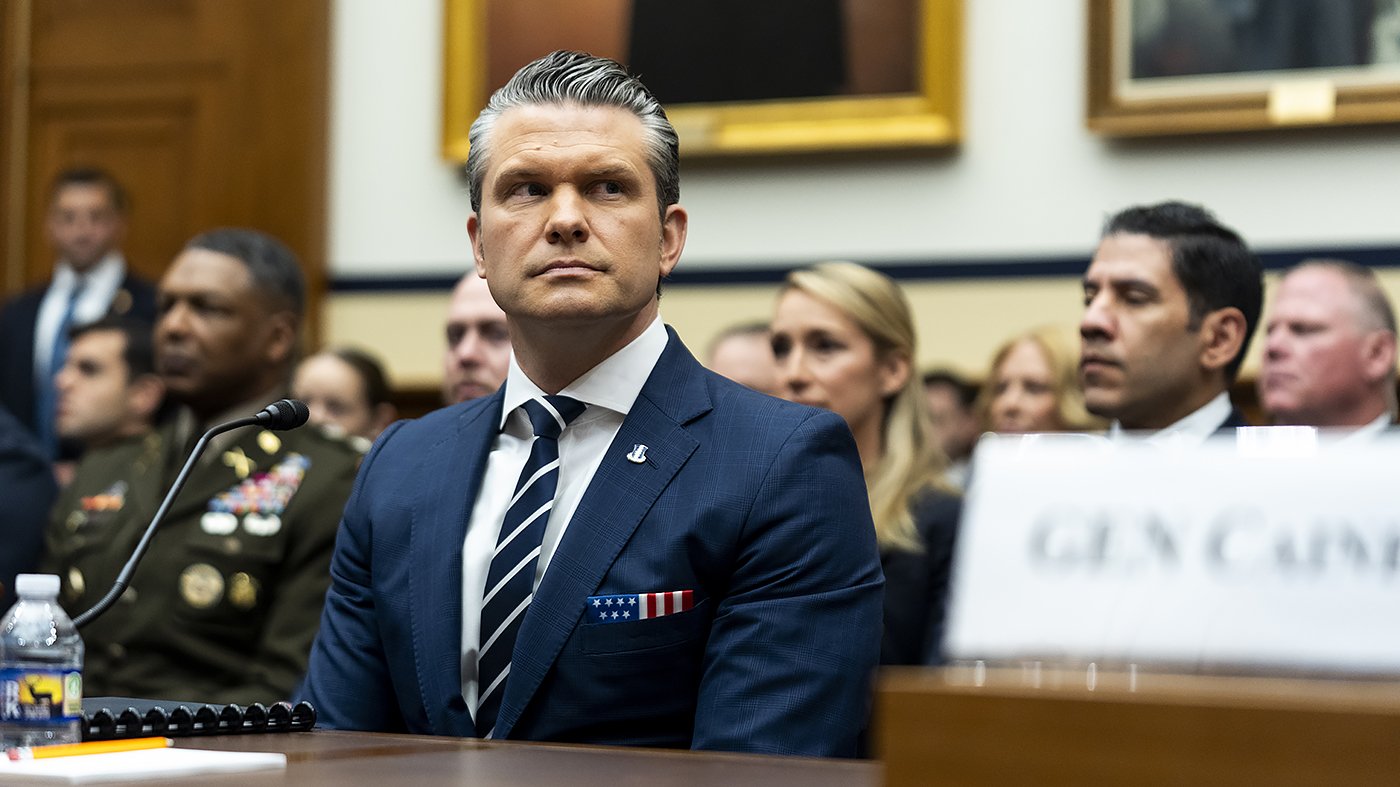
Defense Secretary Pete Hegseth appeared before the House Armed Services Committee on Wednesday for his first hearing since the outbreak of war with Iran, and Democrats wasted no time pressing him on the conflict's cost and the recent dismissal of top military leaders. Republicans, despite earlier signs of frustration, largely held their fire.
Democrats Go on Offense
From the outset, Hegseth struck a combative tone, declaring that “the biggest adversary we face at this point are the reckless, feckless and defeatist words of congressional Democrats and some Republicans.” That line set the stage for a series of heated exchanges in which Democrats accused him of incompetence, blind loyalty to President Trump, and unfitness for the role.
Rep. Chrissy Houlahan (D-Pa.) pressed Hegseth on the firing of Gen. Randy George, the decorated Army chief of staff who was ousted earlier this month. When Hegseth declined to give a specific reason, citing respect for the officer, Houlahan shot back: “You have no way of explaining why you fired one of the most decorated and remarkable men… your answer is a very immature way of responding to my request.”
Republicans Keep It Friendly
Though some GOP members had voiced frustration in recent weeks over the administration's lack of clarity on Iran strategy, most avoided direct criticism during the hearing. Committee Chair Mike Rogers (R-Ala.), who had complained about insufficient answers in a classified briefing last month, stayed largely silent. Rep. Mike Turner (R-Ohio) directed his questions to Joint Chiefs Chair Gen. Dan Caine, emphasizing the importance of allies—a subtle contrast with Hegseth's own skepticism of coalition partners.
Rep. Don Bacon (R-Neb.) was the most vocal Republican critic, expressing concern over the firing of Coast Guard Commandant Adm. Linda Fagan and noting the bipartisan support for both George and former Navy Secretary John Phelan, who was sacked last week. “It may be constitutionally right… but it doesn’t make it right or wise,” Bacon said.
Firing of Gen. George Sparks Bipartisan Unease
The ouster of Gen. George, a 40-year Army veteran, drew scrutiny from both sides of the aisle. Rep. Austin Scott (R-Ga.) told Hegseth, “I do want you to know I disagree with the firing,” and warned it would have a chilling effect on the military. The dismissal is part of a broader turf war between Hegseth and Army Secretary Dan Driscoll, a close ally of Vice President Vance. Rep. Derek Tran (D-Calif.) asked about their working relationship; Hegseth offered only a terse acknowledgment of Driscoll’s efforts.
Rep. Nancy Mace (R-S.C.) broke with her colleagues, praising Hegseth for the firings and arguing that “there are people there that are getting in your way. They need to go.”
Hegseth Defends Soaring War Costs
As the price tag of the Iran conflict surpasses $25 billion, Hegseth repeatedly defended the expenditure, arguing that the short-term cost is necessary to prevent Iran from obtaining a nuclear weapon. “President Trump, unlike other presidents, has had the courage to ensure Iran never gets a nuclear weapon,” he said in his opening statement. Democrats questioned whether the spending is sustainable and whether Congress has been kept fully informed.
The hearing comes amid broader tensions over the Pentagon's direction. For more on the political dynamics surrounding the administration's defense strategy, see our earlier report on Hegseth's clashes with lawmakers. The debate over the war's hidden costs also echoes recent exchanges between Hegseth and Rep. Ro Khanna, detailed in this analysis.
What Comes Next
With the Iran war now in its second month, lawmakers are increasingly calling for a clearer strategy and more robust oversight. The hearing underscored deep partisan divisions over the conflict, even as some Republicans signaled unease with the administration's personnel decisions. The committee is expected to hold additional sessions as the war continues and the defense budget comes under renewed scrutiny.