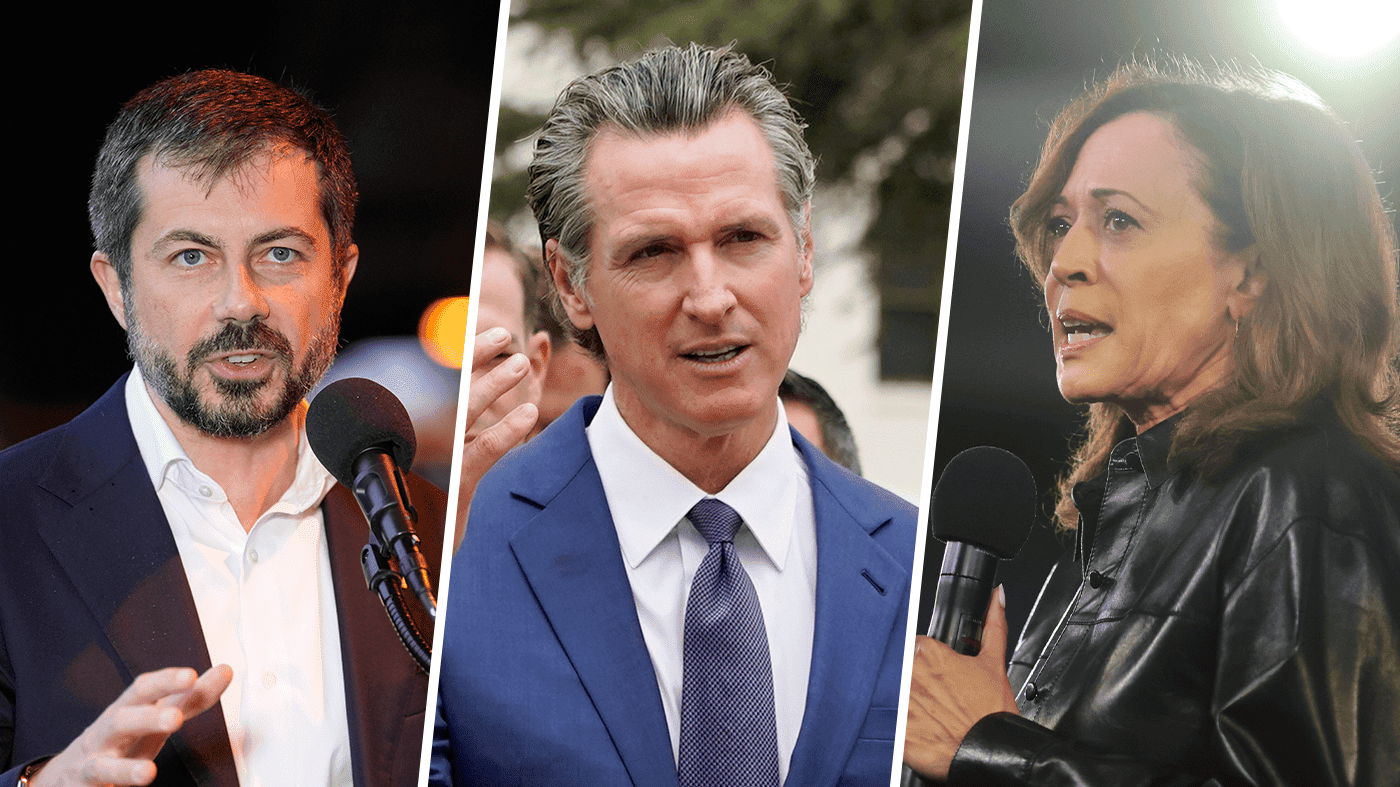
The race for the 2028 Democratic presidential nomination is already underway, with leading figures abandoning the traditional pretense of disinterest and openly positioning themselves for a White House bid. Vice President Kamala Harris, California Governor Gavin Newsom, and other potential contenders are signaling their ambitions years ahead of the election, reflecting a wide-open field without an established frontrunner.
Early Positioning at Key Events
This new dynamic was on full display at the recent National Action Network conference, where multiple prospective candidates courted Black voters, a crucial Democratic constituency. When asked by Reverend Al Sharpton about another presidential run, Harris departed from conventional political hedging. "I might, I might," she told the cheering crowd. "I'm thinking about it." This echoed comments she made last fall about weighing another campaign following her 2024 loss.
Other figures followed similar patterns. Former Transportation Secretary Pete Buttigieg, when asked by Sharpton about reserving a table at Sylvia's Restaurant—a callback to their 2020 campaign meeting—replied, "You save me a seat. I'll be there." Kentucky Governor Andy Beshear went further, telling the audience after his 2023 reelection victory, "I looked at my wife and I said, 'Woo, we'll never have to run a campaign again.' And I'm not sure that's true today." He framed his potential interest as a duty, stating he would "not leave a broken country" to future generations.
A Departure from Tradition
This openness represents a significant shift from the political gamesmanship that once defined presidential politics, where candidates would deliberately obscure their intentions to avoid appearing overly ambitious or alienating voters. Democratic strategist Joel Payne notes the party's base is "eager to jump-start the process of rebuilding the party," with 2028 hopefuls "running to outflank each other and plant their flags as early as possible."
The lack of a clear anointed successor has created this competitive environment. Newsom acknowledged as much in a CBS News interview last fall, stating he would "be lying" if he denied giving a presidential run serious thought after the 2026 midterms. Former Congressman and Ambassador Rahm Emanuel has described himself as a candidate "in training" while making repeated visits to early primary states like New Hampshire, South Carolina, and Nevada.
Strategic Messaging and National Focus
While some are explicit, others are letting their actions speak. Governors Wes Moore of Maryland, JB Pritzker of Illinois, and Josh Shapiro of Pennsylvania—all facing reelection this November—avoided direct 2028 discussion at the NAN event but fine-tuned messages with clear national appeal. On ABC's "The View," Shapiro emphasized focusing on the current administration's "excesses, the chaos, the cruelty, the lawlessness," while calling for a "national referendum" in the upcoming elections.
Beshear used his platform to outline a Democratic path forward focused on easing national tensions, a message that resonated with attendees. Sharpton told The New York Times some influential chapter leaders compared Beshear's potential to Bill Clinton's 1992 rise. Regarding Harris's comments, Sharpton noted she "came right up to the edge" of an announcement, adding, "I was not looking for that. Though I'm glad she did if that's how she feels."
This early maneuvering occurs against a backdrop of intense political competition, as seen in developments like the Cook Political Report shifting several Senate races toward Democrats and Virginia Democrats nearing a redistricting victory that could alter the House landscape. Meanwhile, the Republican field shows different dynamics, with Nikki Haley recently ruling out a 2028 campaign.
The transparent early jockeying suggests Democrats are preparing for a competitive primary that will test the party's direction and unity. With multiple governors, former cabinet officials, and the sitting vice president already in motion, the 2028 campaign has effectively begun, setting the stage for a prolonged and public contest over the party's future.