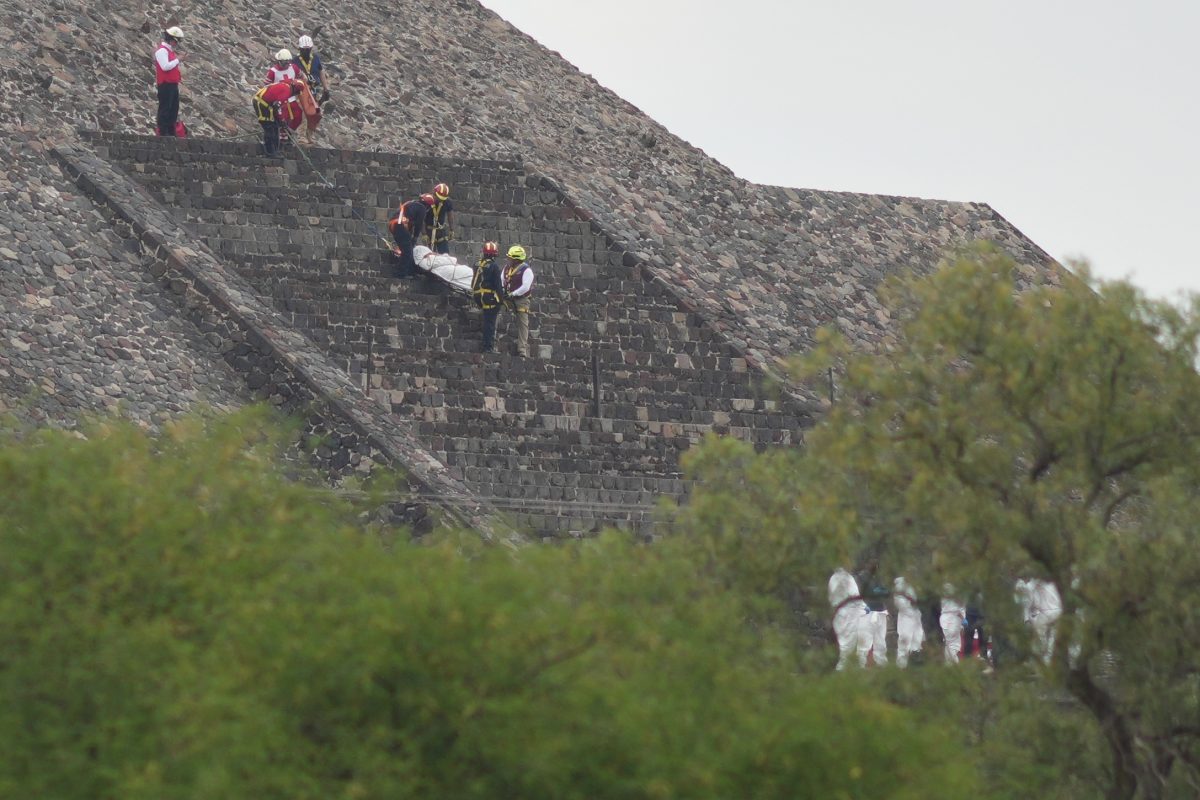
A gunman unleashed a violent attack at one of Mexico's most iconic archaeological sites on Monday, killing one foreign tourist and wounding thirteen others in a rare assault on a major international tourist destination. The shooting occurred at the Pyramid of the Moon within the Teotihuacan complex, a UNESCO World Heritage site located just northeast of Mexico City.
Chaos at the Pyramid
The attack began shortly after 11:30 a.m. local time, as dozens of visitors were atop the ancient structure. According to witness accounts provided to the Associated Press, the armed assailant, identified by authorities as 27-year-old Mexican national Julio Cesar Jasso Ramirez, first fired shots into the air before turning his weapon downward toward tourists descending the pyramid's steps. The incident caused immediate panic, with several people falling as they tried to flee.
Of the fourteen total casualties, seven individuals suffered direct gunshot wounds. The circumstances surrounding the injuries to the other six victims remain unclear, though they are believed to have been hurt during the ensuing scramble. The victims ranged in age from 6 to 61 years old, highlighting the indiscriminate nature of the violence. The local government confirmed the deceased was a Canadian national. Those hospitalized for treatment included six American citizens, three Colombians, one Russian, two Brazilians, and the fatally wounded Canadian.
International and Political Repercussions
Mexican President Claudia Sheinbaum responded to the tragedy on social media, stating, "What happened today in Teotihuacán deeply pains us. I express my most sincere solidarity with the affected individuals and their families." The attack strikes at the heart of Mexico's vital tourism industry and raises immediate questions about security at high-profile cultural landmarks. The Teotihuacan pyramids, built by pre-Columbian civilizations, are a cornerstone of Mexico's cultural heritage and drew over 1.8 million international visitors last year.
This incident adds to a troubling pattern of violence affecting both locals and foreigners in Mexico. It follows other high-profile tragedies, such as the recent crash that killed U.S. Embassy personnel after a joint counter-narcotics operation. The shooting also echoes domestic gun violence challenges faced in the United States, including the recent incident near the University of Iowa that injured five, and the devastating Shreveport domestic shooting that left eight children dead.
Authorities reported that the suspected gunman, Jasso Ramirez, died at the scene from a self-inflicted gunshot wound. His motives remain unknown, and an investigation is ongoing. The National Institute of Anthropology and History announced the immediate and indefinite closure of the entire Teotihuacán archaeological zone.
Broader Security and Diplomatic Context
The attack on a globally recognized heritage site represents a significant escalation in targets for public violence in Mexico. It occurs amid complex security cooperation between Mexico and the United States and could impact bilateral discussions on tourism safety and law enforcement. The involvement of multiple nationalities among the victims ensures the event will have diplomatic ramifications, potentially straining relations as investigations proceed.
For President Sheinbaum's administration, the shooting presents a serious security and public relations challenge, testing the government's ability to protect both citizens and the economically crucial tourism sector. The closure of Teotihuacan deals a direct blow to local economies dependent on visitor spending and may affect international travel advisories. The event underscores the persistent difficulty of preventing isolated, unpredictable acts of violence even at heavily monitored locations.
As forensic teams worked to process the scene on the pyramid steps, the broader implications for Mexico's international image and internal security policies began to crystallize. The incident serves as a grim reminder that geopolitical stability and public safety are inextricably linked, influencing everything from national defense postures to international cultural exchange.