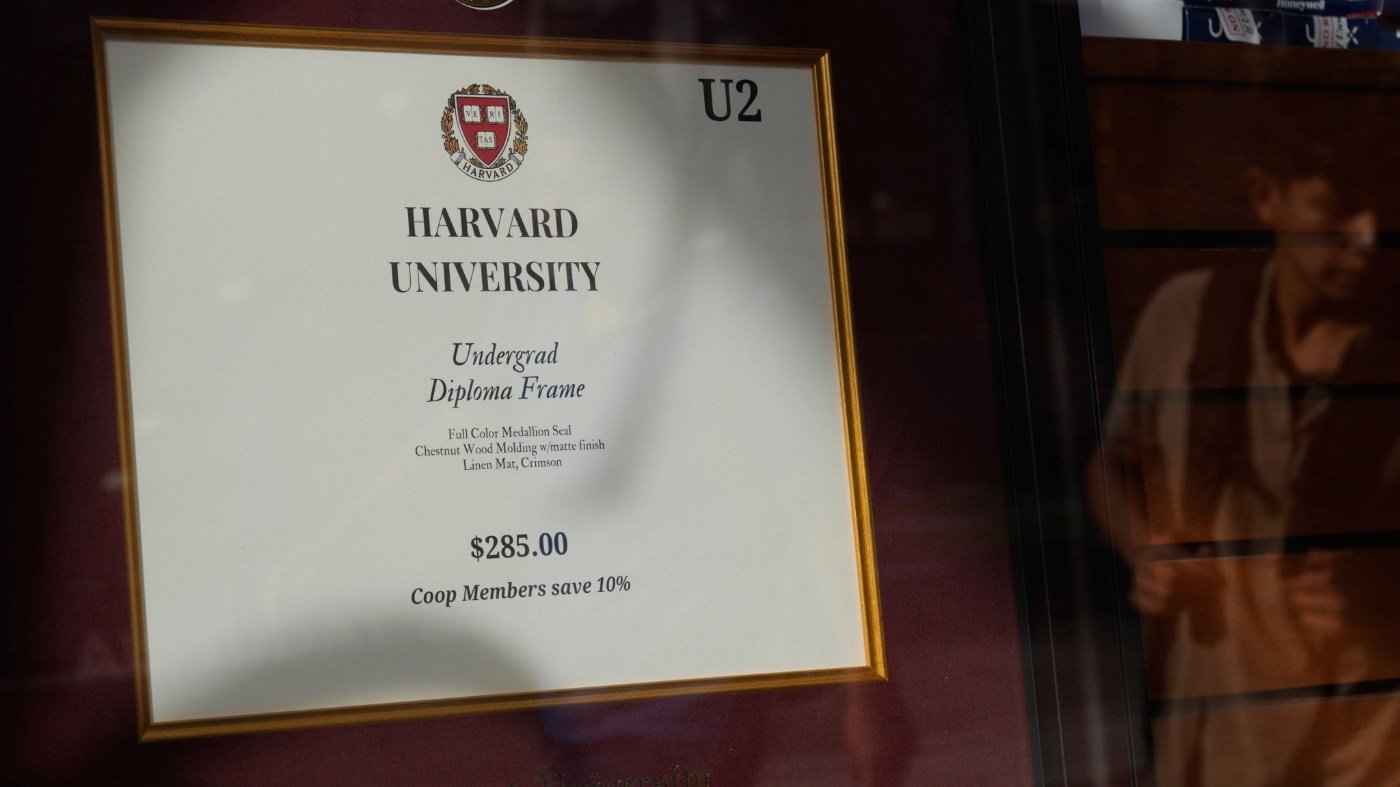
As early decision applications flood in this fall, families are committing to hefty tuition bills with the promise of a degree that once guaranteed a certain level of competence. But a closer look at grading trends and student effort over the past six decades raises a pointed question: What does a diploma actually certify today?
Two parallel trends tell the story. The first is grade inflation. Researchers Stuart Rojstaczer and Christopher Healy compiled grading data from U.S. colleges back to 1940. In 1960, the most common grade was a C, with D's and F's outnumbering A's. By the late 2000s, A's had become the norm, accounting for about 43% of all letter grades—a near tripling of their 1960 share. Elite institutions have pushed the envelope even further: Harvard's own figures show A's rose from 24% of grades in 2005 to 40% in 2015 and a stunning 60% by 2025.
Princeton attempted to resist the trend in 2004 by capping A-range grades at 35% per department, but faculty voted to abandon the policy a decade later amid student complaints that it hurt their competitiveness against peers from more lenient schools. A university review found no measurable harm from the cap, but perception trumped evidence. Once most schools inflate, a honest grading policy looks like a penalty, and few institutions can sustain it.
Harvard is now trying a different approach: in May, its faculty voted 458-201 to limit A's to 20% of each course's enrollment plus four students, starting in fall 2027. Whether that holds remains to be seen.
The second trend is effort. Economists Philip Babcock and Mindy Marks analyzed half a century of time-use surveys and found that full-time students in 1961 spent about 40 hours per week on class and studying. By 2003, that figure had dropped to 27 hours. The decline was broad-based, not explained by students working more, changing majors, or demographic shifts. In the same decades that A's nearly tripled, the work behind them fell by roughly a third.
Direct measures of learning point in the same direction. Richard Arum and Josipa Roksa tracked students at two dozen four-year colleges through the Collegiate Learning Assessment in 2005, 2007, and 2009. After four years, 36% showed no significant improvement. That's just one cohort, but it undermines the defense that today's students are simply better prepared. If A's of 2008 represented more learning than those of 1960, students should be working harder and testing better—they're doing neither.
The implications extend far beyond campus, because a grade and a degree are pieces of information. Economists like Bryan Caplan argue that much of a degree's value lies in its signaling function: it tells employers that the holder is reasonably able, conscientious, and willing to finish what they start. But a signal only works if it's scarce. When nearly everyone has a degree—and nearly all grades are A's—the signal becomes noise. Employers respond by demanding bachelor's degrees for jobs that don't require them, or by leaning on proxies like school prestige or personal connections. Each student rationally seeks the credential, but collectively, society pays more for a signal that tells less.
This isn't an argument for federal grading standards or a mandated curriculum. The four-year degree bundles at least three distinct things: real skill, which could be delivered by shorter, rigorous programs; a signal, which could be provided by portable certifications employers assess themselves; and a period of maturation, which apprenticeships, service, or work could also offer. The bundle persists largely because federal student aid is tied to it, and institutions have every incentive to keep it intact. Remove the subsidy, let the pieces compete, and the diploma would have to start measuring something again—or lose its customers.
Families signing checks this fall are paying a premium for a transcript where the top grade is now ordinary. They deserve to know what they're buying—and whether it's still worth the price.
For more on how credentialing is reshaping the workforce, see bipartisan immigration measures and subnational diplomacy trends.