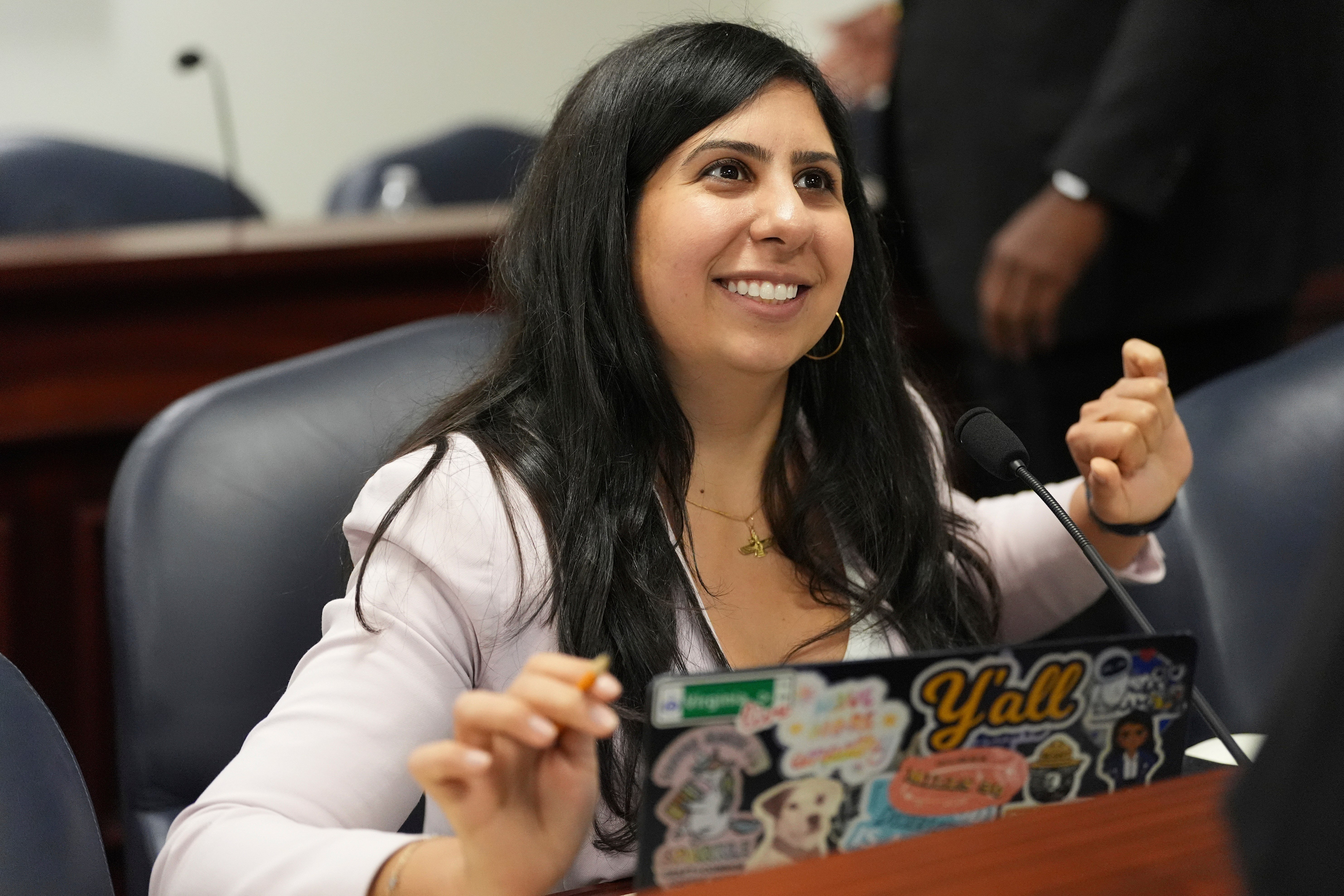
As the Nov. 3 midterms approach, Anna Eskamani is quietly building a mayoral campaign in Orlando that could give progressives another foothold in the Sunbelt. If she wins next year, the city of 340,000 would join a small but growing list of municipal outposts where the left has gained traction in an otherwise red region.
Eskamani, a 36-year-old state legislator term-limited after eight years, is modeling her effort on New York City Mayor Zohran Mamdani's victorious 2025 campaign. She has adopted his organizational playbook—door-knocking, small-dollar fundraising, and a relentless focus on economic fairness. Her campaign reports more than 33,000 doors knocked by January 2026 and a $1.4 million war chest, mostly from $50 and $100 donations.
“Power matters only if you use it to make life better for people and close the gap between what people earn and what it costs to live here,” she told me after Orlando magazine named her the third most powerful person in the city. “That's the work I've done in Tallahassee, and it's the work I'll bring to City Hall.”
Her optimism is infectious. Volunteers like Elly Kennedy, a realtor who met Eskamani at Planned Parenthood in the mid-2010s, describe her as “hard-working” and “always smiling.” Kennedy added, “I am a fan of her philosophy that we build from the ground up. It's really a good feeling to have hope.”
Longtime Democratic consultant Dick Batchelor recalls being impressed when Eskamani first ran in 2018: “Even then she had firm grasp of the legislative issues. She had basically prepared herself for the legislative race, unlike other first-time candidates.” He notes she's “very generous with her political capital,” mobilizing her network for Democratic turnout even though she's not on this cycle's ballot.
University of Central Florida political scientist Aubrey Jewett, who taught Eskamani as an undergraduate and served on her dissertation committee, says she has “the ‘rizz'—charisma. She's good at explaining things in a non-technical way. She has a magnetic personality and a compelling personal story.”
Eskamani's rise has been notable. She was one of 48 first-time women candidates on a 2018 Time magazine cover, and The Atlantic's David Graham presciently wrote that if she won, she'd “join a class of progressive candidates whose elections will reshape the Democratic Party.” She did win, endorsed by Barack Obama, Orlando Mayor Buddy Dyer, and the state AFL-CIO, and was reelected three times by healthy margins.
Unlike Mamdani, Eskamani is not a DSA member and eschews ideological labels. She supports a two-state solution in Israel/Palestine but calls the Gaza war genocide, acknowledging “a difficulty for my Jewish brothers and sisters.” Yet she has faced few campaign trail questions on the issue, which has tripped up other Mamdani imitators.
Her personal story shapes her politics. Her parents fled Iran as teenagers, members of the Baha'i faith, and met in Orlando. Her mother's cancer death when Anna was 13 left a deep imprint. “I had a very challenging but loving childhood,” she says. “I grew up watching my parents work multiple jobs just to keep up, and too many families here are living that same story right now.”
That resilience, she says, comes from her mother's love. “That was the unshakable core for me, the level of love she had for me.” Her father worked as a waiter while studying electrical engineering at UCF, often leaving the country for long stretches. Eskamani's campaign is a testament to that journey—and a test of whether the Mamdani model can travel south.