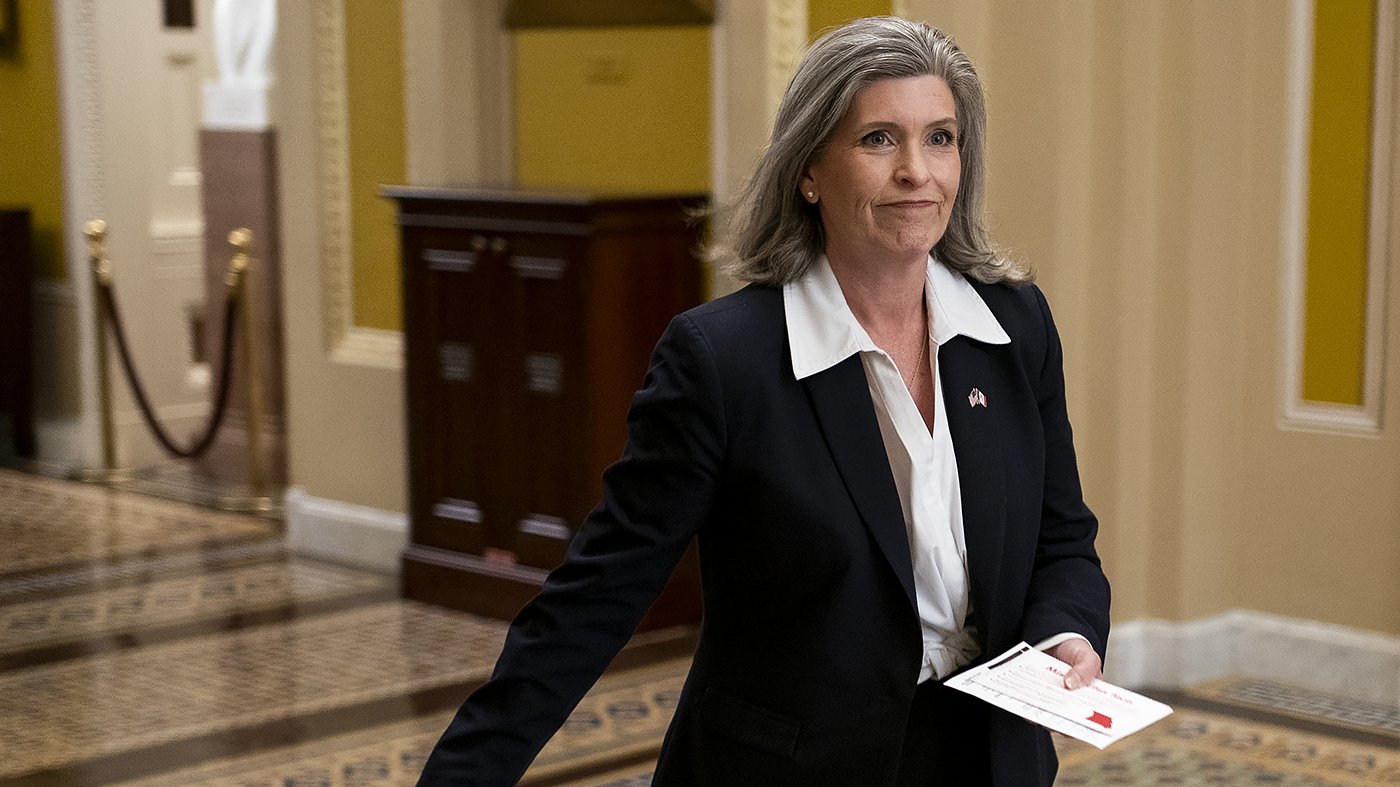
Republican Senator Joni Ernst of Iowa cast doubt Thursday on the preliminary agreement between the United States and Iran, warning that the deal risks repeating the failures of the 2015 nuclear pact. Speaking to NewsNation, Ernst said the administration must provide a thorough explanation of the terms, noting that the original Joint Comprehensive Plan of Action (JCPOA) had serious flaws.
“They’re going to have to come explain this because we did have very serious problems with the JCPOA. I don’t want to see JCPOA 2.0,” Ernst told The Hill’s broadcast partner. The senator, who serves on the Senate Armed Services Committee, pressed for details on how the new memorandum of understanding (MOU) differs from the Obama-era accord that President Donald Trump dismantled during his first term.
White House officials briefed reporters Wednesday on the 14-point MOU, which aims to reopen the Strait of Hormuz and end the prolonged conflict. The deal includes a $300 billion fund for Iran’s reconstruction and economic development—a provision that has sparked sharp questions from Republican lawmakers.
“I have to know where that money is coming from because I don’t think my constituents are going to be really happy about it if that’s all U.S. taxpayer dollars,” Ernst said. “If it is their money that we are releasing, that might be a different story.”
Mississippi Senator Roger Wicker echoed those concerns, drawing a direct line to the JCPOA. He argued that the reconstruction fund would dwarf what he called Iran’s “payoff” under the 2015 deal, making it look “like a pittance by comparison.” Wicker’s comments come amid broader GOP skepticism, as several Republican senators have blasted the Iran Strait deal as a 'JCPOA-Plus' blunder.
Vice President JD Vance pushed back against the criticism during a press briefing at the White House on Thursday. He described many of the reported concerns as “fundamentally untrue” and urged lawmakers to “have a little faith” in the president’s judgment.
“So many of what I’ve read or heard that people believe about this is fundamentally untrue,” Vance told reporters. He framed the agreement as a mechanism to “reward good conduct and punish bad conduct,” and dismissed the notion that Trump would strike a deal harmful to American interests.
“The idea that he is going to strike a deal that’s been bad for the American people, it’s preposterous,” Vance added. “He is the person who has had the courage to fundamentally transform our relationship with Iran and with a lot of other countries over the last year and a half.”
The deal, negotiated remotely and signed earlier this week, has faced a wave of Republican opposition. Trump's Iran deal faces a Republican revolt over secrecy and nuclear loopholes, with lawmakers demanding more transparency on the terms. Ernst’s call for answers underscores the deepening divide between the White House and its own party on foreign policy.
As the administration works to sell the agreement, the $300 billion fund remains a flashpoint. Ernst and other senators are pressing for a clear accounting of whether the money comes from U.S. taxpayers or from frozen Iranian assets. The outcome could shape the debate as the MOU moves toward formal ratification.