President Trump's effort to end the war with Iran is facing a mounting political storm, as Republican lawmakers and conservative commentators voice deep unease over the secretive memorandum of understanding (MOU) set to be formally signed in Switzerland on Friday. The agreement, already electronically signed by senior officials in Washington and Tehran, has not been made public, fueling speculation and leaks that have alarmed hawks within the president's own party.
Trump promised on Tuesday to go through the MOU "word by word" in public, but only in "the next couple of days," leaving a vacuum filled by fear and unverified text. Republican senators, particularly those with a hawkish worldview, are struggling to contain their discontent. Senate Majority Leader John Thune (R-S.D.) told reporters he didn't "know enough about it to say" whether it was a good deal, while Sen. Roger Wicker (R-Miss.) offered only a terse "I'm withholding comment." Sen. Lindsey Graham (R-S.C.) bluntly stated, "I want to see it myself."
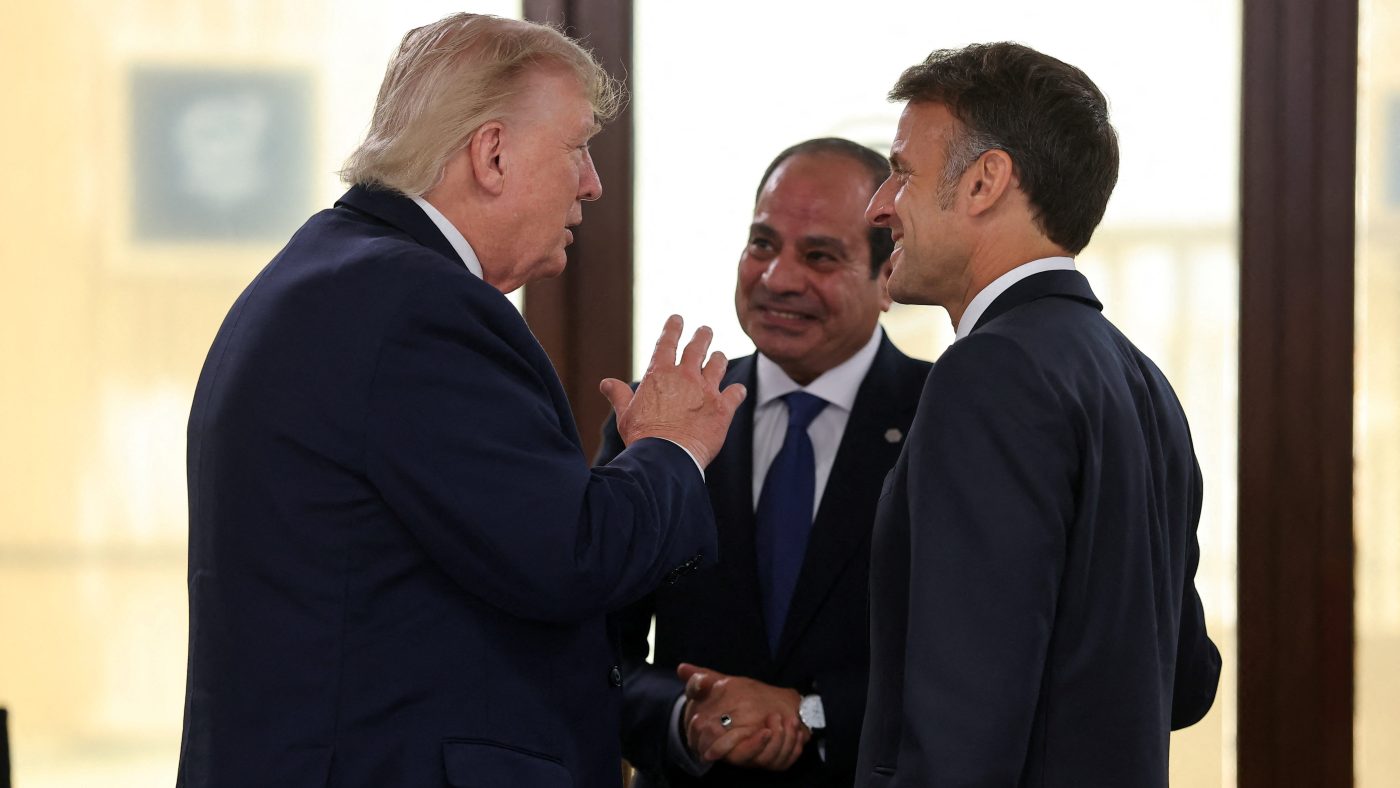
Trump, attending the Group of Seven (G7) conference in France, dismissed Graham's skepticism, warning, "I'll have to talk to Lindsey. He'll be in big trouble." The president's casual hope that the war would soon be "in the rearview mirror" contrasts sharply with the unease among allies like Israel, whose officials have reportedly been denied access to the MOU, a move they view as shabby treatment of a key partner.
Democrats and liberals are largely content to let the disarray on the right play out. Their stance, in essence, is that Trump plunged into a reckless and unnecessary war from which he is now willing to pay almost any price to escape. This sentiment echoes broader criticism that the administration's handling of the conflict has been chaotic from the start.
At the heart of the controversy is the MOU's handling of Iran's nuclear enrichment program. The agreement reportedly kicks the central issue down the road, to be decided in new talks during a 60-day ceasefire extension. Trump has claimed victory, asserting on social media that "Iran has agreed to never have a Nuclear Weapon!" But critics note that Iran has repeatedly made similar claims in the past, and the 2015 Joint Comprehensive Plan of Action (JCPOA) already included such a commitment, along with International Atomic Energy Agency monitoring. The new deal lacks specific verification mechanisms, raising doubts about its enforceability.
Conservative commentators have been particularly vocal. Washington Post columnist Marc Thiessen wrote that if the leaked MOU is accurate, "it's a complete disaster." National Review editor Philip Klein pushed back on White House claims of inaccurate reporting, writing, "Then release the text! This game is embarrassing." Commentary magazine editor John Podhoretz lamented, "There is no person on earth who is going to say that America didn't lose this war! There is nobody!"
Other concerns include the MOU's silence on Iran's support for proxy groups like Hamas and Hezbollah, which had been a key U.S. and Israeli war aim. The deal also reportedly includes sweeping sanctions relief and a $300 billion fund from regional partners to help Iran rebuild. Additionally, it calls for an end to fighting on all fronts, including Lebanon, where Israel has launched an offensive against Hezbollah, putting Prime Minister Benjamin Netanyahu in a difficult position.
Despite the backlash, Trump appears impervious to criticism, focused on ending the war to ease inflationary pressures and lower gas prices ahead of the midterms. Vice President Vance, once a vocal skeptic of the war, has emerged as the deal's chief defender, a twist that has not gone unnoticed. As the signing ceremony approaches, the administration's strategy seems to hinge on the belief that voters care more about prices at the pump than the finer points of Iranian uranium enrichment. But whether that calculus holds remains an open question.