The world of scientific research is entering what some are calling the 'steroid era' of discovery, where generative AI tools like Claude and ChatGPT are enabling researchers to produce results and manuscripts at a pace that far outstrips the ability of human peers to review them. This shift, while remarkable, raises fundamental questions about the future of human expertise and the integrity of the research enterprise.
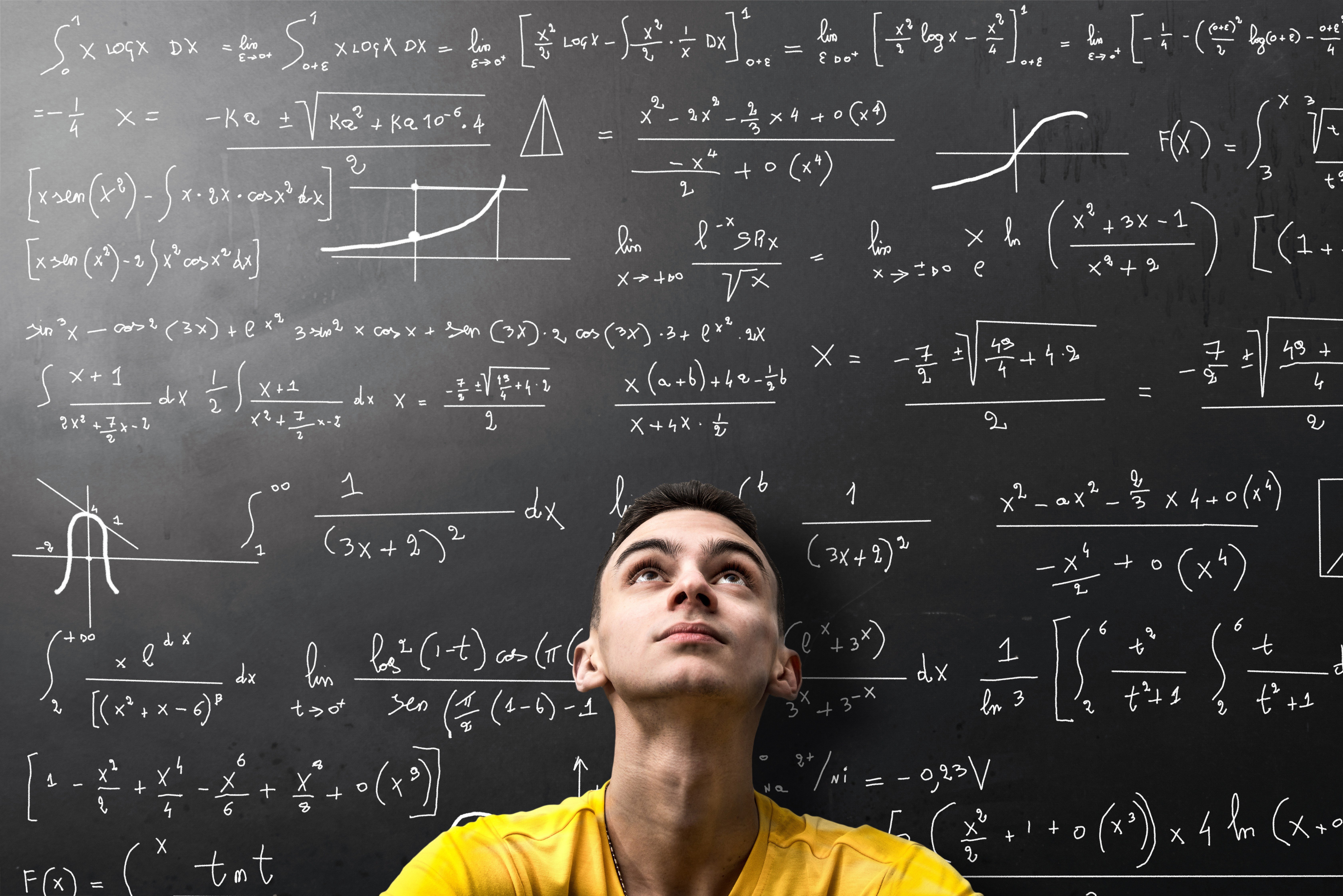
In recent months, AI systems have been credited with proposing solutions to long-standing mathematical problems, including the Navier-Stokes Millennium Problem and the Riemann Hypothesis. OpenAI, for instance, deployed 10,000 algorithmic agents to tackle Navier-Stokes, generating a 166-page proof that has left mathematicians struggling to verify its details. Similarly, an Anthropic mathematician has claimed to resolve the Riemann Hypothesis, and OpenAI has expanded its ChatGPT for Academic Researchers program, offering free access to up to 200,000 faculty and students.
But the cost of these breakthroughs is steep—both financially and intellectually. The Navier-Stokes effort is estimated to have cost up to $15 million, far exceeding the $1 million prize for a correct solution. More critically, as political dynamics shift, the scientific community must confront a paradox: AI can provide answers, but humans may lose the deep comprehension that comes from grappling with problems themselves.
This is not simply a matter of automation, like the arrival of calculators or symbolic math software. Those tools handled routine computation, allowing researchers to focus on higher-level reasoning. GenAI, however, automates the reasoning process itself. As Sheldon H. Jacobson, a computer science professor at the University of Illinois Urbana-Champaign, puts it, working through a mathematical problem is like weightlifting for a bodybuilder—if the dumbbell weighs only two pounds, the lifter gains little benefit. The cognitive struggle essential for developing research skills is being bypassed.
The implications for young researchers are profound. They will need to adapt to this new model, leveraging AI's capabilities while finding ways to maintain their own intellectual growth. Academic promotion criteria, which often rely on publication output, will need to be rethought. Jacobson suggests that oral interviews and peer cross-examination may become necessary to ensure that researchers truly understand the breakthroughs they co-author with AI.
Meanwhile, the peer-review process is under unprecedented strain. Journals are being flooded with AI-generated manuscripts, overwhelming even the most efficient editorial operations. As the volume of output grows, the ability to vet research for quality and validity becomes increasingly difficult.
The acceleration of discovery is likely to continue, but it will be constrained by data access and computing power, much like the physical limits of Moore's Law. How long this acceleration lasts is uncertain, but it could be years or decades.
This era of AI-driven discovery is unlike baseball's steroid era in one crucial respect: no researchers will be banned from participating. Yet, as we witness a cascade of candidate breakthroughs, we must ask ourselves: if AI does all the heavy lifting, what happens when human intellect loses its muscle?