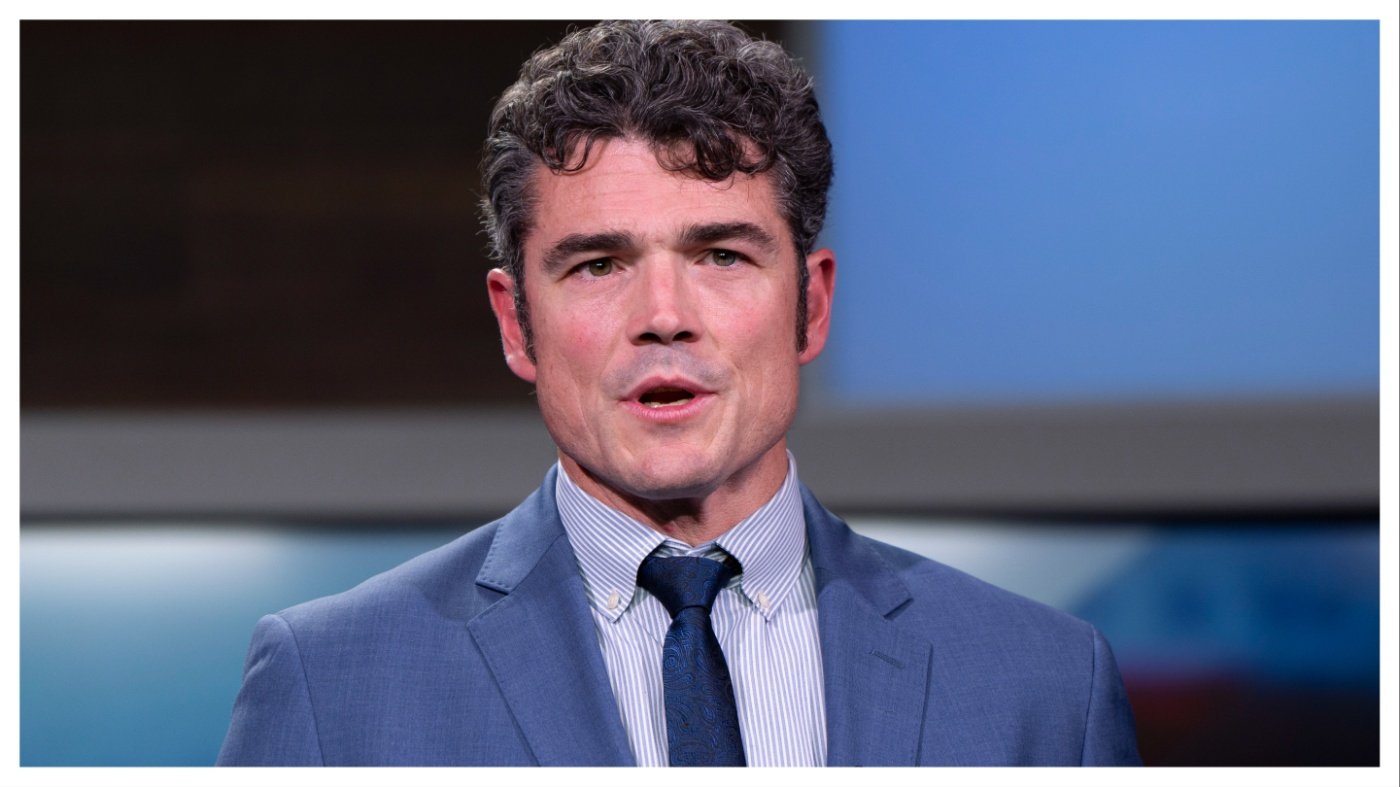
Joe Kent, the former director of the National Counterterrorism Center, has issued a stark warning to the Trump administration against any military deployment to seize Iran's Kharg Island, labeling such an operation a potential "disaster" for U.S. forces.
In an interview, Kent argued that placing American soldiers on the strategically vital but isolated island would essentially hand Iran a large group of vulnerable hostages. "It would essentially be giving Iran a bunch of hostages on an island that they could barrage with drones and missiles," Kent stated, highlighting the severe tactical disadvantage U.S. troops would face.
The Strategic Stakes of Kharg Island
The warning centers on Kharg Island's outsized role in Iran's economy and the ongoing regional conflict. The facility handles approximately 90 percent of Iran's oil exports, making it the financial lifeline of the Tehran regime. Its capture or disabling has been discussed in Washington as a potential decisive blow.
This debate occurs against a volatile backdrop. President Trump recently announced a five-day pause on U.S. strikes targeting Iranian energy infrastructure. This followed an Israeli attack on Iran's South Pars gas field last week, which prompted immediate retaliation from Tehran against energy assets in Qatar, Saudi Arabia, and the United Arab Emirates.
The cycle of strikes has roiled global oil markets, sending crude prices spiking and intensifying international pressure for a ceasefire to restore energy security. The administration's recent signals of a potential de-escalation in the Strait of Hormuz crisis contrast with continued hawkish rhetoric from some quarters.
Graham's Push for Invasion
Leading the charge for more aggressive action is Senator Lindsey Graham (R-S.C.), a longtime foreign policy hawk. Graham has publicly urged President Trump to order an invasion of Kharg Island specifically, arguing it would cripple the Iranian government without a full-scale ground war. "Mr. President, take Kharg Island, this war is over," Graham declared during a television appearance.
He contends that seizing the island would topple the regime in Tehran, a goal the Trump administration has explicitly denied is a core objective of its current military campaign. This divergence highlights a growing rift within Republican foreign policy circles over the scope and aims of U.S. involvement, a tension also visible in the recent Georgia runoff debate where candidates split sharply on the Iran war.
Kent's warning underscores the significant military risks Graham's proposal entails. Isolating a contingent of U.S. forces on a small island in the Persian Gulf would make them exceptionally vulnerable to the very drone and missile arsenals Iran has used effectively throughout the conflict, adding strain to a U.S. military facing mounting operational pressures in its fourth week of sustained engagement.
The administration's current pause and Kent's caution suggest a recognition of the conflict's dangerous escalatory potential. However, with figures like Graham applying pressure and Iran's economy hinging on Kharg, the island remains a flashpoint. The decision could determine whether the conflict moves toward a negotiated pause or a significant and risky expansion of ground operations.