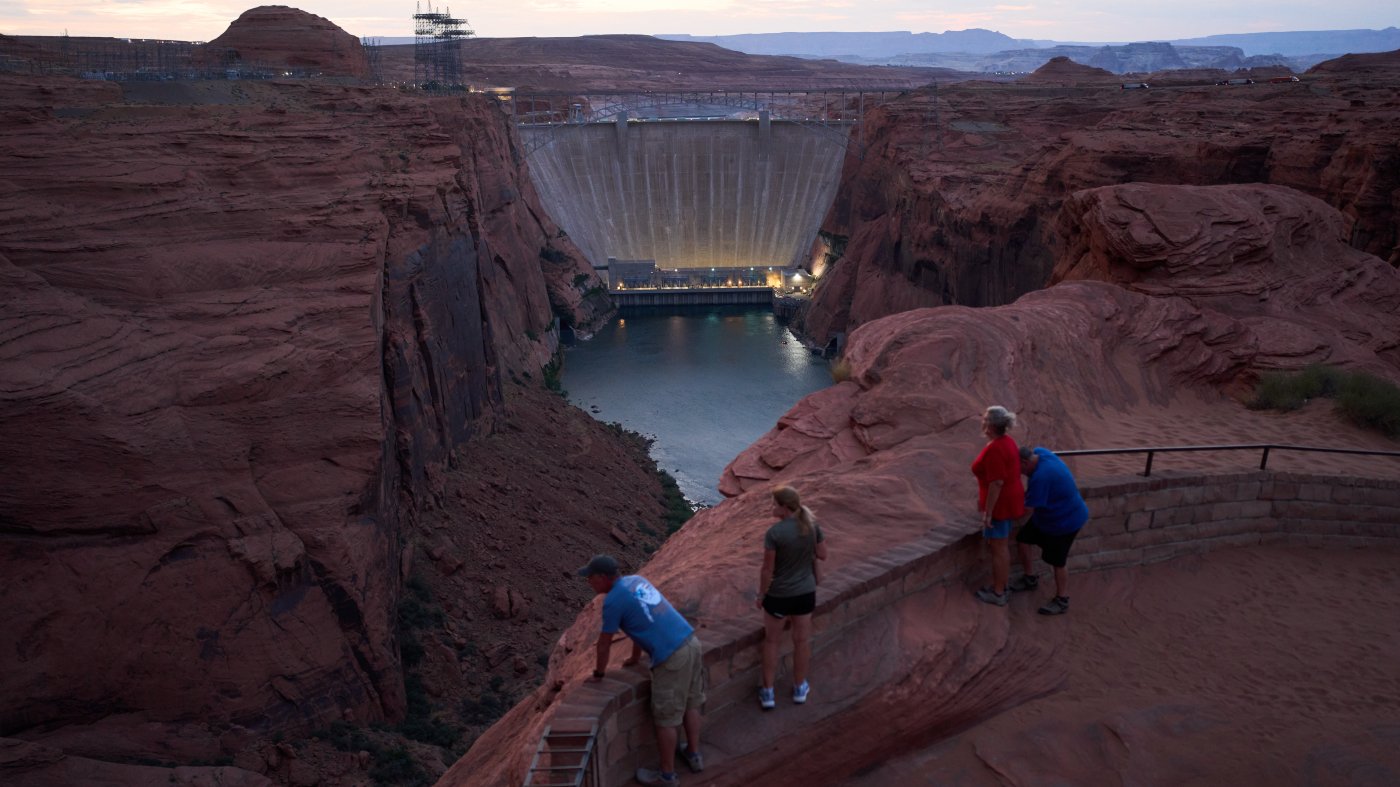
The federal government last week unveiled a new management plan for the drought-stricken Colorado River, but the proposal has ignited a firestorm of criticism from both Democrats and Republicans in the states that depend on the river's water and hydroelectric power.
The river, which has been in a drought for more than 25 years, has seen its reservoirs and aquifers lose a staggering 52 cubic kilometers of water since 2002, according to a recent NASA study. Climate change has intensified the drought, while heavy agricultural use—especially for water-intensive crops like hay—has further strained supplies.
The new plan, proposed by the Interior Department after the seven basin states failed to reach a consensus, would impose potentially steep cuts on Arizona, California, and Nevada—the lower basin states. The maximum reduction could reach 3 million acre-feet per year, a figure far higher than what the states themselves had proposed. However, the Trump administration has stressed that the plan is flexible and will adapt to actual water conditions, though it has not yet specified how deep cuts will be in 2027 and 2028.
Arizona Bears the Brunt
Arizona is expected to be hit hardest. The state's most junior water right in the lower basin supplies the Central Arizona Project Canal, a critical supplemental source for Phoenix and Tucson, according to Jack Schmidt, director of the Center for Colorado River Studies at Utah State University. "The most junior water right in the lower basin, where most of the water is used, is the water that supplies the Central Arizona Project Canal," Schmidt said in an interview before the announcement.
Arizona's Department of Water Resources warned that a cut of 3 million acre-feet per year "would devastate Arizona's water users and its economy." Governor Katie Hobbs (D) called the plan "unacceptable," saying it contains "options that include the federal government forcing Arizona to take the majority of draconian water cutbacks." She vowed to work "around the clock" to advocate for an approach that "distributes water reductions equitably."
Nevada and California Push Back
Nevada's Republican Governor Joe Lombardo also condemned the plan, saying it "seeks to impose unrealistic reductions on Nevada and our water users" and "could have devastating economic and environmental impacts." California, while not issuing an immediate statement, has historically opposed deep cuts that would affect its massive agricultural sector.
Hydropower at Risk
The shrinking river also threatens hydroelectric generation at Lake Mead and Lake Powell, which provide renewable power to the region. The U.S. Bureau of Reclamation recently projected that Lake Powell could fall to a level that jeopardizes power production. Schmidt warned that if reservoir levels drop below a certain threshold, "hydropower gets compromised at both dams."
Malcolm Woolf, president and CEO of the National Hydropower Association, said the situation adds "to the power challenges that that region is already facing." However, he downplayed the risk of blackouts, predicting "a handful of electricity price surges" rather than widespread outages. "It definitely is going to have an impact, but it's probably just a few hours in those hottest summer months," Woolf said.
Political and Economic Stakes
The dispute comes as the 2007 interim guidelines expire at the end of this year, forcing the federal government to step in. The political stakes are high, with governors and lawmakers in the affected states warning of economic devastation. The plan also raises broader questions about Western water policy and the region's ability to adapt to climate change.
Meanwhile, the region's power grid is already under strain, as fossil fuel costs drive up electricity bills and other rivers in the Northern Hemisphere face record lows. The Colorado River's decline underscores the interconnected challenges of water and energy security in the West.