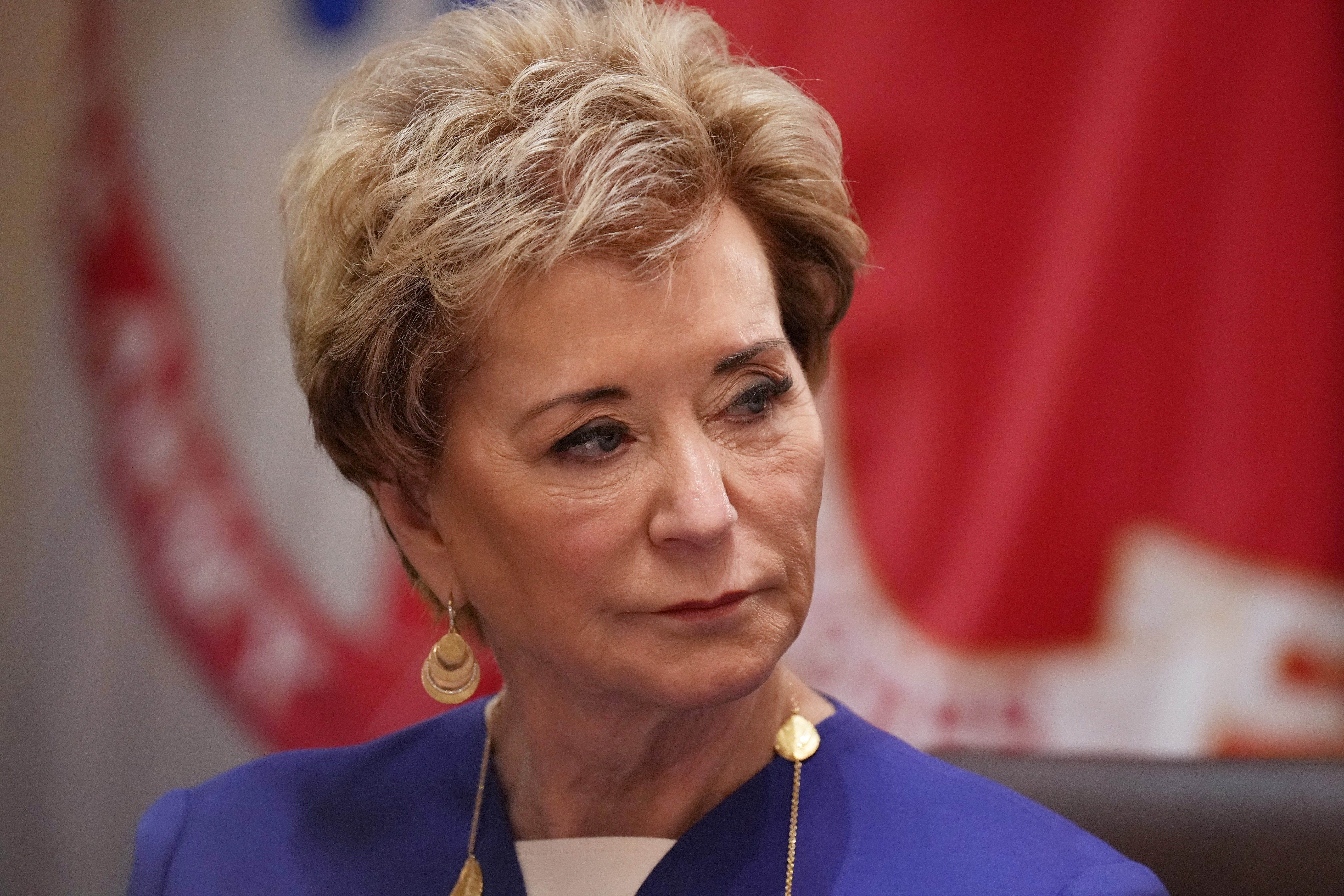
The Trump administration's latest attempt to impose its agenda on higher education is taking a more subtle form than last year's failed compact, but it is already creating fractures among colleges and universities. Education Secretary Linda McMahon has issued a "national call to action," asking every institution to explain how it will ensure merit-based admissions, promote viewpoint diversity, prevent classroom disruptions, control costs, align with workforce needs, curb grade inflation, and resist foreign influence.
Unlike the earlier 10-page compact, which nine top universities unanimously rejected, McMahon's letter contains no explicit quid pro quo. However, a White House official indicated that institutions implementing reforms "could be more likely to be involved in discussions" about federal research funding. This veiled threat has prompted concerns that the administration is using a divide-and-conquer strategy to weaken collective resistance.
Reactions among higher education groups are split. Barbara Snyder of the Association of American Universities called the outreach an "olive branch," while Ted Mitchell of the American Council on Education described it as "an invitation to a conversation," contrasting it with the "gun-to-the-head ultimatum" of the compact. But PEN America and the Alliance for Higher Education view it as "a document designed to divide and weaken higher education," and the American Federation of Teachers and the American Association of University Professors are urging "organized resistance — not preemptive compliance."
Most institutions remain silent, but some are embracing the call. The University of North Carolina system has endorsed it, and all 40 presidents of Florida's public colleges and universities signed a joint letter praising the initiative. Florida Education Commissioner Henry Mack has gone further, warning that institutions ignoring the call should expect "additional statutory requirements, tighter performance expectations, heightened scrutiny of licensure conditions or funding determinations calibrated to demonstrate seriousness." McMahon applauded Florida for "setting a bold example."
In less than three weeks, what was nominally voluntary has become a mandate in Florida, with state sanctions threatened for noncompliance. This could serve as a model for other red states, many of which have already passed legislation aligned with the administration's goals on diversity, equity, and inclusion, faculty governance, curriculum, and tenure. The Heritage Foundation has provided a blueprint for states to condition funding on prescribed policies and conduct periodic "rights audits."
The result is a fragmented response spectrum—from enthusiastic endorsement to cautious engagement to silence—rather than the unified resistance seen last year. Institutions have until December 31 to decide how to respond, and each endorsement provides ammunition for federal and state officials to pressure others.
While the questions McMahon raises about affordability, grade inflation, academic rigor, free expression, and foreign interference are legitimate, the administration's approach risks politicizing research funding and undermining institutional autonomy. As press freedom clashes and other controversies mount, the broader implications for academic independence are concerning.
At a minimum, every college and university should agree on one principle McMahon did not address: the U.S. government should never condition research funding or other benefits on adherence to the political agenda of this or any other administration. This stance is essential to preserving the integrity of higher education and scientific inquiry.