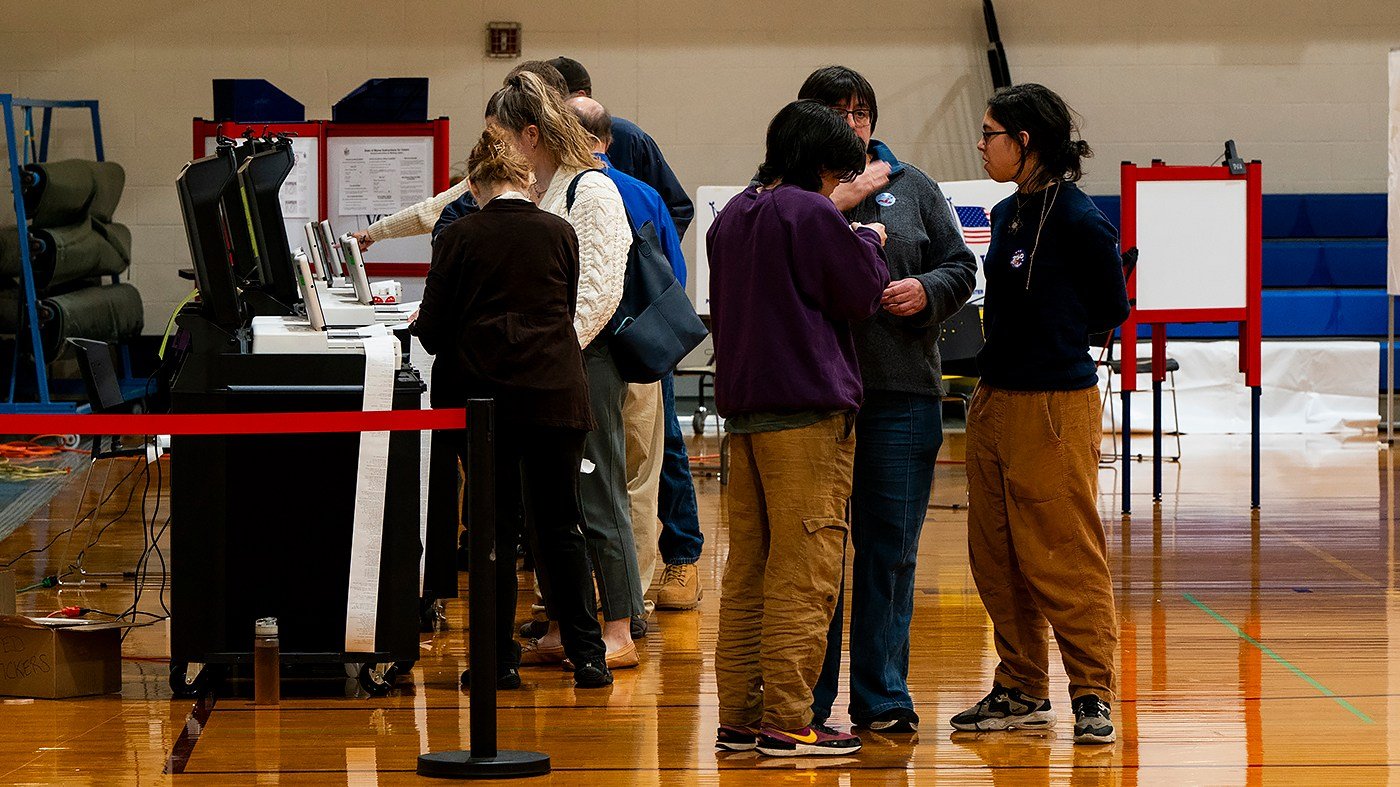
Young voters overwhelmingly sided with Democrats in this year's midterm elections, according to a new national survey that underscores the generational divide reshaping American politics. The Voter Poll from SSRS, conducted in partnership with The Associated Press, found that 73 percent of voters aged 18 to 29 cast their ballots for Democratic House candidates, while just 25 percent supported Republicans.
The survey, which polled more than 81,000 voters between Oct. 19 and Nov. 3, shows a dramatic shift from the 2024 presidential election, when young voters were nearly evenly split between President Trump and former Vice President Kamala Harris. Now, the youth vote appears to have consolidated firmly behind the Democratic Party, a trend that helped fuel the party's sweeping congressional victories.
According to the poll, 14 percent of all Democratic House voters were between 18 and 29, compared with only 6 percent of Republican House voters in that age bracket. The margin of error for the survey is plus or minus 0.5 percentage points.
The results come as Democrats secured control of both the House and Senate, with projections from Decision Desk HQ showing the party winning 261 House seats and 55 Senate seats—a significant gain from their current 214 and 45 seats, respectively. The victories give Democrats the ability to check President Trump's agenda for the remainder of his second term.
The Democratic wave was powered by a combination of factors, including the unpopular war in Iran, President Trump's declining approval ratings, and persistent concerns about the cost of living. These issues weighed heavily on Republican candidates, particularly among younger voters who cited economic anxiety and foreign policy as top priorities.
For Democrats, the midterm success marks a remarkable turnaround from the aftermath of the 2024 election, when the party was mired in internal strife and soul-searching. The strong youth turnout suggests that the party's messaging on economic fairness and opposition to the Iran war resonated with a generation that had previously shown signs of political volatility.
Political analysts note that the youth vote could have lasting implications. As the GOP's midterm rout tied to Iran war showed, anti-war sentiment was a major driver for young voters, many of whom stayed home in previous cycles but turned out in force this time. The shift is also reflected in state-level ballot measures, such as Nevada voters enshrining abortion rights, which drew strong support from younger demographics.
Republicans now face a strategic challenge in winning back the youth vote. With the next presidential election cycle already looming, the party must address the issues that drove young voters away, including the unpopular war and economic pressures. Meanwhile, Democrats are likely to build on this momentum, leveraging the youth vote as a core pillar of their coalition.
The SSRS poll's findings align with other post-election analyses, which show that young voters were pivotal in key battleground districts. As the political landscape continues to evolve, the youth vote's decisive role in the 2026 midterms will be studied for years to come.