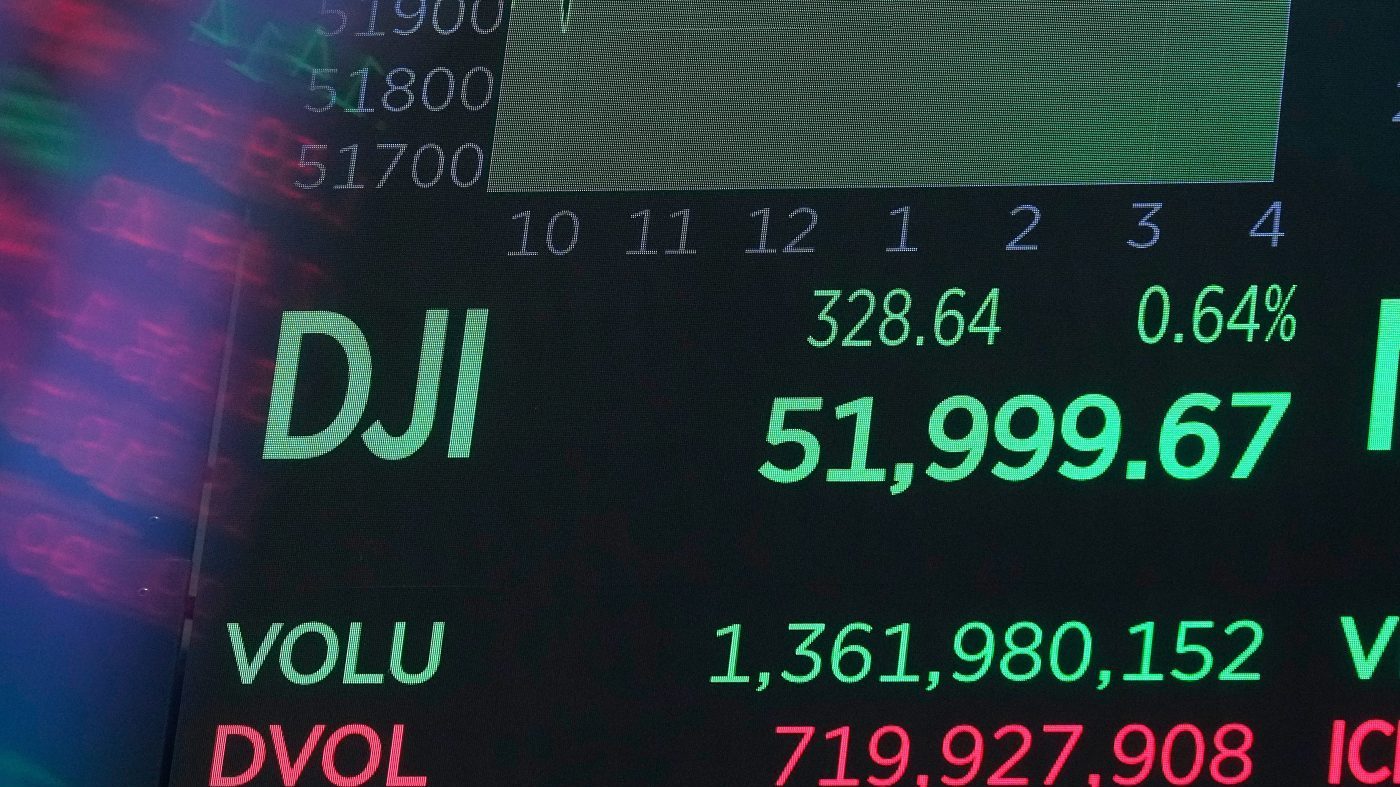
U.S. stock futures surged on Wednesday as investors digested the Democratic Party's decisive midterm victory, which handed the party control of both chambers of Congress and multiple governor's mansions. The Dow Jones Industrial Average futures were up more than 1,150 points before the opening bell, a gain of over 2 percent from Tuesday's close. S&P 500 and Nasdaq composite futures also climbed, gaining more than 90 and 120 points respectively. By late morning, the Dow futures had risen 1,416 points, with the S&P 500 and Nasdaq futures up 117 and 290 points.
The election results broke the GOP's grip on Washington, delivering a stinging rebuke to President Trump and his agenda. Investors, however, largely welcomed the outcome, as the prospect of a divided government often signals legislative gridlock, which markets tend to view favorably.
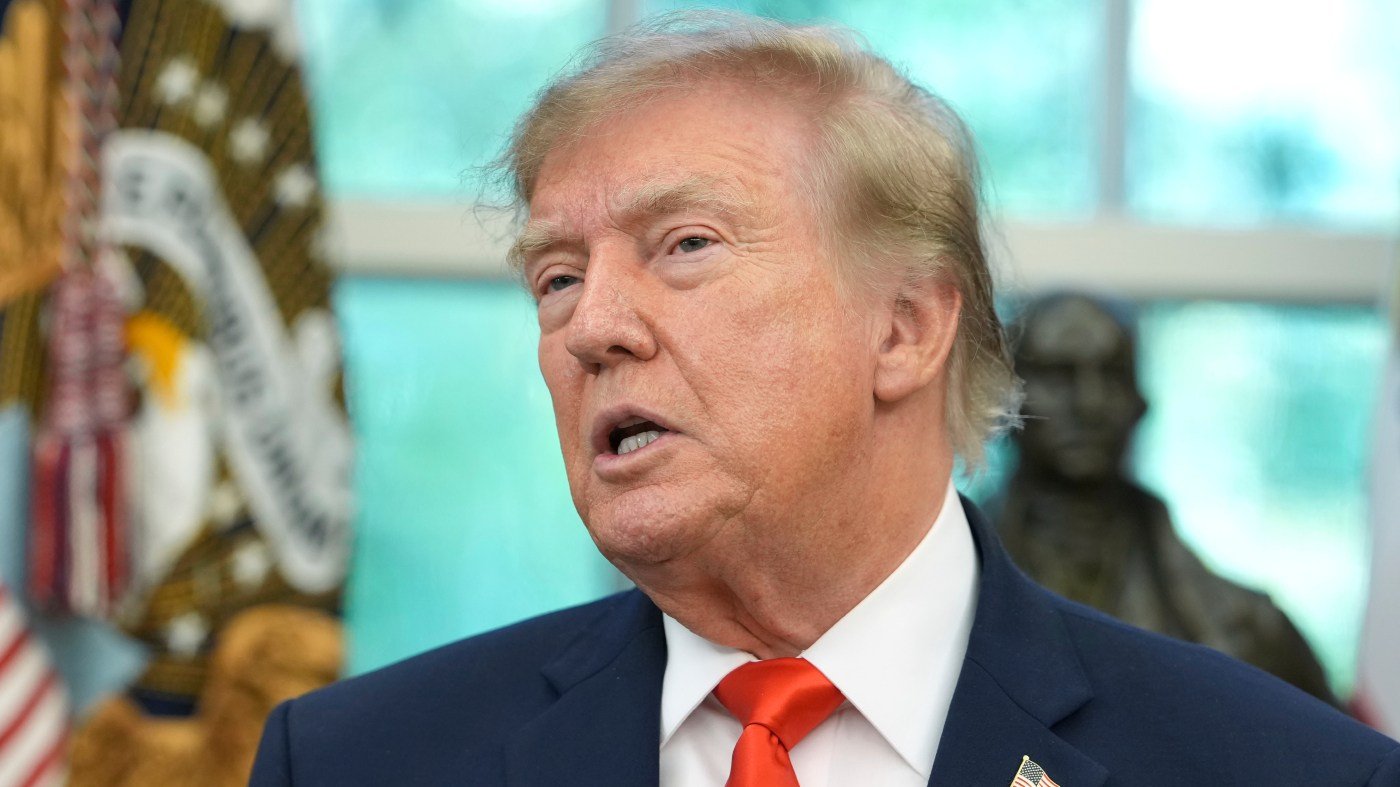
“Wall Street loves divided government, because typically divided government doesn't do anything, and it's very much the case in this particular situation that it's going to be very hard to do anything affirmative during the last two years of Trump's administration,” said Daniel Alpert, executive chair at Westwood Capital, in an interview with The Hill.
Liz Ann Sonders, chief investment strategist at the Schwab Center for Financial Research, argued on Schwab Network that the “decisive” nature of the election allowed investors to “look forward” to what's in store for the economy, rather than remain fixated on the uncertainty of the campaign season.
The Democratic platform centered on affordability, with candidates blaming Trump and Republicans for high gas prices amid the ongoing conflict with Iran and persistent inflation. That message resonated with voters, as Decision Desk HQ has called 249 House and 54 Senate seats for Democrats as of midday Wednesday. The party also flipped several governor's mansions, including in Texas, where Gina Hinojosa won, and in Ohio, where Sherrod Brown secured a Senate seat.
Beyond economic concerns, voters sent a clear signal on the explosive growth of data centers. Of the 44 ballot measures related to data center construction, voters backed restrictions in 37 instances, with the restrict position leading in six other cases, according to data from Redbud Consulting. This anti-expansion sentiment was echoed by Democratic candidates like Brown and Hinojosa, who campaigned on reining in the AI build-out. Investors took note, as shares of tech giants like Nvidia and Elon Musk's SpaceX were down late Wednesday morning.
“The AI industry has clearly benefited from a hands-off approach by the Trump administration, which is very unlikely to be continued by a Democratic Congress,” Alpert noted. He warned that if the AI industry faces a “disruption” from the next Congress, the gains in stock futures could reverse.
“Long story is it's a pop,” Alpert, who has shorted the market, said of the surge. “People are going to buy into that pop because the divided government argument, and then we're going to see what really happens.”
Bond yields also dipped in the aftermath of the Democratic sweep. The 10- and 30-year U.S. Treasury yields were down by roughly 4 and 3 basis points, respectively, as of late morning. These notes have climbed this year amid concerns over the federal government's mounting debt and rising oil prices tied to the Iran conflict, which had fueled a sell-off.
On the campaign trail, Democrats vowed to lower prices by restricting Trump's tariff authorities, pressing him to wind down the Middle Eastern conflict, and tackling rising healthcare costs. Sonders argued that if lawmakers succeed in bringing down costs, the effects could ripple through the markets. “To the extent that there is success in bringing the cost of living down, which is how constituents typically categorize, what we categorize as inflation and the various metrics measuring that … I think it would generally be seen as a positive for both the economy and the equity market,” she said.
However, Alpert cautioned that Trump could derail the stock futures' “pop” during the lame-duck session. The president told Politico's Dasha Burns on Tuesday night he will “take a look” at potential next steps in the war, which is now in its eighth month. Roughly 6 in 10 voters said Trump made the wrong decision to take military action against Iran, according to NBC News exit polling. Despite that rebuke, Alpert noted that Trump could “assert himself in ways that nobody can really anticipate” until the next Congress. “Oil, I believe, will actually likely resolve itself fairly quickly unless [Trump] starts dropping bombs,” he said.
As the political landscape shifts, Democrats are already planning an aggressive agenda. The party's expanded Hispanic Caucus and flipped House seats signal a broader mandate. Meanwhile, Democratic leaders have vowed to crack down on AI and tech, and Schumer is set to press the party's advantage as the GOP reels.