The Federal Aviation Administration has stipulated that President Trump's proposed Triumphal Arch in Washington, D.C., must be topped with an “eternal flame” and illuminated by floodlights to ensure it is visible to pilots operating in the busy airspace around the nation's capital.
In a statement Saturday, an FAA spokesperson said the agency's determination includes conditions for the arch to be “appropriately marked with a non-standard eternal flame on top of the structure and floodlight projectors pointed towards the Arch to make it noticeable for pilots.” The requirement was part of a hazard study released Friday, which concluded that the arch “would not pose a hazard to aircraft” after a review of airspace, traffic patterns, and procedures around Ronald Reagan Washington National Airport and nearby military and public-use airports.

The FAA had previously indicated that the arch would need red obstruction lights similar to those on the Washington Monument, but the latest hazard report omits that requirement, according to the New York Times. Instead, the agency's letter to the National Park Service specifies that the searchlight projectors accompanying the eternal flame should “provide an average illumination of at least 15 foot-candles (161.46 lux) over the top one-third of the structure.”
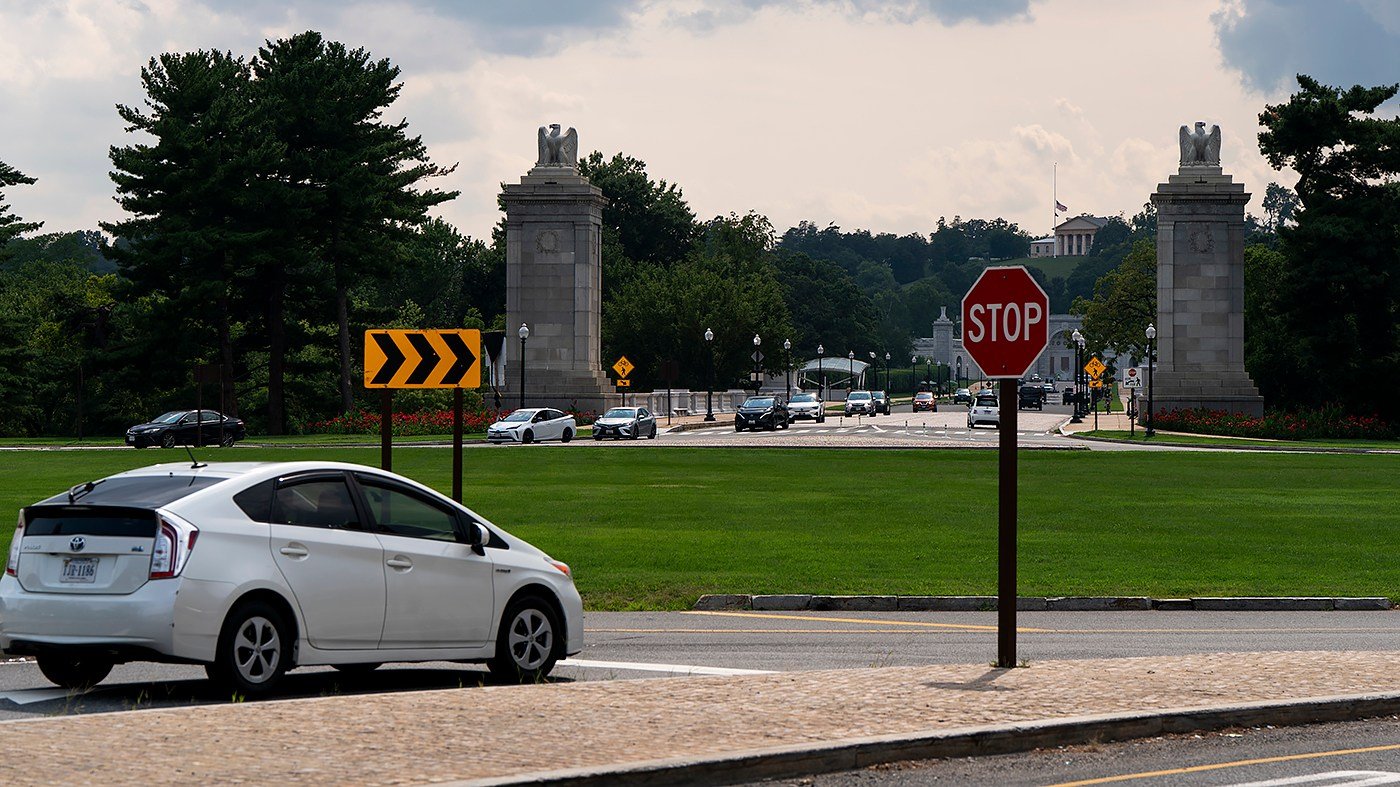
The proposed arch, which would be the largest of its kind in the world, is designed to stand taller than the Monumento a la Revolución in Mexico City (220 feet) and the Arc de Triomphe in Paris (164 feet). It would be erected along the Arlington Memorial Bridge, a site that symbolically represents the reunification of the North and South after the Civil War.
The plan has drawn sharp criticism from veterans groups. Last week, a coalition launched a campaign against the arch, calling it “entirely inappropriate and borders on sacrilege to the men and women buried” at Arlington National Cemetery, because it would break the line of sight between the Lincoln Memorial and the cemetery. The group argues that such a structure would desecrate the hallowed ground and undermine the memorial landscape.
An August assessment by the National Park Service found that the arch would adversely affect dozens of historic sites across the city, including by obstructing views. The agency listed nearly 40 locations, ranging from the Pentagon and the Washington Monument to the U.S. Capitol, the National Mall, the Lincoln Memorial, the Robert E. Lee Memorial, and the Lyndon B. Johnson Memorial Grove.
The FAA's safety determination does not clear the project for construction; it only addresses aviation concerns. The arch still requires approvals from local and federal agencies, including the National Capital Planning Commission and the D.C. government. The controversy comes amid broader debates over the president's use of executive power and his administration's approach to federal properties. In a related development, the administration has faced pushback over its handling of press access, with some conservative media outlets breaking with the White House over recent bans.
The arch proposal has also become a flashpoint in the ongoing tensions between the president and international leaders, as seen in escalating disputes with Canada over trade and diplomatic posture. Meanwhile, the administration's aggressive use of executive orders on immigration and other fronts has drawn legal challenges, including lawsuits over federal agents at polling sites.
The FAA's decision to require an eternal flame—a symbol typically associated with memorials and remembrance—has struck some observers as ironic, given the arch's contentious placement near a national cemetery. Supporters of the project argue that the arch would honor American unity and military service, while opponents see it as a self-aggrandizing monument that disrespects the fallen.
As the review process continues, the fate of the Triumphal Arch remains uncertain, with the FAA's technical requirements now adding a unique and visually striking element to the design. The eternal flame, if approved, would become a permanent feature atop the arch, serving both as a symbolic gesture and a practical aviation aid.