The diplomatic rift between President Trump and Canadian Prime Minister Mark Carney has deepened this week, following Carney's meetings with European Union officials and a contentious proposal from Brussels that has drawn sharp rebuke from the White House. The escalating friction comes just days before Trump is set to address the United Nations General Assembly, where global leaders will convene amid ongoing conflicts in Iran and Ukraine.
EU Associate Membership Proposal Stirs Controversy
European Commission President Ursula von der Leyen this week proposed making Canada an associate member of the EU, a move Trump described as a "horrible act." The president's reaction underscores the fragility of the U.S.-Canada trade relationship, which has been strained by a series of retaliatory tariffs imposed by both nations in recent months. The proposal, if realized, would mark a significant shift in Canada's economic alignment, potentially reducing its reliance on its southern neighbor.
Trump's criticism aligns with his broader skepticism of multilateral arrangements, and he has threatened additional tariffs or even a trade embargo if the EU proceeds with Canada's membership. The president's stance has further complicated efforts to stabilize trade relations ahead of the UN gathering.
No Bilateral Meeting Planned at UNGA
According to reports from The Hill's Mallory Wilson and Helen Huiskes, no bilateral meeting between Trump and Carney is currently scheduled on the sidelines of the UN General Assembly. The absence of a formal sit-down suggests the two leaders are unlikely to resolve their differences in the near term, leaving the trade dispute unresolved as both nations head into an election cycle in Canada.
The UNGA session comes at a critical juncture: the U.S. military engagement with Iran has now surpassed the 200-day mark, and Russia's war in Ukraine continues to escalate, drawing in broader international attention. Trump's public schedule in New York is expected to focus on these pressing security issues, but the Canada file remains a significant diplomatic distraction.
AI Giants Hit with Antitrust Lawsuit
In a separate development on Friday, a coalition of plaintiffs filed a lawsuit against leading artificial intelligence companies—Anthropic, OpenAI, SpaceXAI, and Google—alleging collusion among the tech giants. The suit claims that CEOs Sam Altman (OpenAI), Elon Musk (SpaceXAI), and Demis Hassabis (Google DeepMind) entered into an illegal agreement to slow the pace of AI development, violating U.S. antitrust law.
The legal action points to a recent proposal by Anthropic CEO Dario Amodei, who advocated for "industry-wide coordination" to "pace the frontier" of AI advancement, citing safety concerns. Plaintiffs argue that such coordination amounts to a restraint on trade, artificially limiting competition and innovation.
This lawsuit adds to the growing scrutiny of AI companies, both from regulators and the public, as the technology's societal impact becomes increasingly prominent. The case could set a precedent for how antitrust laws apply to emerging technologies.
Trump's Weekend at Camp David
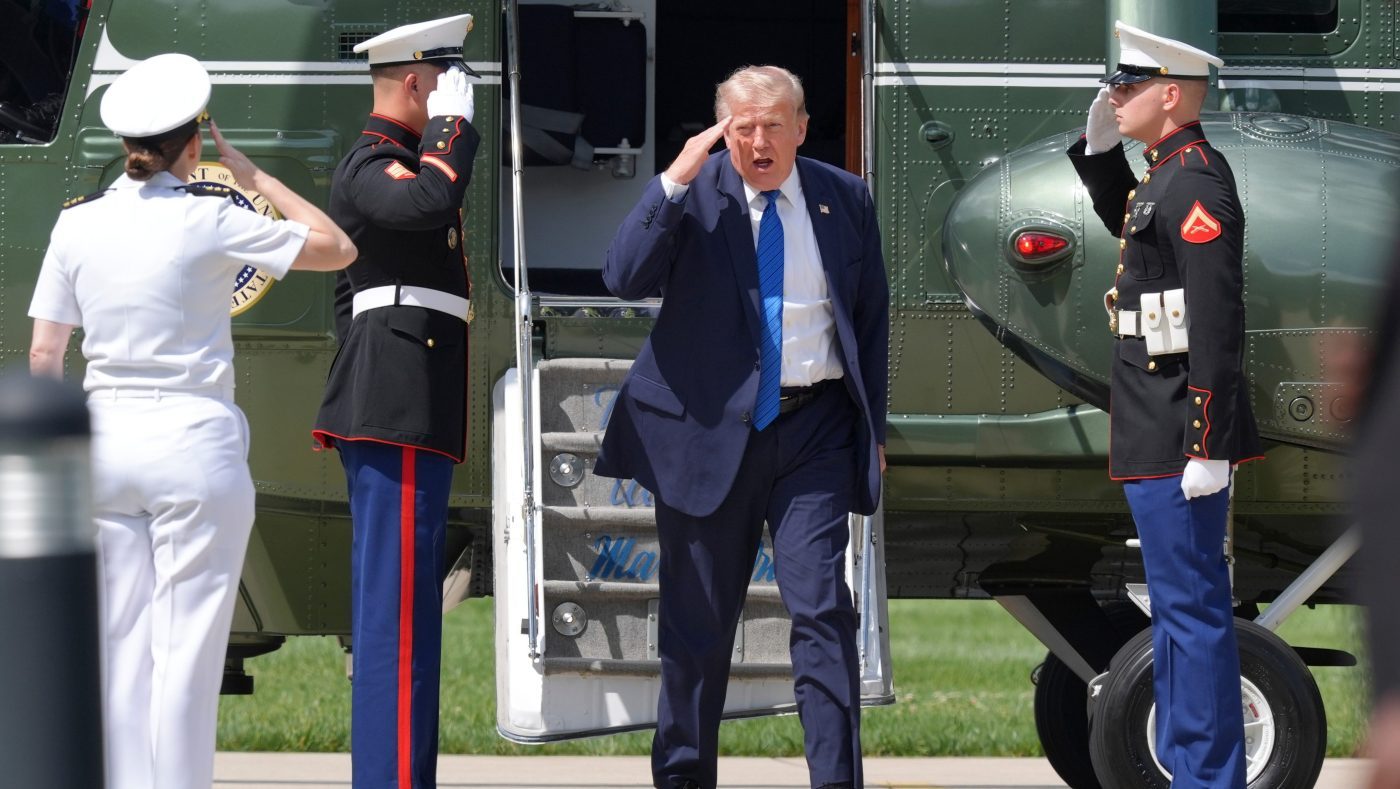
President Trump arrived at Camp David late Friday night for his third visit this year to the presidential retreat in Frederick County, Maryland. The president has no public events scheduled during his stay, which is expected to conclude with a return to the White House on Sunday. The retreat offers a moment of respite amid a turbulent week of diplomatic and legal headlines, but the administration's agenda remains full as it navigates multiple international crises and domestic controversies.