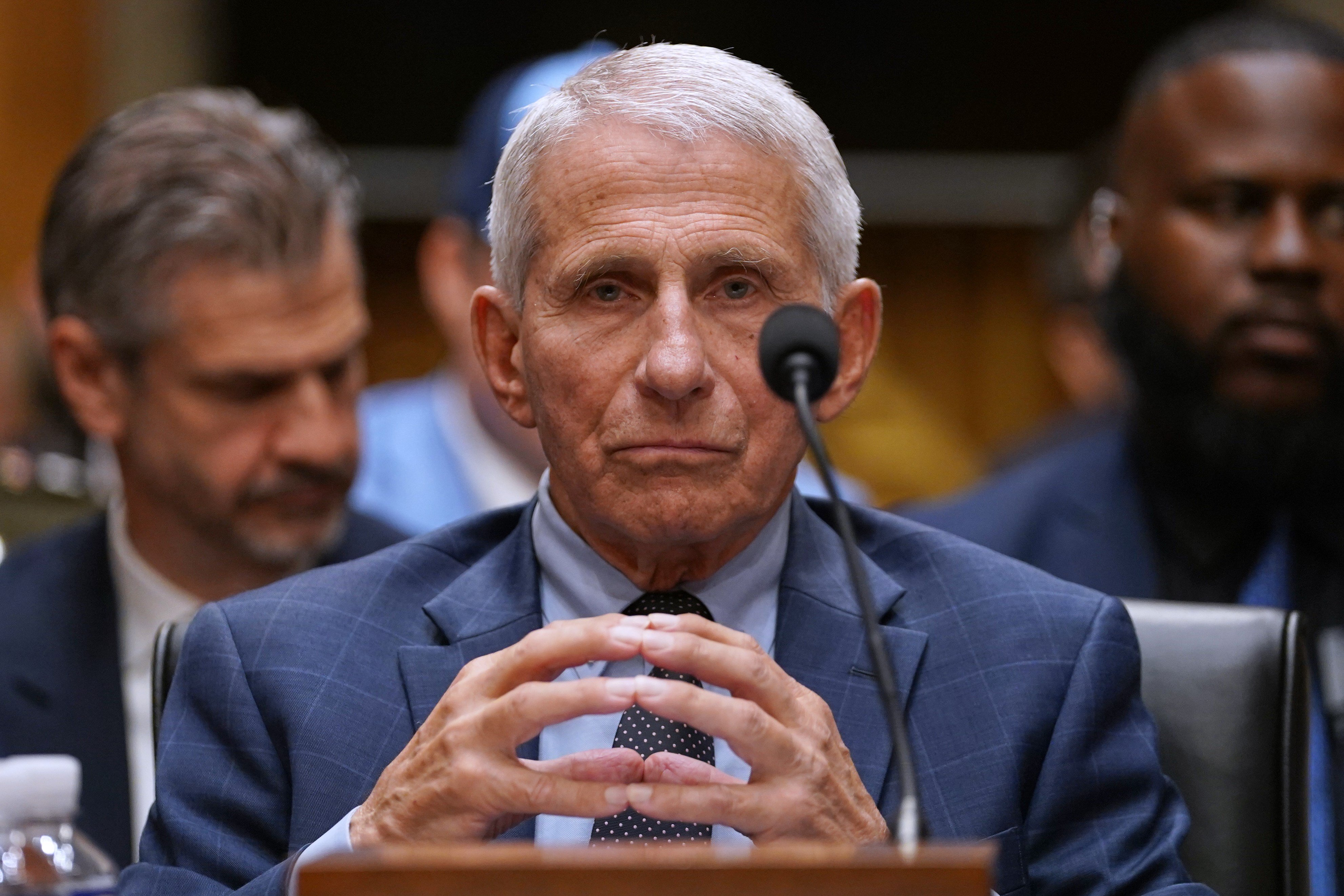
Former National Institute of Allergy and Infectious Diseases director Dr. Anthony Fauci has re-emerged at the center of a political storm, with Senate investigators now pressing his closest aides for answers about the possible lab origin of the pandemic. The probe, led by Sen. Rand Paul (R-Ky.), has stalled as key witnesses invoke their Fifth Amendment rights, and Democrats have blocked a move to grant immunity.
The central question: Did SARS-CoV-2 emerge from gain-of-function research at a Wuhan laboratory, and did U.S. taxpayer dollars funneled through Fauci's agency help create the virus? The Senate Homeland Security and Governmental Affairs Committee has subpoenaed records and testimony, but Fauci himself invoked the Fifth Amendment 111 times during his appearance. Now, his longtime special assistant, Patricia Conrad, has also declined to testify, citing the same right against self-incrimination.
Paul's committee has uncovered evidence that Conrad, who served as Fauci's gatekeeper for 15 years, may have destroyed a trove of emails. According to Paul, logs from Fauci's government computer show Conrad telling him she deleted "a ton of emails" over a weekend—hundreds or thousands of records—and that this was "a routine practice" in Fauci's office. The committee wants to know who ordered the deletions and what those emails contained.
The investigation has also spotlighted a January 31, 2020 email exchange in which Jeremy Farrar, then head of the Wellcome Trust, urgently requested a call with Fauci. Conrad replied, "Will call shortly." That same day, scientist Kristian Andersen told Fauci that some features of the virus "(potentially) look engineered." Fauci later testified he advised Andersen to notify the FBI and Britain's MI5 if the concern held up.
Paul has offered immunity to Conrad to compel her testimony, but the effort failed on a party-line vote. All Republicans voted to proceed, while every Democrat voted no, with six Democrats voting by proxy. The 8-7 vote fell short of the two-thirds majority needed.
This is not the first time Fauci's inner circle has faced legal trouble. In August, his senior adviser David Morens pleaded guilty to conspiracy for hiding federal records on his personal Gmail, including documents related to the EcoHealth gain-of-function grant and its Wuhan subaward, as well as efforts to counter the lab-leak narrative.
Peter Navarro, who served as a White House trade adviser during the pandemic and authored a book calling for Fauci's imprisonment, argues that the public deserves to know what was happening behind the scenes. "Documents tell us what somebody wrote down. Diaries tell us what somebody chose to record. Aides like Morens and Conrad see the machinery," Navarro wrote.
The stakes are high: over a million Americans died from COVID-19, millions more report long COVID, and thousands have filed injury claims related to vaccines. Yet Democrats have largely defended Fauci, even as he becomes a political liability. Paul has vowed to continue the investigation, insisting that "it was never our intention really to try to have her indicted. We wanted to know who gave her the orders."
As the probe continues, the question of whether the pandemic was a natural spillover or a lab accident remains unresolved. The committee's next steps could include further subpoenas or renewed efforts to grant immunity to key witnesses. For now, the American public is left with more questions than answers.