The recent electoral defeat of Hungarian Prime Minister Viktor Orbán has triggered a significant political realignment within the European Union. While many Western leaders celebrated the result as a democratic correction, EU institutions are now moving swiftly to capitalize on the moment, advancing proposals that would fundamentally reshape the balance of power between member states and the central bureaucracy in Brussels.
A Strategic Opening for Brussels
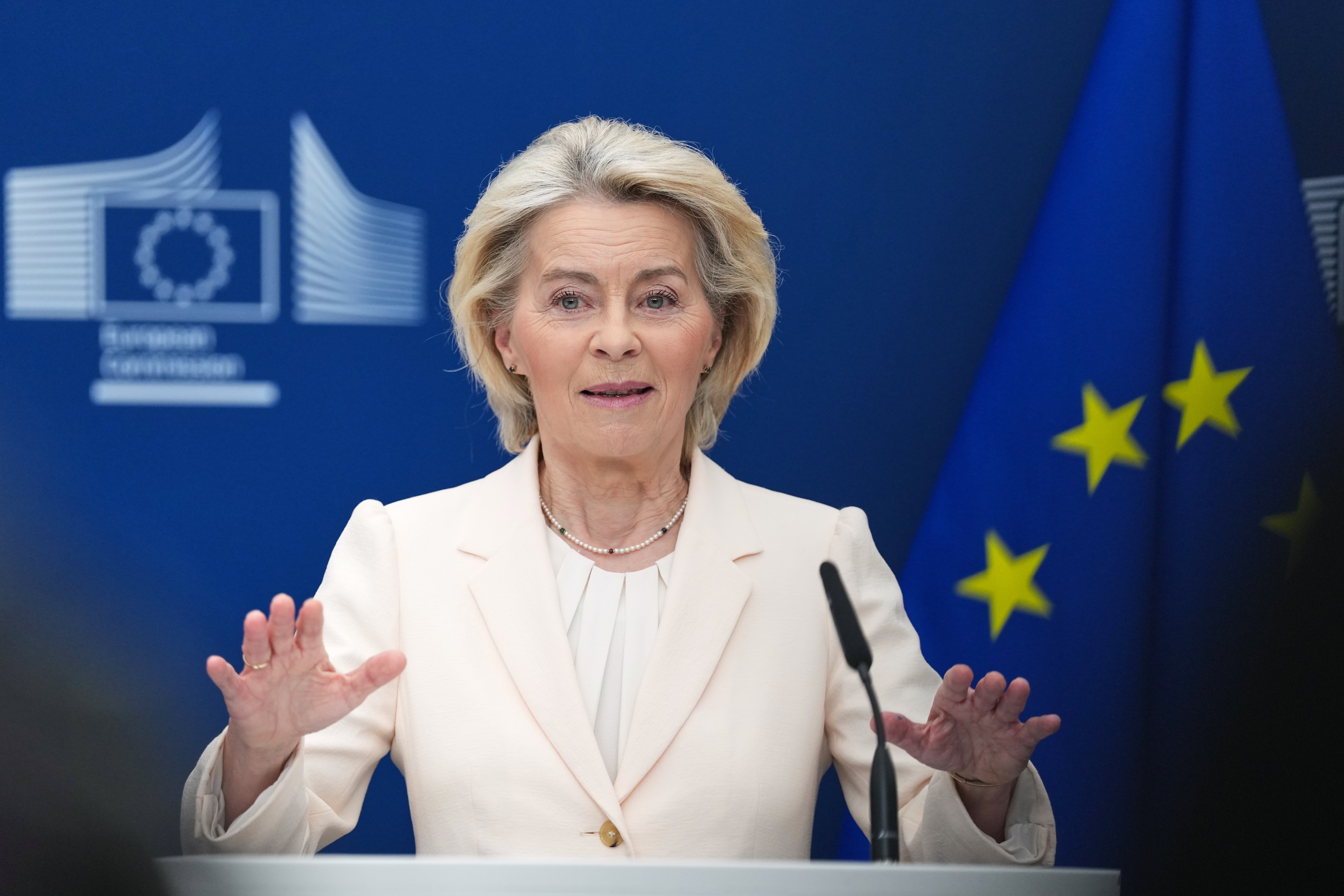
European Commission President Ursula von der Leyen has explicitly framed the political shift in Budapest as an opportunity to accelerate integration. She has called for eliminating the national veto in key policy areas, particularly foreign affairs, arguing that unanimous voting creates "systemic blockages." This push would replace veto power with qualified majority voting, effectively allowing the EU to impose policies on dissenting member states.
The Commission had previously leveraged financial tools to pressure Orbán's government, withholding billions in funds over rule-of-law concerns. His expected successor, Péter Magyar, is viewed in Brussels as more amenable to EU priorities. Reports indicate von der Leyen has presented Magyar's camp with a list of demands to fulfill before frozen funds are released, directly linking financial support to political compliance.
The Broader Sovereignty Debate
This maneuver has reignited a foundational debate about the nature of the European project. Critics argue the EU's trajectory is toward a supranational governance model that diminishes national identity and democratic accountability. The proposed changes would transfer ultimate decision-making authority from national capitals to EU institutions, which are not directly elected in the same manner as national governments.
Parallel initiatives compound these concerns. Some EU commissioners are advocating for a single European military command structure, a move that would represent another substantial transfer of sovereign authority. Furthermore, the EU's regulatory reach, exemplified by laws like the Digital Services Act, is increasingly seen as extending beyond its borders, affecting American companies and, by extension, U.S. citizens' speech rights. Figures like former Secretary of State Hillary Clinton have encouraged the EU to use such mechanisms to impose content moderation standards globally.
Implications for Transatlantic Relations
The consolidation of EU power presents a novel challenge to the United States. Proponents of national sovereignty warn that a more centralized, powerful EU could act as a rival regulatory and geopolitical bloc, one that may compel U.S. entities to adhere to European standards on issues ranging from digital governance to environmental, social, and governance (ESG) criteria. This dynamic frames the EU not just as a partner but as a potential systemic competitor in shaping global norms.
This comes at a time when the U.S. faces its own internal challenges to institutional stability, including escalating conflicts between political and independent agencies. Simultaneously, global flashpoints like the volatile situation in the Strait of Hormuz demand a coherent Western response, which could be complicated by internal EU power struggles.
A Clash of Governing Philosophies
At its core, the conflict pits two visions against each other: one of pooled sovereignty within a multinational federation and another of nation-states as the primary and irreplaceable vessels of democratic legitimacy. The U.S., founded on principles of limited government and enumerated powers, finds itself philosophically at odds with the EU's centralizing impulse. Analysts note that the EU's method has been a gradual, technocratic transfer of authority, which its critics label a slow-motion dissolution of national self-determination.
While the EU project has demonstrated resilience, its critics contend it suffers from a fundamental democratic deficit that renders it unstable in the long term. They argue that the removal of decision-making from local, accountable bodies to a distant bureaucracy inevitably fuels public disillusionment. The coming years will test whether the EU's "momentum" for integration can withstand the countervailing forces of national identity and the desire for local political control.