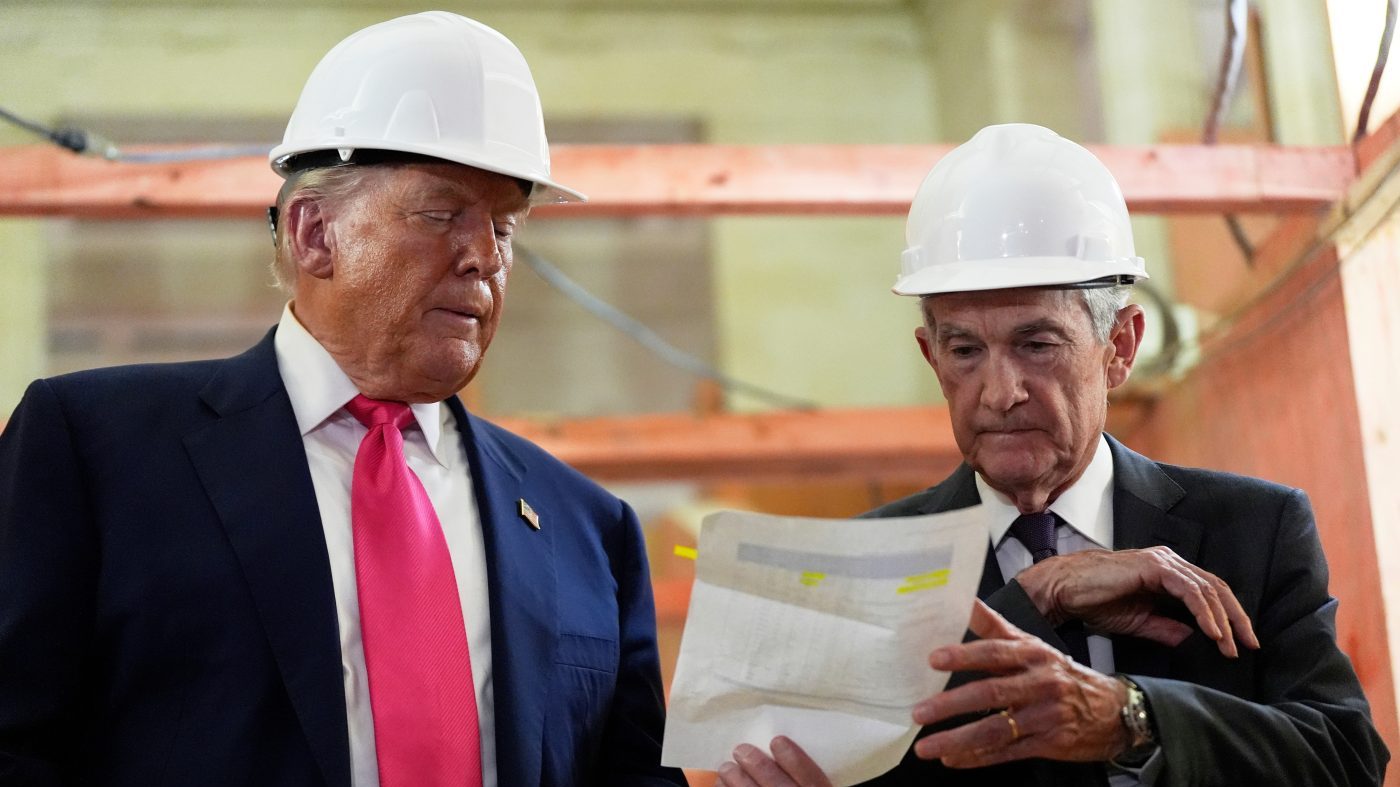
The editorial board of The Washington Post issued a sharp condemnation of President Trump's escalating confrontation with Federal Reserve Chair Jerome Powell, characterizing the president's threats to remove him as a futile political struggle that will ultimately backfire. The board warned that the central question is how much financial market anxiety and political damage Trump will incur before the conflict concludes.
A Multifront Political and Legal Battle
The president's ire stems from Powell's refusal to lower interest rates, a policy stance Trump has publicly blamed for exacerbating economic pressures from rising energy prices linked to his administration's foreign policy. This policy dispute has now merged with a separate Justice Department criminal investigation into Powell regarding the management of a multi-billion dollar renovation of the Federal Reserve's headquarters. That probe suffered a setback last month when a federal judge dismissed grand jury subpoenas targeting the Fed and its chair.
Undeterred, federal prosecutors made an unannounced visit to the Fed building this week in an attempt to inspect the construction site, signaling the investigation remains active. This legal pressure coincides with Trump's political maneuvering to replace Powell, whose term as chair expires in mid-May. The president has nominated former Fed board member Kevin Warsh as a successor, with Senate confirmation hearings scheduled to begin shortly.
Growing Republican Resistance in the Senate
The nomination path, however, is encountering resistance from within Trump's own party. Senator Thom Tillis (R-N.C.) has declared he will oppose any nominee for the Fed chairmanship until the administration either drops its case against Powell or presents credible evidence of criminal conduct or financial mismanagement. His stance reflects broader concerns about the appearance of weaponizing law enforcement against a central bank leader whose independence is considered sacrosanct.
Echoing this sentiment, Senate Majority Leader John Thune (R-S.D.) publicly urged the Trump administration to conclude its investigation into Powell. "I think it's in everybody's best interest to wrap up the investigation," Thune stated. "I've said that before, it would be better if it winds down." This intraparty pressure highlights the political risks for Trump as he faces declining support among key voter blocs and increasing scrutiny from allies.
Constitutional and Institutional Stakes
The standoff carries significant institutional implications. While Powell's term as chair concludes next month, he retains a separate 12-year term on the Fed's Board of Governors, extending into 2028. This complicates any removal effort, as firing a governor requires specific statutory cause. In a televised interview, Trump explicitly threatened Powell's position on the board, stating, "If Powell does not resign from the board entirely, then I'll have to fire him." The president added, "I've held back on firing him. I've wanted to fire him, but I hate to be controversial. I want to be uncontroversial."
The confrontation has drawn comparisons to other instances where Trump has challenged established norms and institutions, such as when his administration pushed forward with contentious energy policies or when legal actions prompted warnings about collateral damage, similar to concerns that his fraud enforcement policies could harm vulnerable populations.
Financial analysts and political observers warn that the public feud undermines the perceived independence of the Federal Reserve, a cornerstone of global economic stability. The Post's editorial board framed the conflict as emblematic of a broader pattern where the president's personal grievances collide with the guardrails of governance, creating unnecessary volatility. As the May deadline approaches, the resolution of this power struggle will test the resilience of federal institutions and the limits of presidential authority over the nation's independent central bank.