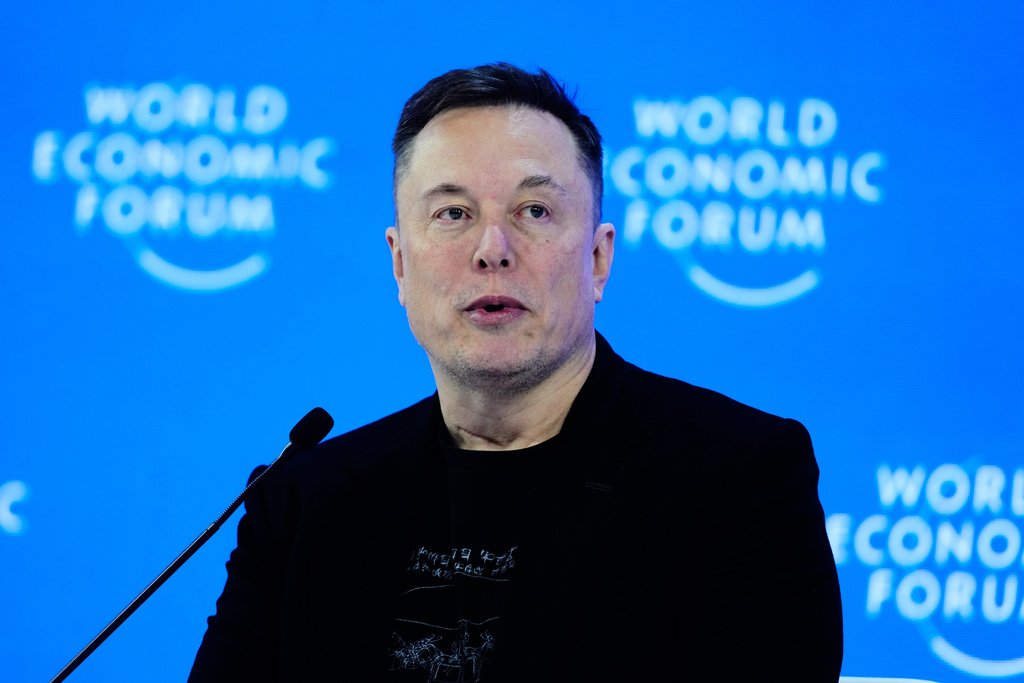
Elon Musk's latest policy pitch—a scheme to have the federal government issue checks to anyone whose job is eliminated by artificial intelligence—has ignited a sharp debate over who should bear the costs of technological upheaval. Dubbed "universal high income," the proposal was floated by the billionaire entrepreneur during a recent public appearance, but critics say it serves the interests of tech oligarchs far more than the workers it purports to help.
A Flawed Premise
The idea rests on a shaky assumption: that AI will trigger mass unemployment without creating new job categories to replace those lost. Yet history suggests otherwise. The Industrial Revolution reshaped the labor market dramatically, but it didn't leave workers permanently idle. There's scant evidence that AI represents a faster or more disruptive shift than past technological transformations. For now, Musk's apocalyptic vision remains a hypothesis, not a proven fact.
Even Sam Altman, who once poured $14 million into a study of universal basic income, recently reversed course, acknowledging the concept's shortcomings. Altman's change of heart underscores a growing skepticism among tech leaders about blanket government payouts.
Undermining Accountability
At its core, Musk's plan would strip away individual initiative and accountability, argues Brian Hamilton, founder of the fintech firm Sageworks (now Abrigo) and the nonprofit Inmates to Entrepreneurs. Writing in a sharp critique, Hamilton warns that government handouts for job displacement would discourage workers from adapting and retraining. "Imagine what this idea would have meant in the mid-19th century," he says. "People would have waited around for government handouts instead of taking ownership of their lives."
That vision clashes with American principles rooted in distributed control, not concentration of power in the hands of a few. The danger, Hamilton contends, is a slide toward "informational feudalism," where a small group of tech oligarchs decides what to give the rest of us at their own discretion. "We become their pawns," he warns.
Self-Interest at Play
The proposal also raises questions of motive. The very people warning that AI will decimate jobs—Musk included—stand to gain financially if the public panics and slows resistance to automation. Companies building and deploying AI technologies would face less pushback if the government cushions the blow. "It's not very American for the guy on trial to be his own jury," Hamilton writes.
This dynamic mirrors broader concerns about the growing divide between executives and workers on AI's impact. Executives often predict job losses, while employees feel less threatened—a gap that highlights how policy proposals can serve corporate interests over public ones.
Offloading Costs to Taxpayers
Perhaps the most pointed criticism is that Musk wants to socialize the downside of his industry's innovations. If automation eliminates jobs, Hamilton argues, the companies creating that technology should bear the cost, not taxpayers. "If what you are doing is taking jobs away, then own it, acknowledge it, and pay people from your own pocket, not my pocket," he says. Offloading those negative externalities to the government, he adds, is "weak and un-American."
This debate comes amid historically low public trust in government, making any proposal that expands federal payouts a tough sell. It also intersects with broader concerns about the politicization of federal agencies and who gets to shape policy.
A Warning on Oligarch Influence
Hamilton's critique echoes a larger worry: that a handful of tech billionaires wield outsized influence over public policy. Wealth inequality has already concentrated control in too few hands, he argues, and Musk's universal high income proposal is a perversion of American ideals. "We need to be vigilant about their impact on public policy," he concludes.
As the AI revolution accelerates, the question of who pays for disruption—and who benefits—will only grow more urgent. For now, Musk's vision of government checks for displaced workers is drawing fire from across the political spectrum, with many seeing it as a bailout for Silicon Valley at the expense of individual responsibility and taxpayer dollars.