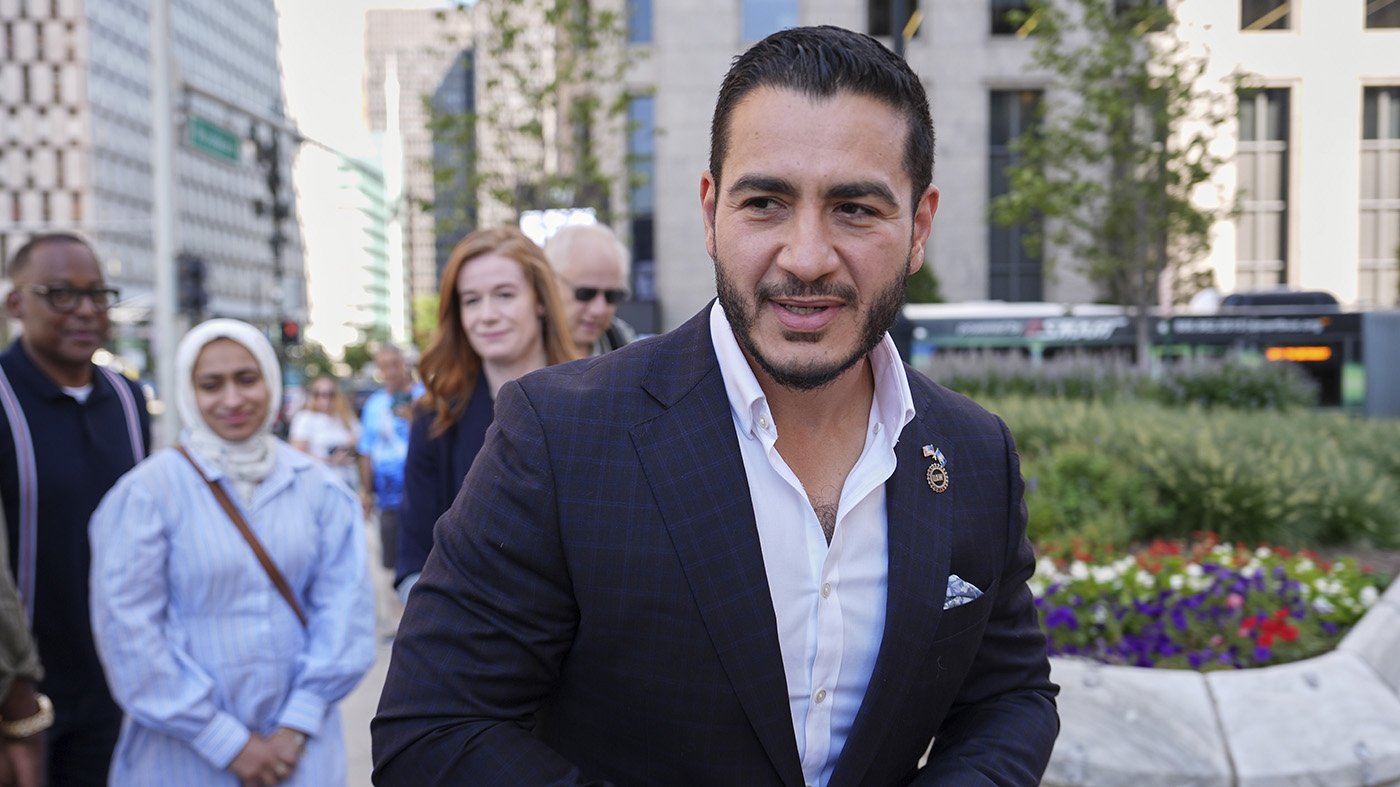
Abdul El-Sayed's narrow victory in Michigan's Democratic Senate primary has thrust him into the national spotlight, but the real challenge begins now. The progressive outsider must channel the energy from his insurgent campaign into a broader coalition, reaching out to the voters who backed his primary opponents, Rep. Haley Stevens and state Sen. Mallory McMorrow, as well as the Black, working-class, and independent voters who remain skeptical of his candidacy.
Democratic strategists say the path forward is fraught with obstacles. El-Sayed will face a barrage of outside spending and negative ads, not to mention lingering resentment from a bruising primary. "The biggest thing El-Sayed can do is make it clear Stevens supporters are welcome," said Democratic strategist Steve Schale. "I think the 'party' will unify — whether El-Sayed can win the same margins with Black voters and independents. That's another question."
Rodell Mollineau, another Democratic strategist, echoed that sentiment, noting that an anti-establishment candidate in a state known for its institutional politics must actively build bridges. "When you're running an anti-establishment campaign in an establishment state, it's incumbent upon the winner to reach out because you're going to need the same people that you've been s—ing on for the last six months to get you over the hump."
The primary results exposed clear fault lines. El-Sayed performed well in college towns like Ann Arbor and East Lansing, as well as in some rural areas, but he struggled in Wayne and Genesee counties, home to Detroit and Flint, where Rep. Stevens had strong support. These areas also contain major manufacturing hubs, highlighting El-Sayed's weakness with working-class voters. "He has real work to do in the African American community to ensure that they feel included in his vision for the state and the country," said Jamal Simmons, a Democratic strategist with Michigan roots.
Matt Bennett of the centrist Democratic group Third Way argued that El-Sayed must moderate his positions to win a general election in a purple state. "Of course he can win because it's a terrible year for Republicans and he's a skilled candidate," Bennett said. "But if he's gonna win in a general election in a purple state, he's got to drop his extremism." Bennett pointed to El-Sayed's underperformance with non-college voters as a significant concern.
One of the most contentious issues is El-Sayed's stance on Israel. His criticism of Israel's military campaign in Gaza as "genocide" and his description of the country as "bloodthirsty" could alienate pro-Israel voters in the state. "Israel is an issue. It's going to be very tough for some of the pro-Israel voters in the state to vote for him," said one Democratic strategist. "I don't see how that changes."
Republicans, meanwhile, are eager to paint El-Sayed as a far-left radical. "The type of socialism and anti-semitism and anti-American vibe is no longer fringe Democrats from New York City and other urban centers," said Republican strategist Brian Seitchik. He pointed to El-Sayed's alignment with progressive movements and figures like New York City Mayor Zohran Mamdani as evidence that the Democratic Party has shifted left.
Despite the challenges, El-Sayed has already begun reaching out. In his victory speech, he thanked Stevens and expressed hope for unity in the fall. The question now is whether he can translate that rhetoric into a winning coalition. As Decision Desk HQ President Drew McCoy noted, "How big is the overall universe that he's drawing from? That is the challenge for him and any candidate in that position."
With the general election against Republican Mike Rogers shaping up to be a toss-up, El-Sayed's ability to broaden his appeal will be critical. The primary results suggest he has a solid base among progressives and younger voters, but he must expand that base to include the diverse constituencies that decide Michigan elections. The next few months will test whether El-Sayed can transform from a primary insurgent into a general election contender.