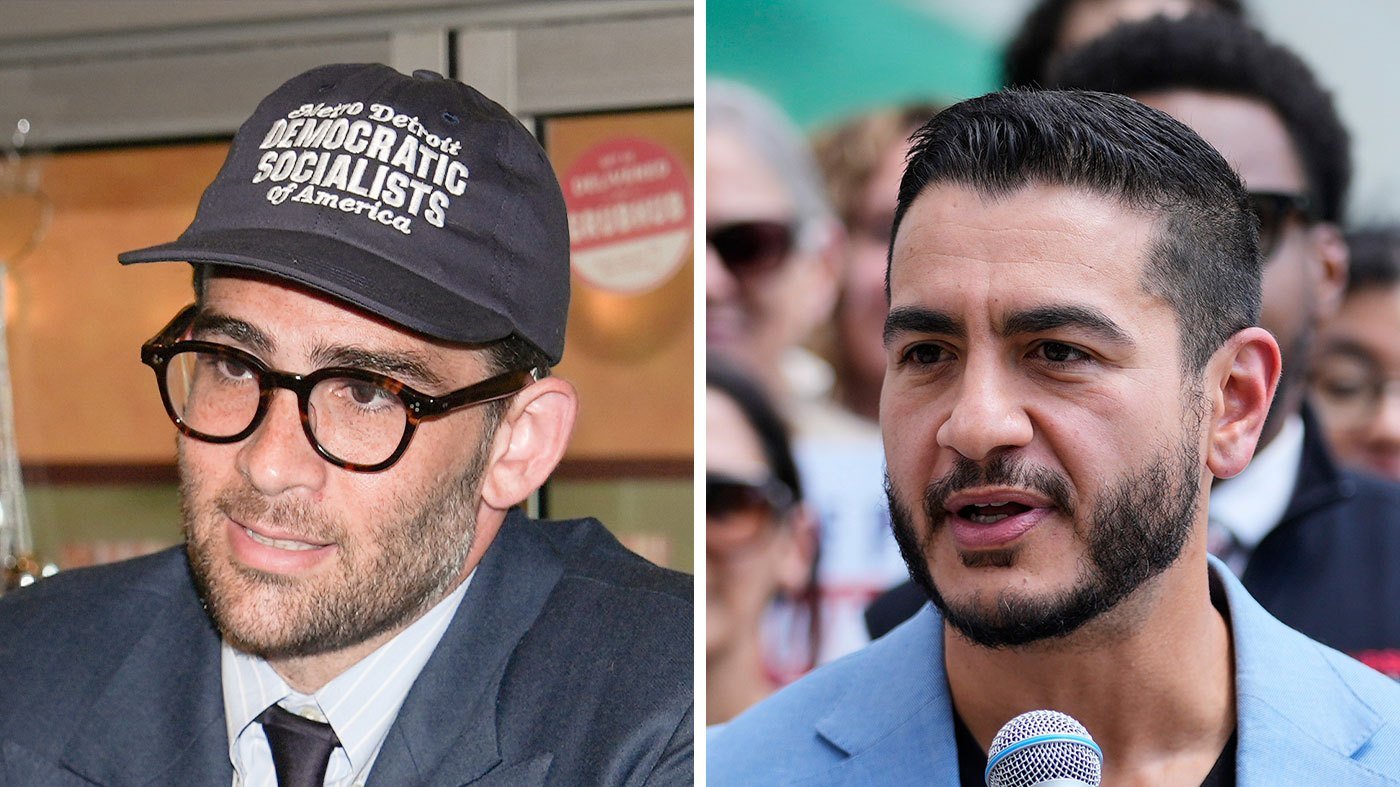
Michigan Democratic Senate nominee Abdul El-Sayed has firmly ruled out any joint campaign events with left-wing streamer Hasan Piker, following a wave of criticism from Democratic lawmakers over Piker's recent remarks about American Jews and Israel. In an interview with Semafor in the Detroit suburbs, El-Sayed dismissed the notion that Piker would play any role in his general election contest against former Republican Rep. Mike Rogers, who is vying to succeed retiring Sen. Gary Peters.
“Most people are a lot more worried about things like, what are you going to do about my groceries? What are you going to do about my healthcare? What are you going to do about the fact that I cannot afford [to enroll] my kid in baseball, even though my kid’s a really great baseball player?” El-Sayed told the outlet. He added, “Those are the things I’m talking about, and the effort to make this race about a streamer in LA [Los Angeles] is actually kind of laughable.”
Piker, who commands a large following of 1.7 million on the social platform X, sparked controversy during a livestream when he suggested that “Jewish institutions” are “teaching people the idea that Jews are monolithic.” He went on to say, “If Jews in America keep putting this idea out there that they are singularly invested in Israel, eventually someone is going to come around and take action, not against the state of Israel, mind you, but against American Jews,” while displaying a photo of Michigan state Sen. Jeremy Moss (D) and his campaign contributions from “pro-Israel” donors.
The backlash was swift, with House Minority Leader Hakeem Jeffries (D-N.Y.) denouncing the comments as “dangerous and antisemitic.” Jeffries wrote on X, “The malicious claim that American Jews are inviting violence against themselves is dangerous and antisemitic. There is zero justification for threats against the safety of our Jewish brothers and sisters at a moment of rising hate. We will fight the cancer of antisemitism with the fierce urgency of now.”
El-Sayed, who defeated Rep. Haley Stevens in the Democratic primary earlier this month, also issued a statement distancing himself from Piker’s remarks. “I believe all Americans deserve the right to advocate for what they believe without fear of violence,” he said. “This is particularly true for communities that have been intimidated for their beliefs in the past. My commitment to Jewish safety is the same as my commitment to the safety of my own daughters. Antisemitism is a scourge, and we need to address it in all its forms. And I stand against any rhetoric that puts the community at risk.”
During the primary, Piker had joined El-Sayed on the campaign trail, part of the streamer’s pattern of backing progressive candidates nationwide. Piker has repeatedly called Israel’s military campaign in Gaza a “genocide,” a stance that has made him a polarizing figure even within Democratic circles. The controversy has also drawn attention to the broader debate over Israel and antisemitism in the party, with some arguing that El-Sayed’s response may not fully reassure Jewish voters.
The issue has become a flashpoint in the race, with Republicans seeking to tie El-Sayed to Piker’s more extreme statements. However, El-Sayed’s campaign has sought to pivot to kitchen-table issues, a strategy that other Democratic candidates are also employing in competitive races. A June AP-NORC poll found that 40% of religious Jews feel very or extremely emotionally attached to Israel, compared to 11% of secular Jews, underscoring the sensitivity of the topic.
El-Sayed’s decision to avoid Piker comes as some progressives worry that such controversies could hand Republicans an opening in the midterms. Meanwhile, Piker has not publicly responded to El-Sayed’s latest comments. The race in Michigan remains tight, with both candidates vying to define the other before November.