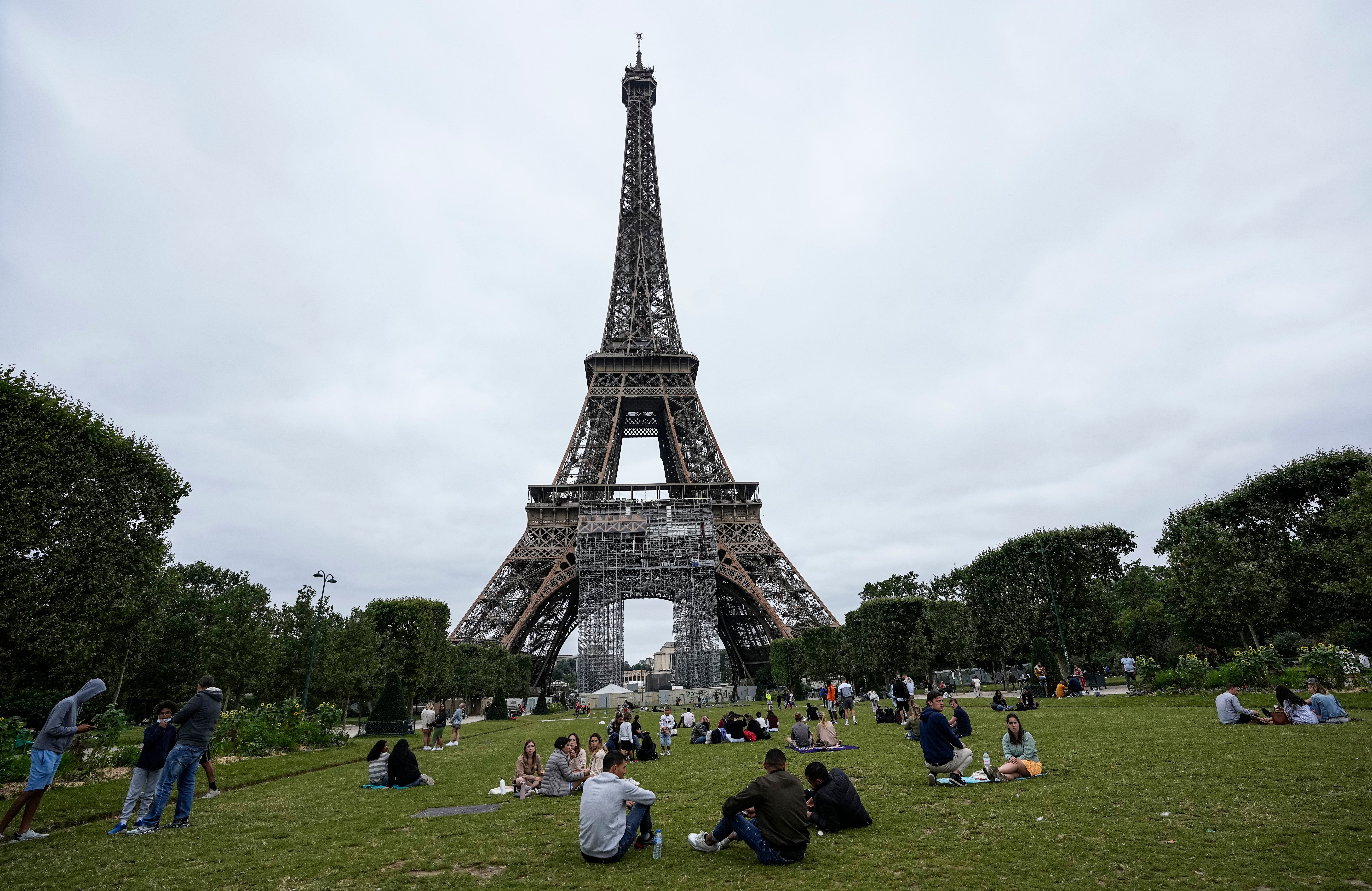
The head of the company that operates the Eiffel Tower is resigning after an internal investigation confirmed that female employees were ordered to stay out of sight during a visit by a conservative Hindu religious group.
Patrick Branco Ruivo, who leads the Société d'Exploitation de la Tour Eiffel (SETE), will leave his post by the end of the year, the company announced. The decision follows a management directive that sparked a one-day staff strike and accusations that the landmark's leadership had violated French principles of equality.

The order was issued ahead of a private visit by the Bochasanwasi Akshar Purushottam Swaminarayan Sanstha (BAPS), a spiritual movement rooted in a conservative sect of Hinduism. The group reportedly asked that women have limited contact with its monks, who have taken vows that forbid interaction with women.
Strike and internal probe
Employees at the monument walked off the job, forcing the tower to close for a day, after learning of the directive. In a statement, worker representatives denounced the policy as discriminatory and contrary to the values of the French Republic.
“No one should be asked to disappear because of their gender,” one staffer told local media, speaking on condition of anonymity. The strike and the ensuing public backlash prompted SETE to launch an internal investigation into the incident.
The BAPS movement later issued an apology, saying it regretted “any inconvenience or offense” caused by its request. But union leaders said the damage was done, arguing that the management's willingness to accommodate the request set a dangerous precedent.
A clash of values
The episode has reignited a broader debate in France about religious accommodation versus the country's strict secularism and gender-equality norms. While French law allows private groups to set conditions for their events, public institutions are expected to uphold nondiscrimination standards.
Political observers noted that the controversy comes at a time when the French government is already grappling with questions about religious expression in public spaces. Some lawmakers have called for clearer guidelines on how public landmarks should handle such requests.
Branco Ruivo's resignation is seen as an attempt to quell the controversy, but it has also raised questions about the culture within SETE. The company said it would implement new training and protocols to ensure that all staff are treated equally, regardless of gender.
The Eiffel Tower, one of the world's most visited monuments, has long been a symbol of French identity and values. The incident has cast a shadow over that image, prompting calls for greater accountability from its leadership.
As the year ends, the search for a new head of the Eiffel Tower will begin, with the hope of restoring public trust and ensuring that such a directive is never repeated.