For generations, American politicians have tinkered with election laws, each side convinced that tweaking the rules will tip the scales in their favor. Whether framed as good-government reform, expanding access, or securing ballot integrity, the underlying motive has always been partisan advantage. But a growing body of evidence suggests that both parties are operating on outdated assumptions about who votes and why.
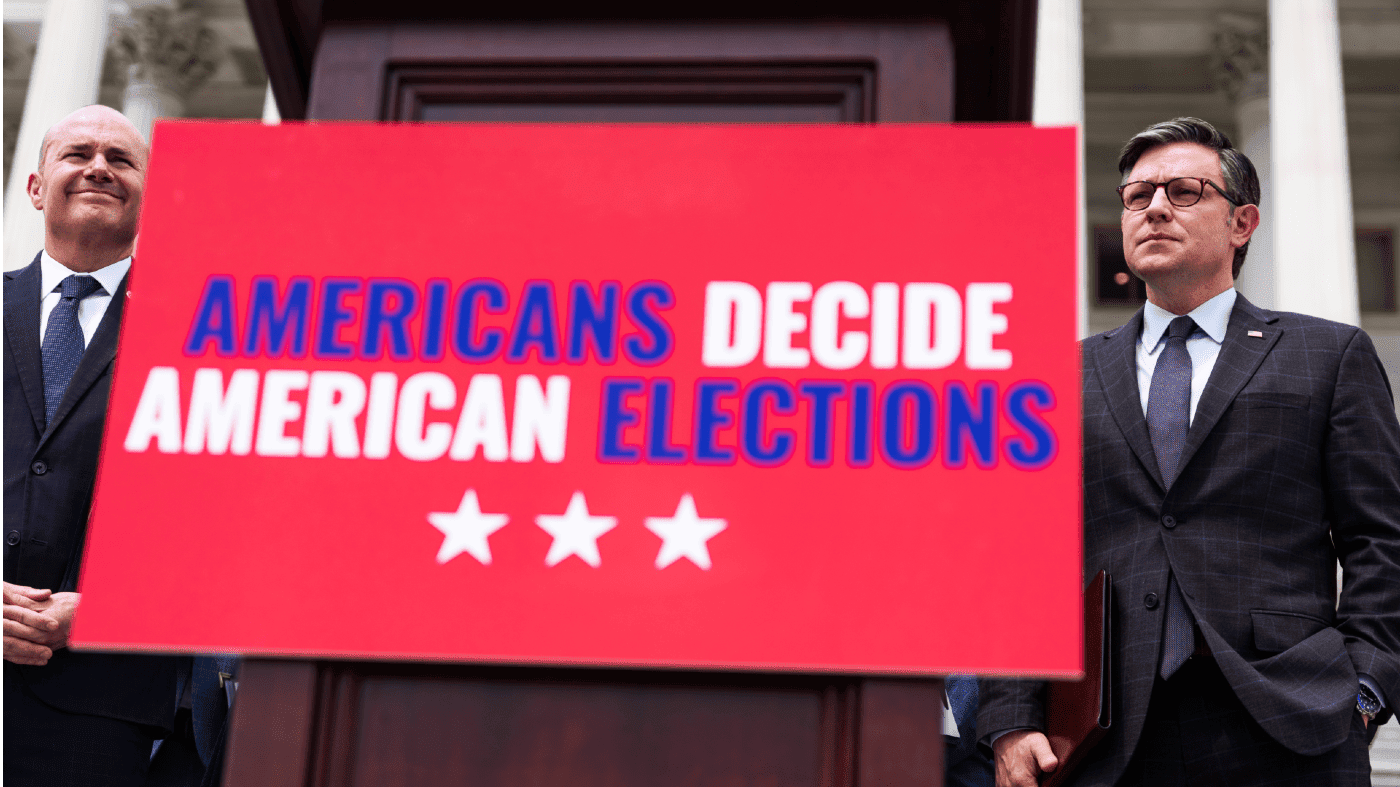
Democrats tend to believe that nonvoters lean their way, so they push for easier voting. Republicans, by contrast, fear that making voting too easy would swell the rolls with Democratic-leaning citizens, leading them to support stricter requirements. The latest flashpoint is the GOP's SAVE America Act, which would mandate proof of citizenship to vote. President Trump has boasted that the measure would "guarantee the midterms" and help Republicans "win every election for a long time." But the data tell a more complicated story.
Decades of research show that socioeconomic status—especially education—is the key driver of voter turnout. Political scientists model voting likelihood as benefits minus costs, plus a sense of civic duty. While the benefits of casting a ballot are small for any individual, the costs are also low. Yet a persistent "diploma gap" means the most educated Americans vote at roughly twice the rate—around 80 percent—as those with the least education, who turn out at about 40 percent.
Education boosts turnout in several ways: it reinforces the belief that voting is a civic obligation, increases knowledge about politics, and builds skills like public speaking and organizing that make participation easier. Higher education also correlates with higher income and professional jobs, which reduce the financial and time costs of voting. So when voting becomes more difficult—whether through stricter ID laws, reduced early voting, or other hurdles—the better educated are more likely to overcome them.
Here's the twist for Republicans: in today's polarized landscape, highly educated voters are increasingly voting Democratic. As Hoover Institution scholar David L. Leal notes, the SAVE Act's requirement for a passport or birth certificate imposes costs—both financial and bureaucratic—that are more easily borne by Democrats. A passport costs $130, and navigating the system to obtain one is simpler for those with time and resources. Married women, who voted for Trump by a 56-42 margin in 2024, might face name-matching issues. Latino voters, who have been trending Republican since 2016, could encounter complications with matronymic surnames. Younger voters and men, both groups that moved toward Trump in the last election, might also be disproportionately affected.
This dynamic undermines the GOP's strategy. As Republican strategist Michael Fragoso put it, "Your stereotypical Republican of old was also just the sort of person whose documentation would always be in order. In recent years, though, these high-propensity voters have flipped their party allegiance." In other words, the very voters Republicans might hope to suppress with stricter laws are now more likely to be their own supporters.
Democrats, meanwhile, may be overestimating the payoff from making voting easier. Most research suggests that voter ID laws, mail-in ballots, and similar reforms have had minimal impact on election outcomes. A drastic shift like the SAVE Act could be different, but not necessarily in the way either party expects. The education gap in turnout means that both parties' reform agendas are rooted in a class politics more suited to the Eisenhower era than to 2026.
None of this means electoral reform is unnecessary. Public confidence in elections has eroded, and a bipartisan voter ID requirement could help restore trust—as Hoover's Paul Peterson has argued. But for now, both parties cling to outdated assumptions, and their efforts to reshape the electorate may backfire. The real lesson from the data is simple: education, not party ID, is the most powerful predictor of who shows up at the polls.