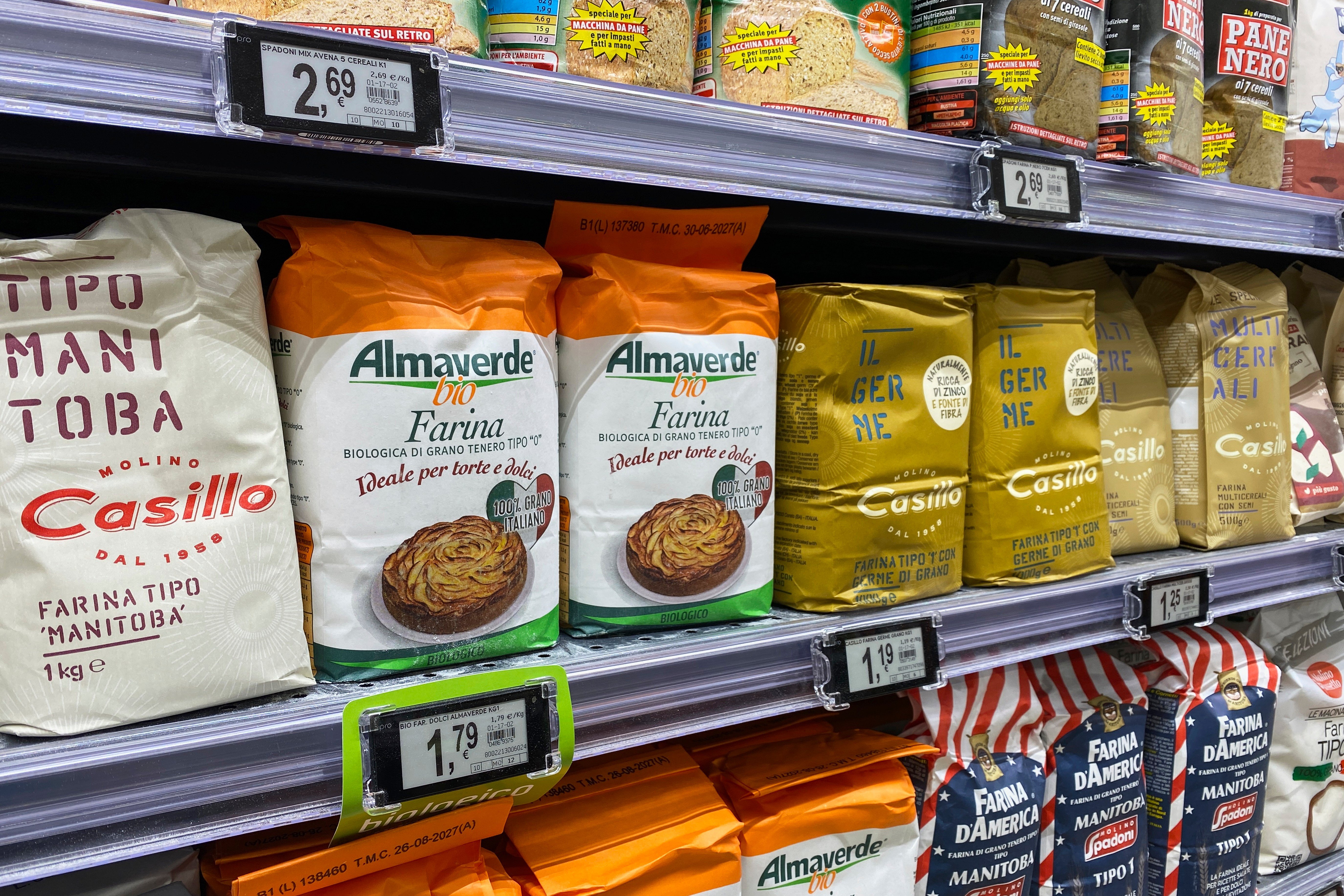
Fifty years ago, consumer groups fought the introduction of bar code scanners in grocery stores, fearing they would enable price gouging and even burn shoppers with lasers. Today, a similar battle is unfolding over electronic shelf labels (ESLs), which replace paper price tags with digital displays that can be updated remotely via computers or tablets.
While about 80 percent of European supermarkets have embraced ESLs, adoption in the United States has been slower, largely due to political opposition and concerns about predatory pricing. The AFL-CIO, the nation's largest labor federation, recently released a report warning that digital price tags could lead to higher grocery prices and job losses.
But history suggests such fears may be overblown. The grocery industry has been transformed by labor-saving innovations for over a century—from shopping carts to self-checkout kiosks—and these have generally benefited both consumers and workers. Despite these changes, grocery employment has not collapsed. In California, for instance, food retailing jobs have grown by 38 percent since 1992, outpacing the state's population growth of 28 percent, according to US Census data.
Electronic shelf labels are unlikely to eliminate jobs either. Food retailing already faces one of the highest turnover rates among major industries, and surveys consistently show that recruitment and retention are top challenges for supermarket operators. By automating the tedious task of changing paper tags, workers can be redeployed to more valuable tasks like manning registers, stocking shelves, and assisting customers. This reallocation could boost overall store productivity.
There is also little evidence that digital price tags lead to higher prices. In fact, research shows that food prices are often “sticky”—they don't adjust quickly to changes in costs like energy or commodities. This stickiness is partly due to “menu costs,” the labor and printing expenses associated with changing prices on tens of thousands of products. With ESLs, retailers can adjust prices more fluidly, allowing them to revert to previous levels when cost pressures ease. This could actually help lower prices for consumers.
Critics worry about “surveillance pricing,” where retailers use customer data to set individualized prices. However, such practices are not inherent to ESL technology and can be curbed through regulation. For example, laws could prohibit facial recognition or other identifying measures during shopping. Most states already have price gouging laws on the books, which apply equally to digital and paper pricing.
The US grocery market remains highly competitive, with most supermarkets operating on thin margins. Technologies that reduce operating costs, like ESLs, could help stabilize and even reduce food price inflation. As gas prices remain high, consumers are sensitive to any cost increases, making efficiency gains more important than ever.
Ultimately, the story of bar code scanners is likely to repeat. Just as manual inventory counting now seems antiquated, paper price tags will eventually be seen as costly and wasteful. The challenge for policymakers is to provide retailers with tools to operate efficiently while maintaining regulatory guardrails against anticompetitive behavior. As Richard Volpe, a professor of agribusiness at Cal Poly, notes, the future of grocery pricing is digital—and with proper oversight, it can benefit everyone.