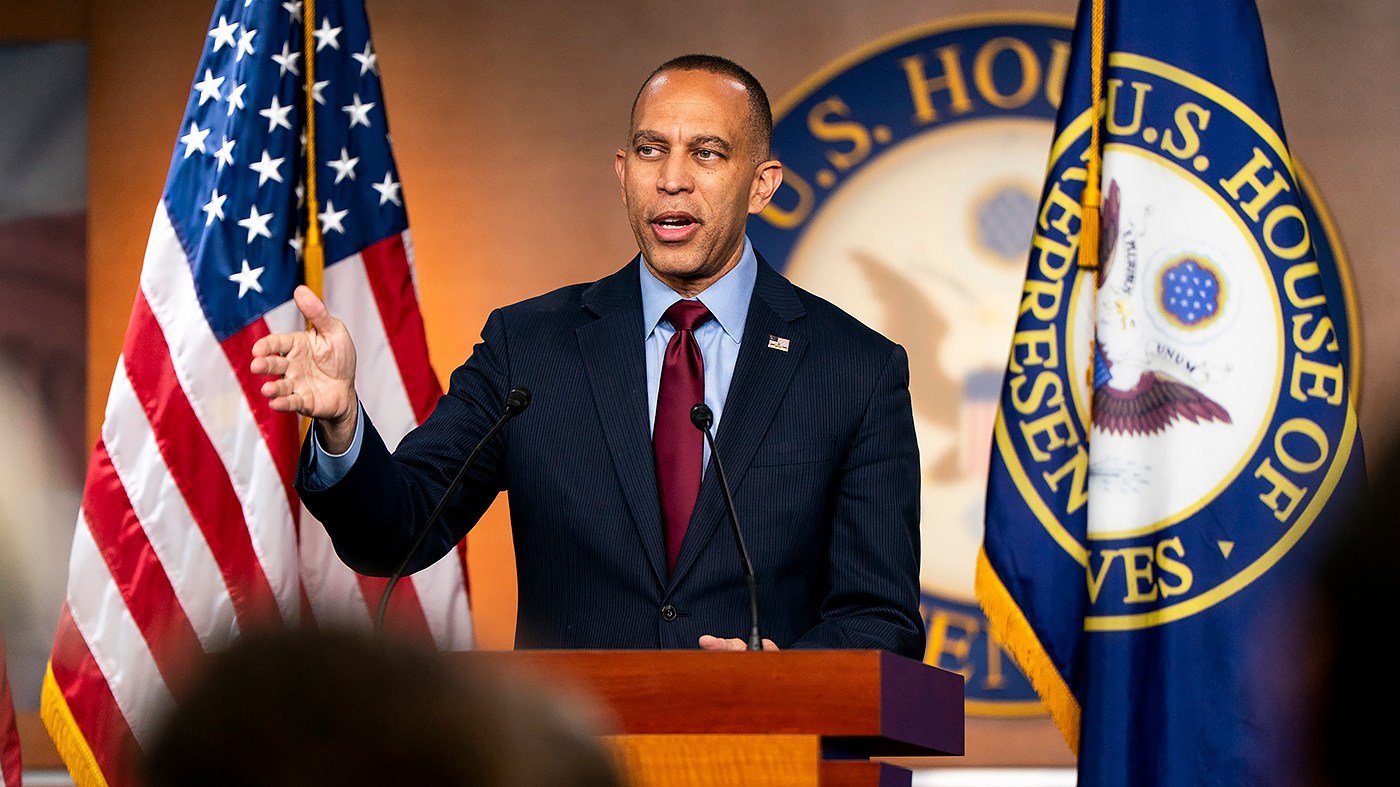
House Democratic Leader Hakeem Jeffries (D-N.Y.) faced progressive backlash last week for not listing impeachment as a top priority for the new term. His focus on affordability contrasted with incoming House Oversight Chair Robert Garcia's (D-Calif.) warning that Trump and Republicans should "lawyer up" for a wave of corruption probes.
Writing in The New Republic, strategist Michael Tomasky cautioned that Democrats risk a "poisonous" false choice between kitchen-table economics and holding the administration accountable. He's right: exit polls show nearly nine in ten voters across party lines rank corruption alongside affordability as top national concerns. Those voters won't accept a party that can only handle one crisis at a time.

Democratic leaders currently treat affordability and accountability as separate tracks. Instead, they should build a strategy where bold accountability actions set the stage for serious affordability legislation—and vice versa. The problem isn't two distinct issues; it's one sprawling public corruption crisis that drives up costs for ordinary Americans.
Trump's graft offers ample opportunities to demonstrate that voter economic pain and Republican corruption are intertwined. The easiest targets also let Democrats show bipartisanship while reclaiming Congress's co-equal status, which Republicans have ceded to an imperial White House.
Rep. Thomas Massie's (R-Ky.) impeachment articles against Defense Secretary Pete Hegseth were a prime starting point. Hegseth has few defenders; many Republicans blame his mismanagement of the Iran war for their midterm losses. He appeared at a rare Pentagon press briefing to project confidence, insisting he wasn't worried. But rank-and-file Republicans have turned against him, given the war's role in fuel and fertilizer price spikes.
Though Hegseth's impeachment failed, the next opportunity looms at Health and Human Services, where Secretary Robert F. Kennedy Jr. faces staff resignations and accusations of corruption from former adviser Calley Means. Democrats have already offered the same ultimatum: resign or face impeachment. Republicans are losing patience, and Senator-elect Annie Andrews (D-S.C.) and Sen. Bernie Sanders (I-Vt.) have backed the effort. Impeachment hearings could spotlight Kennedy's conspiracy theories while promoting popular healthcare reforms Democrats championed on the campaign trail.
Democrats can also leverage their new congressional majorities to push economic measures that resonate with voters. For example, they've signaled interest in capping credit card interest rates amid record debt, and they're pressing drugmakers to release pricing agreements from the Trump era. These moves tie corporate profiteering to the affordability crunch.
Additionally, oversight of Trump's financial entanglements, including banking ties in the Epstein case, can expose how the administration's corruption enriches insiders at public expense. Meanwhile, the recent release of $10 billion in rural health funds—after Democratic pressure—shows how accountability can unlock needed resources.
Democrats have a real chance to connect affordability and accountability through actions that make clear how Trump's lack of oversight has worsened life for those outside the MAGA inner circle. If they succeed, they'll treat these as two faces of the same Trumpian corruption crisis.
Max Burns is a veteran Democratic strategist and founder of Third Degree Strategies.