For years, a dominant theory in criminal justice held that reducing crime required moving away from traditional policing and prosecution. This philosophy, championed by progressive reformers, argued that systemic change, not punishment, was the solution. The results in several major American cities, however, have delivered a stark rebuttal, with Washington D.C. providing one of the clearest case studies.
A Capital in Crisis
During the early 2020s, the District of Columbia implemented a series of policies aligned with this reform movement. The city council, led by members like Charles Allen, enacted significant budget reductions for the police department. Concurrently, the Biden-appointed U.S. Attorney and the locally elected city attorney adopted charging policies that de-emphasized prosecution for certain categories of crime, particularly for juvenile offenders.

The consequences were severe and measurable. After hitting a 49-year low of 88 murders in 2012, the District's homicide count skyrocketed to a 25-year high of 274 in 2023. Carjackings, a relatively rare offense with 152 cases in 2019, exploded to 957 in 2023—an increase exceeding 500 percent. The city became a focal point in the national debate over public safety.
The Policy Reversal
The trend reversed sharply beginning in 2025. The murder count plunged to 127 that year. Current 2026 data shows only 12 homicides to date, a 68 percent decrease from the same period last year, putting the city on pace for roughly 42 murders—potentially the lowest annual total since at least 1930. Carjackings also fell dramatically, from 957 in 2023 to 250 in 2025, with a further 44 percent drop so far in 2026.
This turnaround coincided with a fundamental shift in strategy. Facing a historic police staffing shortage exacerbated by earlier budget cuts, the federal government intervened. The Trump administration deployed National Guard personnel and redirected federal law enforcement resources to bolster street-level policing in the District.
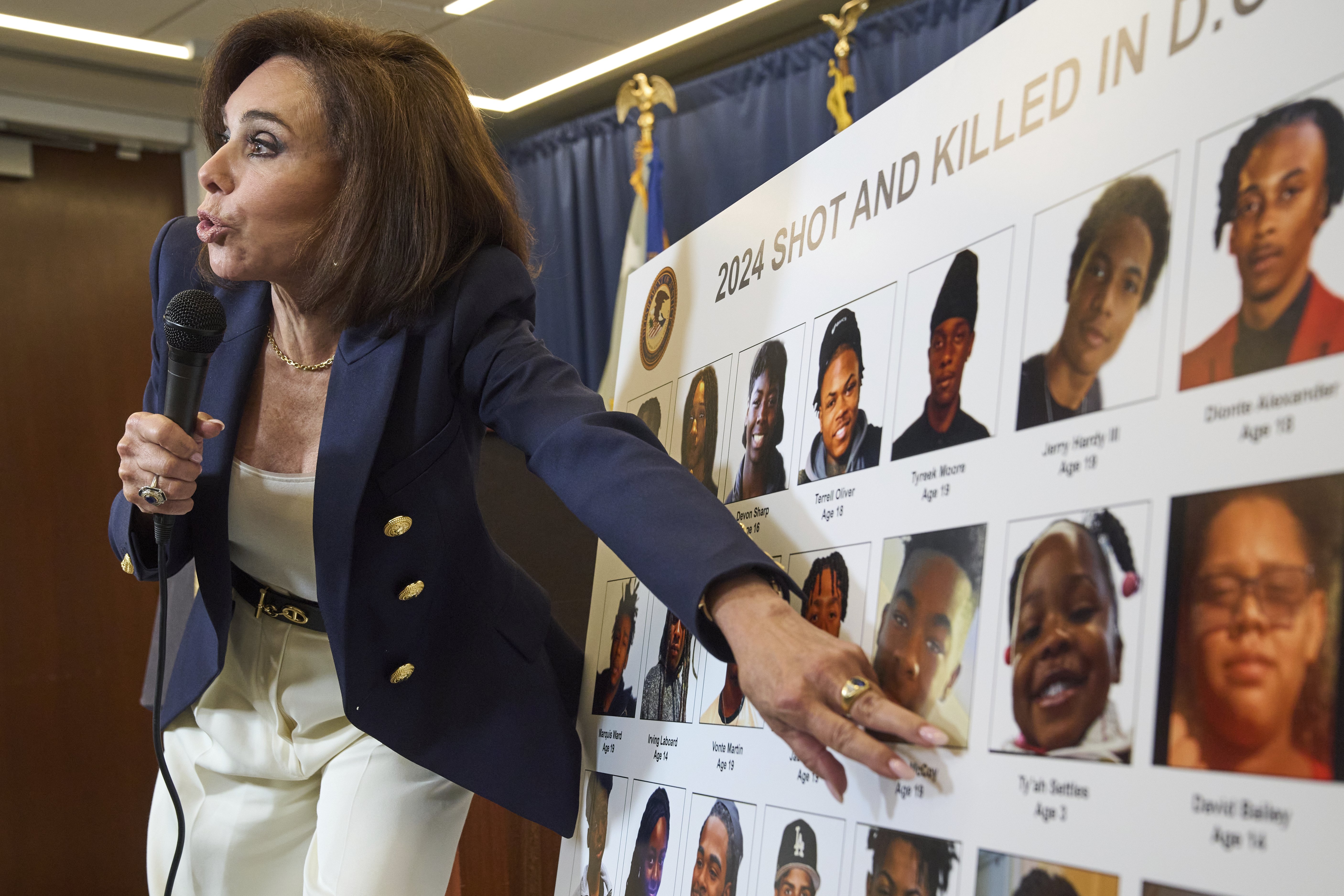
Simultaneously, a new U.S. Attorney, Jeanine Pirro, was appointed. She immediately signaled a return to aggressive prosecution, vowing to bring appropriate charges and seek tough sentences, a stark departure from the previous administration's approach. This realignment of resources and prosecutorial philosophy formed the core of the new crime reduction playbook.
A National Pattern
Washington D.C. is not an isolated example. Similar narratives have unfolded in other cities that experimented with progressive prosecution. Voters in San Francisco recalled District Attorney Chesa Boudin, while Los Angeles County voters rejected George Gascon's re-election bid. In Baltimore, the ouster of State's Attorney Marilyn Mosby in 2022 was followed by a new prosecutor focusing on aggressive charges; homicides subsequently fell to a 56-year low.
In Memphis, a state-federal partnership focusing on enforcement has driven violent crime down from its peak, with murders falling 50 percent from 2023 highs. These cases collectively challenge the premise that decoupling crime from consequence is a viable public safety strategy.
The Enduring Formula
The evidence from these jurisdictions reinforces a long-established, if politically contentious, formula for reducing violent crime: visible street-level policing, consistent prosecution of offenders—with emphasis on violent and repeat criminals—and the imposition of credible penalties. This model, famously deployed in New York City under Mayor Rudy Giuliani and Police Commissioner Bill Bratton in the 1990s, continues to show efficacy when applied with resolve.
The political dimension remains potent, as seen in the ongoing debate over executive authority and legal boundaries in other policy areas. The D.C. experiment demonstrates that voter tolerance for elevated crime is limited, even in liberal jurisdictions, and that political willpower remains the critical variable in implementing effective public safety policy. As the 2024 election cycle approaches, the lessons from the nation's capital will likely feature prominently in debates over urban policy and the proper role of the federal government in local law enforcement, much like controversies surrounding the integration of new data sources into political coverage.