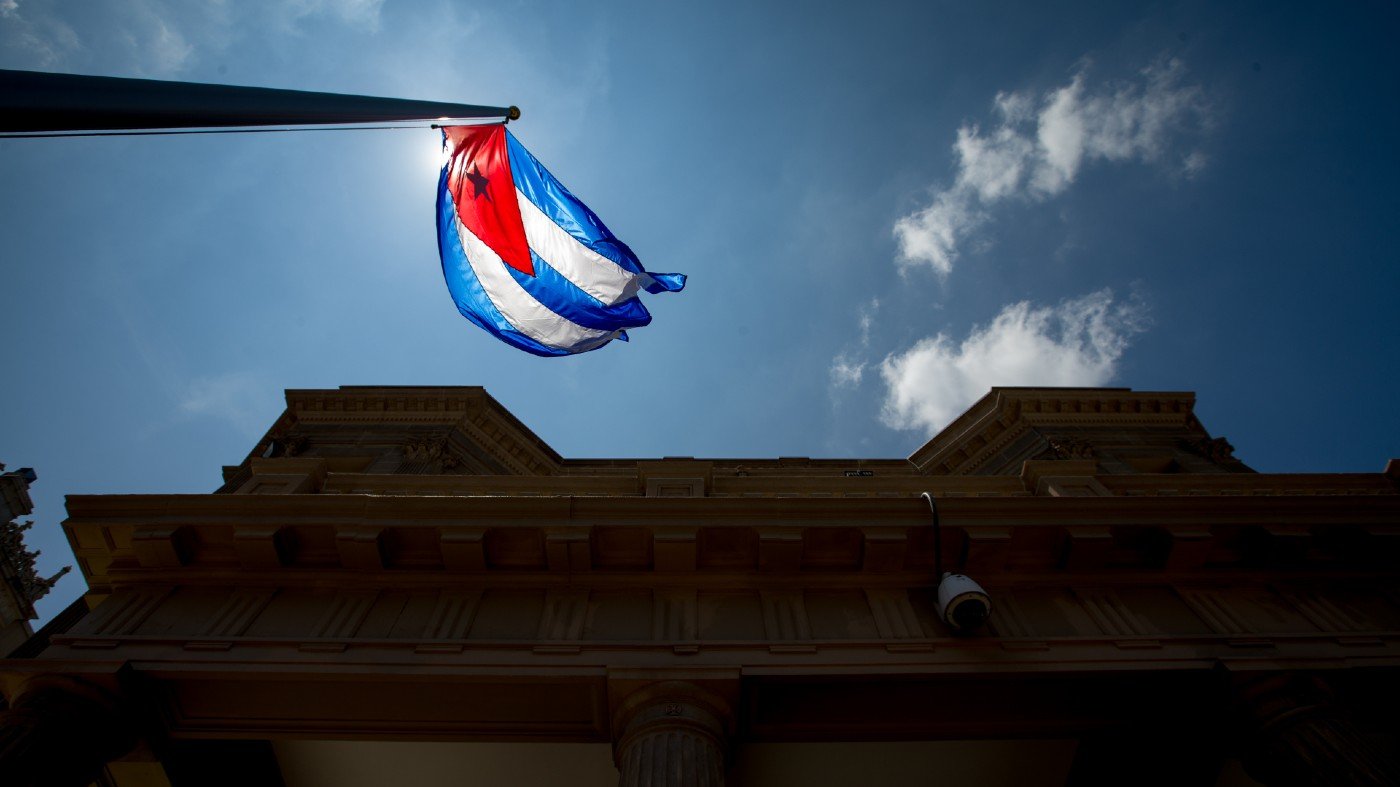
Cuban officials declared Sunday that the nation's armed forces are actively preparing for potential military confrontation with the United States, citing escalating rhetoric and threats from the Trump administration as justification for heightened defensive measures.
Deputy Foreign Minister Carlos Fernández de Cossío stated during an interview on NBC's 'Meet the Press' that Cuba would be 'naive' not to prepare given current global tensions. 'Our military is always prepared. And in fact it is preparing these days for the possibility of military aggression,' de Cossío said. He expressed hope that conflict could be avoided, questioning why Washington would consider military action against a neighboring nation.
Trump's Escalating Rhetoric
The Cuban statements follow President Trump's recent declaration that his administration would be 'taking Cuba' in some form after implementing a weeks-long oil blockade against Havana. The blockade has reportedly caused significant civilian hardship, with citizens complaining of power outages and hospitals reporting dire circumstances.
Trump has justified his aggressive posture by claiming Cuba's government poses a threat through its alleged support for 'numerous hostile countries, transnational terrorist groups, and malign actors.' Secretary of State Marco Rubio, a prominent critic of Cuba's communist government, has echoed this hardline position, though he recently denied reports that the administration was planning to oust Cuban President Miguel Díaz-Canel.
Regional and Global Context
The Cuba confrontation occurs against a backdrop of broader regional interventions by the Trump administration. This year alone, Washington ordered the capture of Venezuelan leader Nicolás Maduro and supported Israel's operation that killed Iran's former Supreme Leader Ayatollah Ali Khamenei. These actions have raised concerns among some lawmakers about global perceptions of American foreign policy.
Representative Jim McGovern (D-Mass.) warned that Trump's approach could have dangerous consequences. 'Donald Trump thinks he can bully himself around the world and take over this country or that country or whatever country he wants,' McGovern said during a Bloomberg interview. 'That's going to come back to bite us in the rear end, quite frankly. And it's a really dangerous precedent. I can only imagine what China and Russia are thinking right now.'
Cuban President Miguel Díaz-Canel responded defiantly to the American threats last week, declaring that 'any external aggressor will clash with an impregnable resistance.' His statement reflects Cuba's historical posture toward perceived U.S. aggression, dating back to the Cold War era and the 1962 missile crisis.
The administration's approach to Cuba mirrors its recent pattern of confrontation and de-escalation with Iran, where threats have been followed by temporary pauses in military action. Similarly, the U.S. military faces mounting strain from multiple potential conflict zones, raising questions about strategic priorities and resource allocation.
As tensions mount, the situation highlights the complex dynamics of U.S.-Cuba relations, which have oscillated between diplomatic openings and renewed hostility across multiple administrations. The current escalation represents a significant reversal from the normalization efforts undertaken earlier this century, returning to a more adversarial posture reminiscent of Cold War tensions.