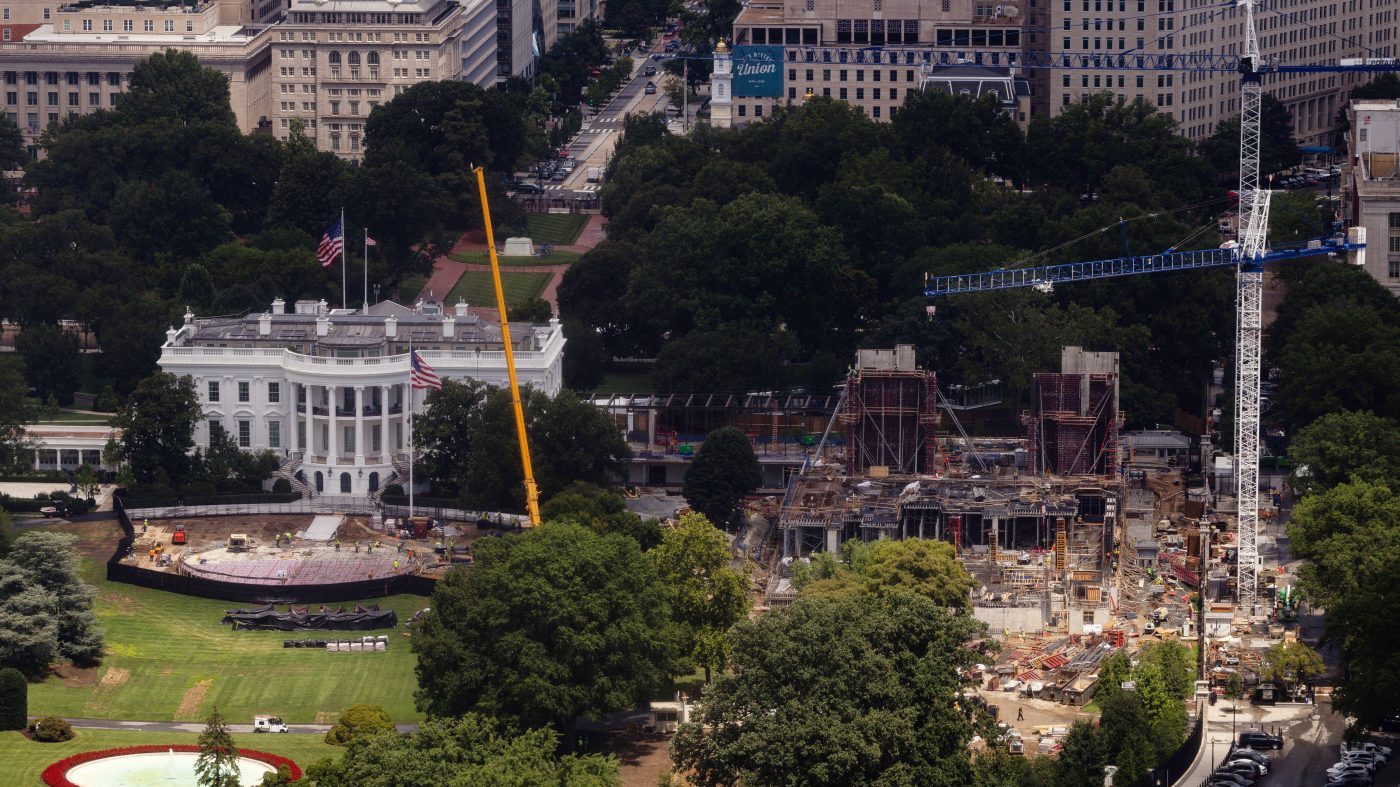
A federal appeals court on Friday dealt a significant setback to President Trump's ambitious plan to build a lavish ballroom at the White House, ruling that the project cannot proceed without congressional approval. The 2-1 decision from the U.S. Court of Appeals for the D.C. Circuit halts all above-ground construction, though it allows below-ground work that the administration claims is essential for security.
The court's ruling stems from a lawsuit filed by a preservationist group challenging the president's use of privately raised funds to demolish and rebuild parts of the historic executive mansion. The majority opinion, written by Judge Patricia Millett and joined by Judge Brad Garcia, emphasized that Congress holds the constitutional power of the purse and has not authorized such a sweeping renovation.
“We are aware of no instance in American history in which a President unilaterally and using privately collected funds demolished substantial portions of the White House that Congress authorized to be built and American taxpayers paid for. Until now,” the judges wrote.
The panel's ideological split was evident. Judges Millett and Garcia, appointed by Democratic presidents, formed the majority. In dissent, Judge Neomi Rao, a Trump appointee, argued that the preservationist group lacked standing to sue and that the president likely has authority over White House construction. Rao accused the lower court and her colleagues of “judicial overreach,” asserting that “construction should be allowed to continue.”
The court has temporarily stayed its order for two weeks, giving the Trump administration time to appeal to the Supreme Court. This case is the latest in a series of legal battles over presidential authority, including disputes over birthright citizenship and other executive actions.
The White House ballroom project, which began last fall with the demolition of the East Wing, is a massive 90,000-square-foot undertaking. As the administration defends the project's legality, it has increasingly stressed national security justifications, pointing to recent shootings near the president's location as evidence of the need for enhanced protective features.
Critics, however, see the project as an overreach of executive power and a misuse of private donations. The D.C. Circuit had previously allowed construction to continue while the appeal was pending, but Friday's ruling changes the landscape, potentially forcing a halt to most work unless the Supreme Court intervenes.
This decision comes amid broader political tensions, as Trump's influence continues to shape Republican primaries, with mixed results. In Tennessee, for instance, a Trump-endorsed candidate was recently ousted, highlighting the limits of his sway. Meanwhile, Senate leaders are grappling with spending and recess negotiations, as detailed in ongoing fiscal disputes.
The immediate future of the ballroom remains uncertain. If the Supreme Court declines to hear the administration's emergency appeal, the project could be stalled indefinitely, pending a full trial on the merits. The White House has not yet commented on the ruling, but insiders suggest the president is determined to press forward, possibly by seeking new legislation from Congress.
Legal experts note that this case could set a precedent regarding the limits of presidential authority over federal property and the use of private funds for public projects. The outcome may also influence other battles over executive power, as seen in recent controversies involving appointments and oversight.
For now, the two-week stay provides a brief window for the administration to seek relief from the highest court. Should that fail, the ballroom's fate will rest with Congress, which has shown little appetite for authorizing such a costly and controversial project.