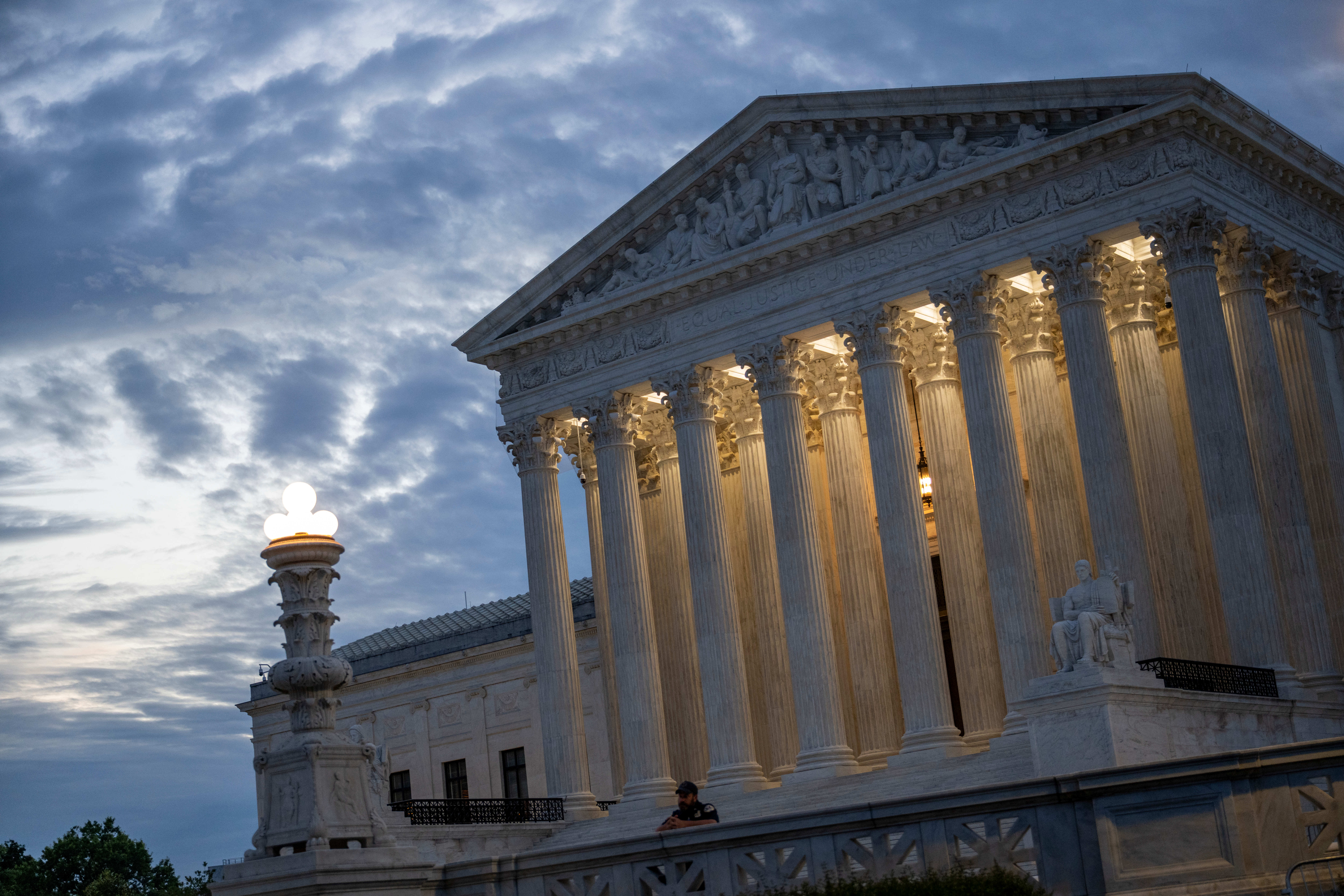
Americans may not care about the exact number of justices on the Supreme Court, but they care deeply about whether the court is fair. Trust in the institution is eroding—not because of any single ruling, but because the court itself is increasingly seen as a political prize rather than a neutral arbiter.
That fear is well-founded. Democrats have repeatedly introduced legislation to expand the court from nine to 13 or even 15 seats, driven by frustration with a conservative supermajority they view as illegitimately obtained. Republicans, watching those bills and threats to eliminate the filibuster, feel compelled to act preemptively.
The filibuster has already been weakened by both parties for judicial appointments. What remains may not survive this cycle. Each side's threats justify the other's, creating an escalation with its own logic. The endpoint is a court with 17, 20, or even 30 justices, staffed largely by whoever won the last election, its independence shredded.
Marc Hodak, a corporate governance expert who advises global institutions, argues that Republicans don't need to write their own court-packing legislation—Democrats already did it for them. The Judiciary Act, introduced by progressive Democrats in 2021, 2023, and again in 2024, would expand the court and give the sitting president authority to fill new seats immediately. With a Republican in the White House and a Republican-controlled Senate, passing that bill today would produce a conservative supermajority that outlasts multiple Democratic administrations.
No Democrat, including the bill's sponsors, would vote for their own legislation under these conditions. That contradiction is leverage, and it points toward a deal.
The Deal on the Table
Hodak proposes a straightforward bargain: Republicans should prepare two bills and make clear one will move. The first is a clean version of the Democrats' expansion legislation, brought to the floor for a vote. The second is a constitutional amendment permanently fixing the court at 11 justices—with the two new seats filled by the next two presidents, regardless of party. That last point is critical: it signals the goal is institutional stability, not locking in the current conservative majority.
The message to Democrats is simple: help us pass the amendment, or watch us pass your bill in our favor.
This is not a bluff designed to humiliate the opposition. A constitutional amendment locking in 11 seats does not favor either party in the long run, but it removes the court's size from the political chessboard. No politician who accepts this deal gets exactly what they want, but they prevent something far worse: the destruction of a critical institution in the system of checks and balances.
The objection that a constitutional amendment is too hard to pass misses the point. The difficulty of amending the Constitution is exactly what makes this a durable solution, unlike a statute any future Congress can repeal. And the current political environment—where both parties claim to be defending the court's legitimacy—may be the best window in decades to get it done. Polling consistently shows Americans want structural stability for the court, even when they disagree sharply with its rulings.
The Supreme Court has endured for 150 years with a stable bench. It has survived landmark decisions that enraged half the country. What it may not survive is becoming the thing both parties are now threatening to make it: a deep keel ripped away from the ship of our republic for temporary partisan advantage. A recent cross-partisan voting analysis suggests the court is less partisan than critics claim, but the perception of politicization is itself damaging. Meanwhile, GOP legislative offensives following recent rulings show how quickly the battle lines harden.
Hodak notes that in 30 years of advising institutions, he has watched this dynamic play out in boards, regulatory bodies, and markets: once the rules are seen as negotiable, the negotiations begin. The restraint that kept both sides from acting is itself the casualty—and it cannot be rebuilt from the rubble of the first move. That is where the Supreme Court is headed.
Our institutions have carried this country through many storms. A stable, independent Supreme Court is indispensable to that continuity, regardless of its current composition or which party benefits from its decisions today. The sincerity of Washington leaders in valuing the court is not in doubt. What is in doubt is their political courage. With the right deal on the table, we can rely on their survival instincts to get us through the current tempest.