Every June, the Supreme Court releases a flurry of decisions to clear its docket before the summer recess. These rulings are often high-profile and politically charged, touching on issues like birthright citizenship, presidential removal powers, and transgender athlete bans. Critics quickly accuse the justices of legislating from the bench for partisan gain, a view reinforced by recent Pew polling showing widespread public skepticism.
But a closer look at the court's actual voting patterns tells a different story. Take the opinions issued on June 18. That day, the court handed down three decisions: U.S. v. Hemani, T.M. v. University of Maryland Medical System, and Hunter v. U.S. Only the Second Amendment case Hemani drew significant media attention, the others passing largely unnoticed.

These routine days, however, reveal the court's true nature. In Hemani, the justices ruled unanimously in favor of the criminal defendant. Justice Neil Gorsuch wrote the opinion, joined by six colleagues. Samuel Alito and Elena Kagan concurred in the outcome but wrote separately to offer alternative legal reasoning. Such near-unanimity is common.
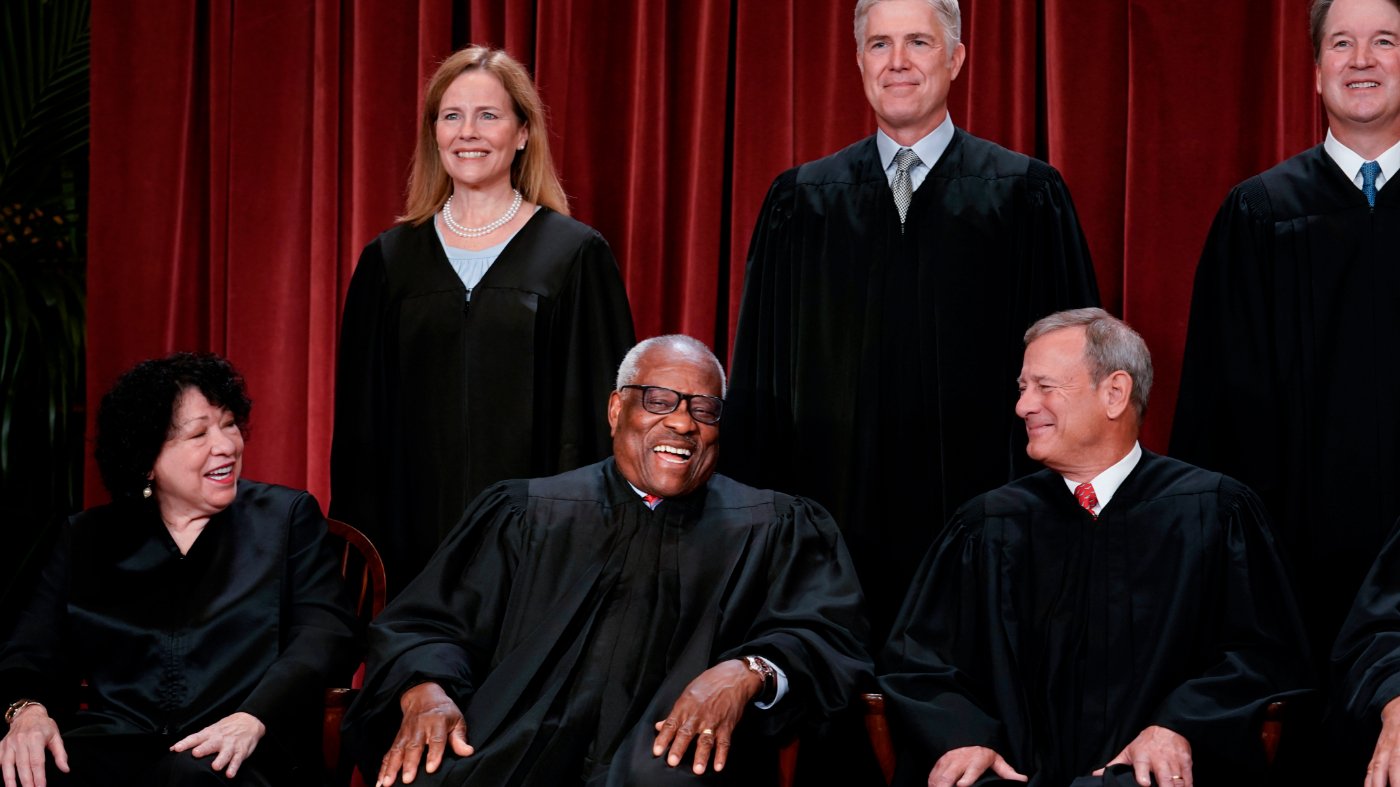
The other two cases showed even more striking cross-partisan coalitions. One was an 8-1 decision with only Clarence Thomas dissenting. The other was a 5-4 split where the majority included Sonia Sotomayor, Clarence Thomas, Brett Kavanaugh, and Ketanji Brown Jackson—an ideological mix of the court's most conservative and liberal members—while Chief Justice John Roberts, Gorsuch, Kagan, and Amy Coney Barrett dissented.
This is not an anomaly. Unanimous or near-unanimous rulings and cross-partisan voting coalitions are the norm. Over recent terms, unanimous decisions have ranged from 50 to 70 percent of the docket. Even the justices who vote together least often—Alito and Jackson—still aligned in 53 percent of cases during the 2024 term, according to the Empirical SCOTUS 2024 StatPack.
Partisanship is not absent, but it is not the court's modus operandi, unlike in Congress or the presidency. The distinction between judges and politicians is real: judges are primarily concerned with law, even if aware of political implications. Losing that distinction undermines the rule of law itself.
For context, the court's recent rulings have also sparked debate on other fronts. For instance, the GOP has mapped a legislative offensive after the Supreme Court upheld birthright citizenship, while critics have accused the justices of enabling executive overreach in cases like Shapiro's blast over Trump's $2 billion windfall. Yet these high-profile disputes obscure the court's routine, cross-partisan work.
As Matthew Brogdon, senior director of Utah Valley University's Center for Constitutional Studies, argues, the court's behavior challenges the narrative of a purely partisan institution. The data shows that justices frequently cross ideological lines, belying the simplistic labels of "conservative" and "liberal."