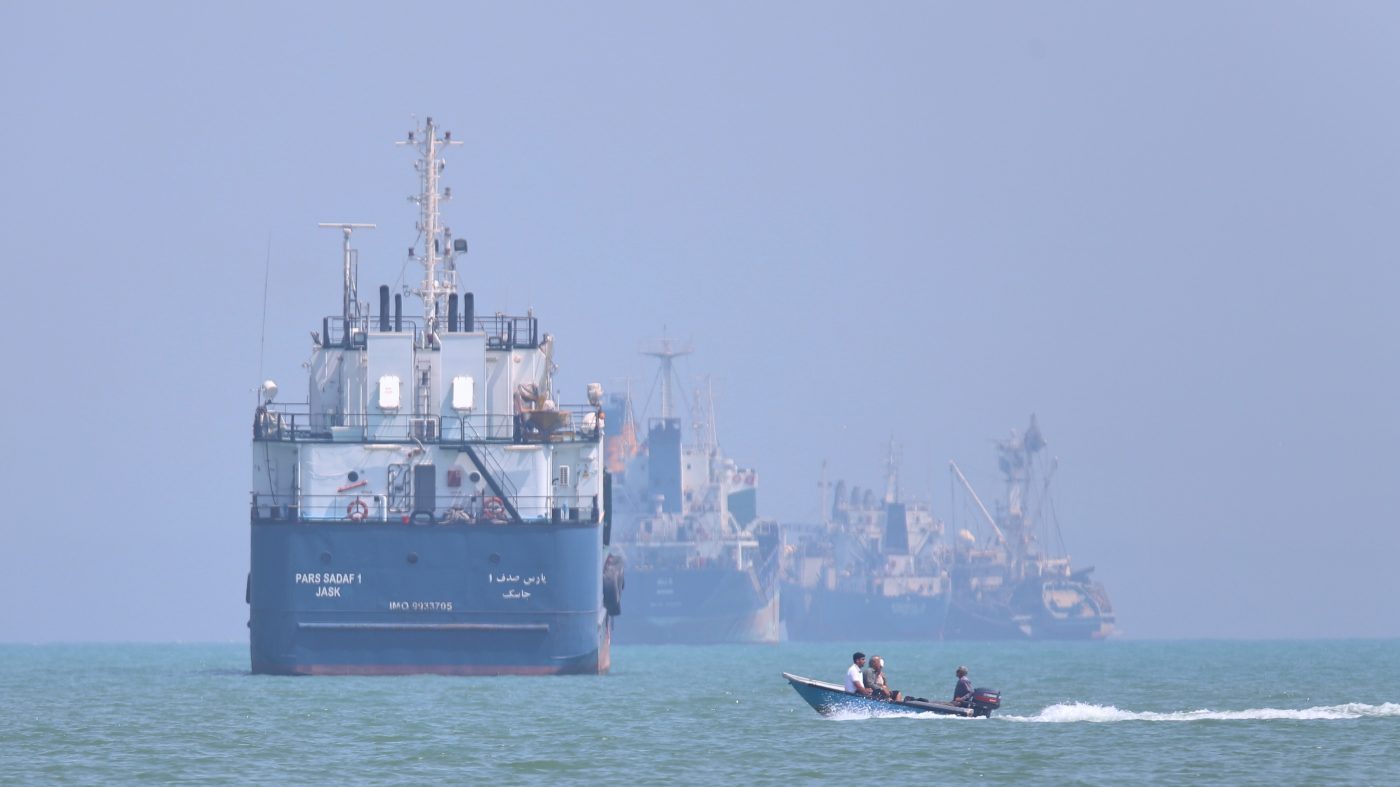
A foreign container ship ran aground in the Strait of Hormuz early Wednesday, according to Iranian state television, after the vessel deviated from a route authorized by Tehran. The Associated Press reported the grounding, which occurred as 42 vessels were in the strategic waterway and 11 ships transited the strait over the previous 24 hours, according to tracking data from hormuz.data-tracking.net.
Of those 11 transits, nine ships moved from the Gulf of Oman into the Persian Gulf, while two headed outbound toward the Arabian Sea. One outbound vessel took the northern route near Iran, and the other used the southern passage through Omani and UAE waters, the data showed.

The grounding follows a broader effort by the United Nations International Maritime Organization (IMO) to restore normal shipping through the chokepoint, which handles about one-fifth of the world's oil. Last Tuesday, the IMO launched an evacuation operation to remove more than 11,000 seafarers from the strait. Under that plan, ships could use either the northern route close to Iran or the southern route near Oman and the UAE.
The IMO aimed to boost daily traffic to prewar levels of roughly 130 ships, according to U.N. News. But that effort stalled after an Iranian attack on a vessel in the Gulf of Oman last week. IMO Secretary-General Arsenio Dominguez said the affected vessels did not transit under the organization's evacuation framework, and the plan will resume only when “further clarity is obtained.”
The recent uptick in traffic through the strait, which Iranian forces restricted after the U.S. and Israel launched the conflict in late February, has helped push oil prices lower. West Texas Intermediate crude traded below $69 per barrel on Wednesday, a drop from wartime highs above $100 and a positive sign for consumers.
Gas prices in the U.S. have followed suit. A gallon of regular gas averaged less than $3.85 on Wednesday, according to the American Automobile Association, down from over $4.50 last month. That relief comes as 61.4 million Americans are expected to travel by car during the Fourth of July week, though prices remain higher than the roughly $3.15 per gallon seen this time last year.
The grounding and ongoing shipping disruptions underscore the fragility of the Strait of Hormuz as a critical energy artery. For more on the broader conflict, see our report on U.S. and Iran trading strikes after a ceasefire unraveled. And for context on how traffic has recovered, read our analysis of Hormuz shipping traffic recovering after U.S.-Iran strikes.