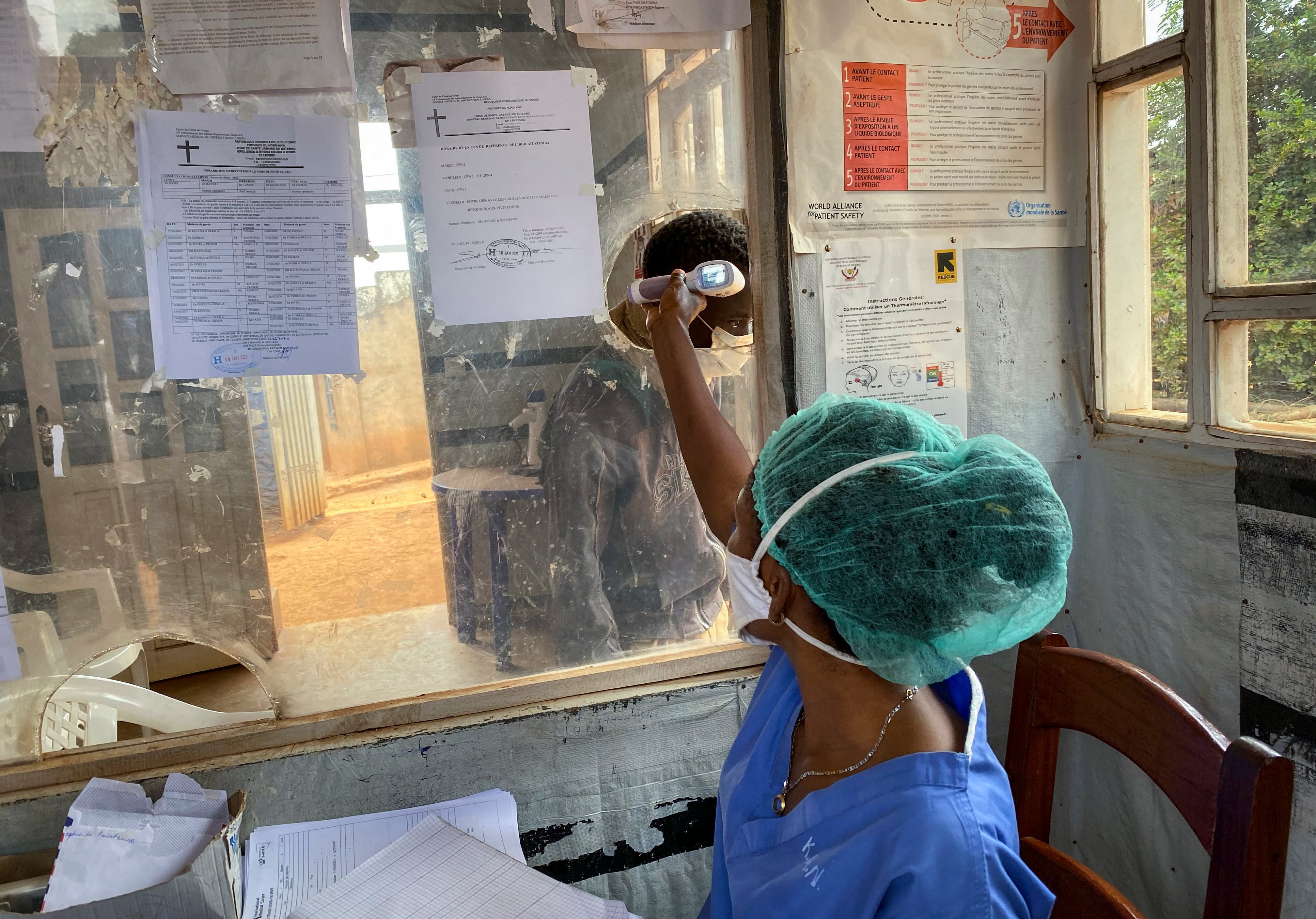
The International Rescue Committee (IRC) warned Tuesday that the Ebola outbreak in the Democratic Republic of Congo could become one of the deadliest on record unless global health authorities mount a more aggressive response. The warning comes as the virus spreads faster than containment efforts, with more than 900 suspected cases and at least 223 deaths reported across Congo and neighboring Uganda.
“The warning signs are flashing red,” said Bob Kitchen, the IRC’s vice president for emergencies, in a statement. He noted that eastern Congo is now more fragile and less prepared than during the 2018–2020 outbreak that killed over 2,000 people. “Increased conflict and cuts to global aid funding have dismantled defenses at exactly the wrong moment. The lesson from every previous outbreak is clear: delays cost lives,” Kitchen added.

The IRC is calling on the United Nations Office for the Coordination of Humanitarian Affairs and the World Health Organization to appoint a UN coordinator to lead the regional response. The aid group also urges health officials to prioritize resources for women and girls, who account for two-thirds of suspected cases. Restrictions on importing personal protective equipment must be lifted immediately, and accreditation for specialist NGOs with Ebola experience should be fast-tracked, the IRC said.
The outbreak is unfolding amid a sharp reduction in international aid. The Trump administration dismantled the U.S. Agency for International Development (USAID) last year and withdrew from the WHO, dealing a severe blow to global health emergency funding. In previous years, USAID led on-the-ground Ebola responses; in 2024, it allocated $12.7 billion—nearly a third of its global foreign assistance—to sub-Saharan Africa. That infrastructure is now largely gone.
“The fact that the U.S. has significantly scaled back, reduced its funding, reduced its footprint, or reduced the number of staff does affect the response,” said Jen Kates, senior vice president and director of the Global and Public Health Policy Program at KFF. “I wouldn’t say that this has contributed to the start of this outbreak. But the loss of infrastructure and capacity is going to take a toll, and that can impact the ability to respond.”
The IRC emphasized that safe humanitarian access and rapid delivery of medical supplies are critical, and that building community trust will be essential to containing the virus. The outbreak has already prompted border closures, including Uganda shutting its border with Congo as the rare Ebola strain spreads rapidly. The economic fallout is also mounting, with Uganda's tourism sector reeling from cancellations and economic anxiety.
Some experts argue the U.S. still has capacity to respond despite recent cuts. Dr. Deborah Birx, who led the U.S. response to previous Ebola outbreaks, told The Hill the country has a “deep bench” to handle the crisis, even with vacancies at the CDC and FDA. But the IRC warns that the window for effective action is narrowing. “The warnings are flashing red,” Kitchen reiterated, urging the international community to act before the outbreak spirals out of control.