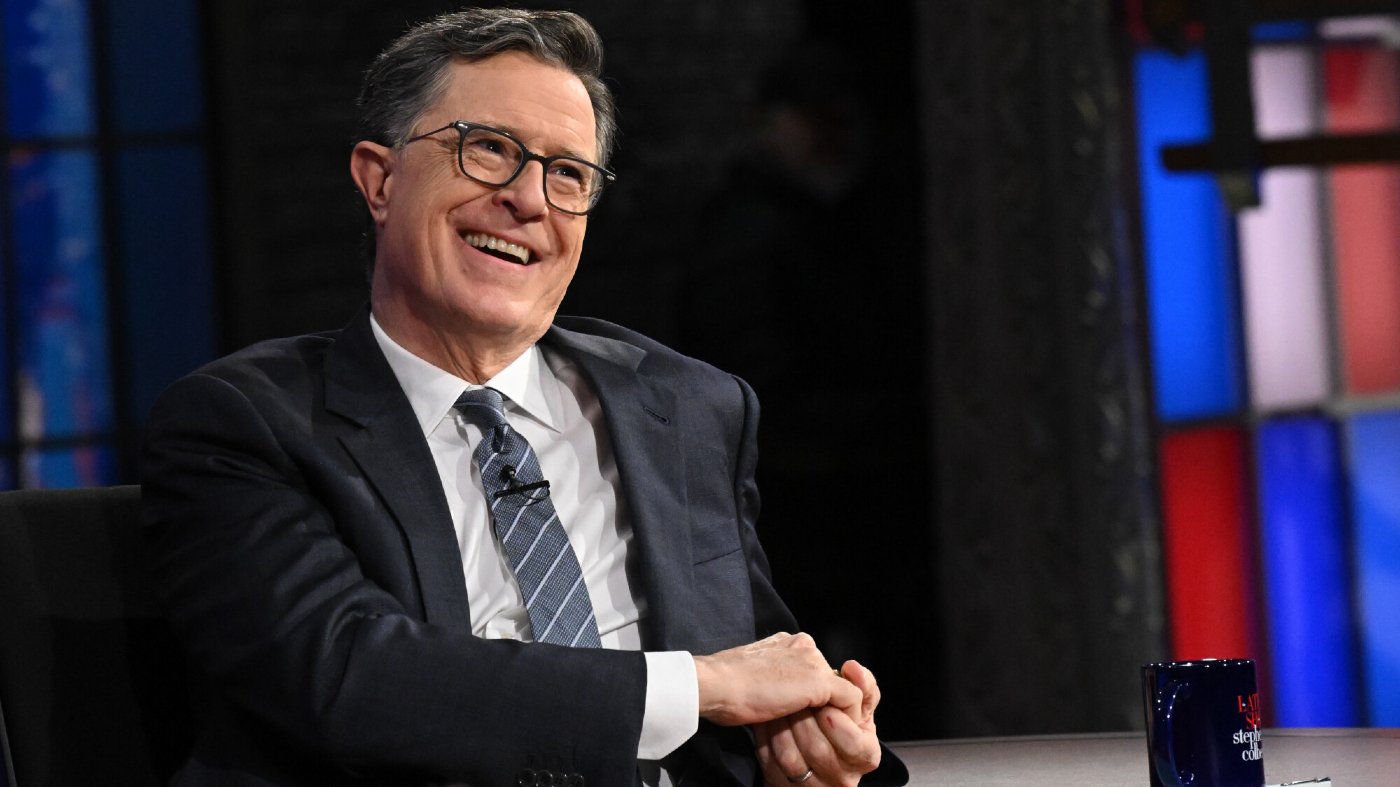
Stephen Colbert is set to deliver his final monologue on Thursday, closing out more than a decade as host of CBS's 'The Late Show' and marking what many see as a turning point for late-night television. The network's decision to cancel the franchise, which began with David Letterman in 1993, underscores a broader contraction in the genre that has grown increasingly political in recent years.
Kliph Nesteroff, a comedian and author of 'The Comedians: Drunks, Thieves, Scoundrels and the History of American Comedy,' compared Colbert's farewell to historic moments in late-night history. 'I think of Johnny Carson's final week, Jay Leno's first week, David Letterman's last NBC week and first CBS week,' Nesteroff said. 'This feels like it belongs with those—it has the magnitude of late-night in the 1990s, even though it's coming about for a far more political and bizarre reason.'
CBS announced the cancellation roughly 10 months ago, calling it 'purely a financial decision against a challenging backdrop in late-night' and insisting it was unrelated to the show's performance or content. The move came as parent company Paramount Global pursued a multibillion-dollar merger with Skydance, which was ultimately approved by the Trump administration's Federal Communications Commission, forming Paramount Skydance.
Colbert, one of President Trump's most vocal late-night critics, had drawn Trump's ire for years. Trump celebrated the cancellation on social media, posting, 'I absolutely love that Colbert got fired.' The president has also attacked other late-night hosts, calling NBC's Seth Meyers 'deranged' and 'untalented' and labeling ABC's Jimmy Kimmel 'in no way funny.'
Stephen Farnsworth, a political science professor at the University of Mary Washington, noted that Colbert was part of a generation of comedians who 'became much more aggressive and critical in their mockery of politics.' He added, 'We've been on a steady trajectory since the more evenhanded days of Johnny Carson towards a much more aggressive and partisan vision of late-night humor.' Farnsworth pointed out that while Colbert's criticism of Trump boosted his ratings, 'it hasn't helped him with the new conservative ownership of CBS.' Paramount Skydance CEO David Ellison and his father Larry Ellison are seen as Trump allies.
Colbert's career began on 'The Daily Show' in the late 1990s, and he launched 'The Colbert Report' on Comedy Central in 2005, playing a bombastic conservative cable host. Nesteroff described that show as 'legendary political satire,' but said 'The Late Show' felt like 'a smoothing of the satirical edges for more palatable mainstream consumption.' He added, 'This happening to him is bizarre because it was really the previous show that felt like the hard-hitting political show more than this one.'
Farah Latif, an adjunct professor at George Washington University, said Colbert will be remembered for making late-night more political, but argued his true legacy is making politics a priority. 'They attribute their success to increased involvement of young voters being more involved in politics, being more aware, have increased news consumption,' she said. Colbert frequently hosted high-profile political candidates, and his show was a consistent ratings winner for network TV.
The cancellation has sparked broader questions about the future of late-night. David Letterman, the original host, recently called CBS 'lying weasels' over the decision and predicted the end of late-night as we know it. Meanwhile, Kimmel is stepping aside for Colbert's finale by airing a rerun, and some hosts have openly wondered if they might be next. The shrinking landscape reflects what Farnsworth described as a shift driven by a polarized audience: 'Politics itself has become much more intensely critical and partisan over the last 30 years. The voters and the politicians themselves have moved in more polarized directions. The audience changes, the hosts need to change with it.'
As Colbert prepares to sign off, the moment feels both historic and uncertain. Nesteroff summed it up: 'It feels like it has the magnitude of what late-night had in the 1990s, despite the fact that it's coming about for a far more political and bizarre reason.'