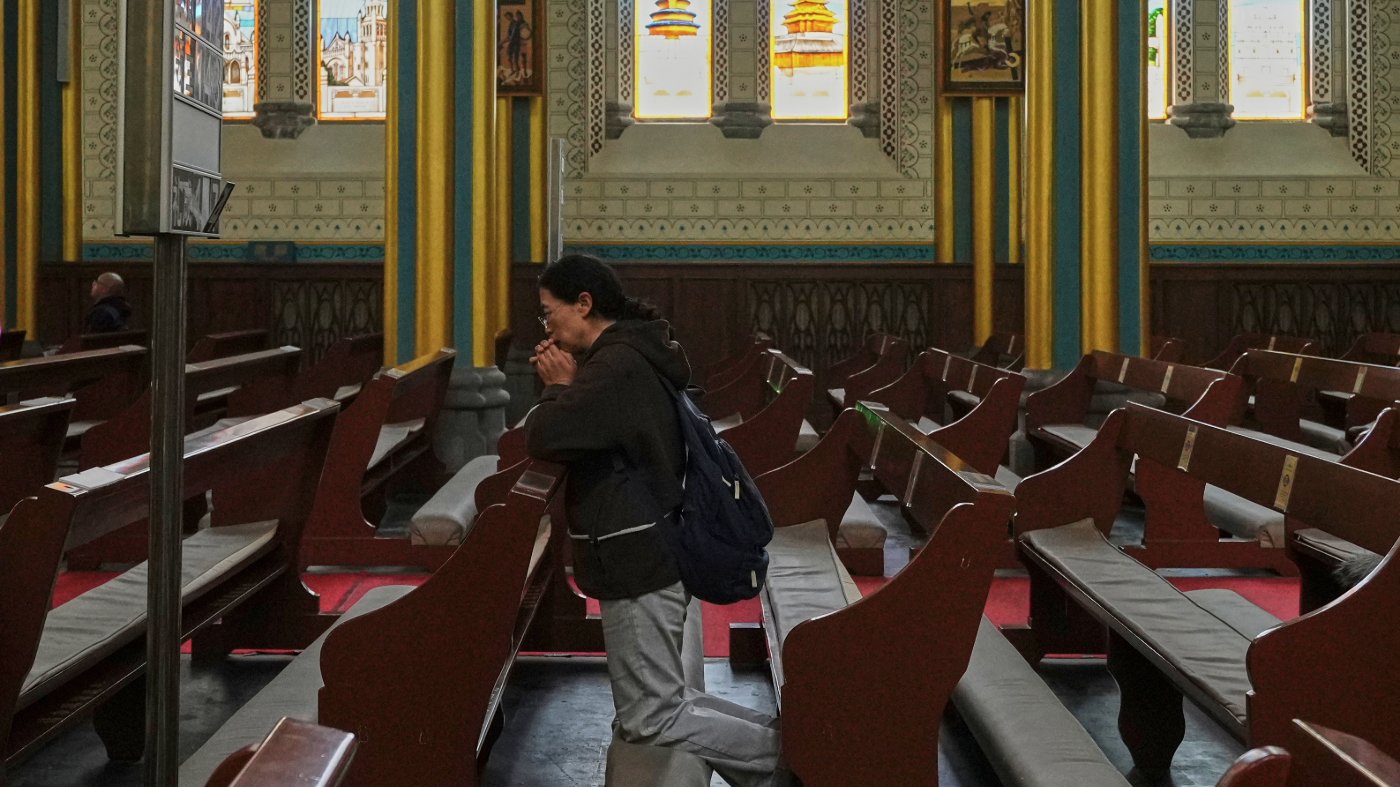
The Chinese Communist Party is deploying its state-controlled Catholic body to advance a sweeping ethnic assimilation law, escalating a campaign that critics say targets religious and cultural freedoms. The Chinese Catholic Patriotic Association, Beijing's sanctioned version of the church, has thrown its weight behind the Law on Promoting Ethnic Unity and Progress, a measure the European Parliament condemned in April as a tool for cultural erasure.
The law, which mandates loyalty to the state over religious convictions, has been pushed by church officials who direct clergy to prioritize national law over Catholic doctrine. This aligns with Xi Jinping's broader drive to 'Sinicize' religion—a process the U.S. Commission on International Religious Freedom defines as subordinating faith groups to the party's Marxist agenda.
The Patriotic Association's endorsement of the law comes as it sidelines Pope Leo XIV's encyclical 'Magnifica Humanitas,' which addresses minority rights and cultural protection. 'Catholic doctrine is being Sinicized in accordance with party dictates,' said Piero Tozzi, senior China director of the America First Policy Institute, in an interview this month.
Beijing's campaign has intensified in recent years. In December 2023, the Patriotic Association issued a five-year plan to deepen the Sinicization of Catholicism. Last December, the National Religious Affairs Administration launched a nationwide drive to study Xi's thoughts on religion. This April, Catholics were ordered to follow directives from a training session at the Central Institute of Socialism, where Bishop Li Shan of Beijing declared that Catholicism must reflect 'Chinese characteristics'—a euphemism for party control.
The crackdown has pushed China's Catholic community into crisis, as reported by a Catholic newspaper in November. The Vatican's 2018 agreement with Beijing, extended three times, was meant to heal a decades-old rift by giving the Pope final say over bishop appointments. But Tozzi called the accord a failure, noting Beijing has unilaterally appointed bishops and redrawn diocesan lines.
Beijing now tells Catholics the Vatican has ordered them to join the Patriotic Church, though the Holy See denied this in 2019. The state-sanctioned Bishops' Conference of the Catholic Church backed the regime's ban on unregistered clergy in a February statement. As the magazine Bitter Winter noted, 'The Chinese Patriotic Catholic Church has entered a new phase of political usefulness,' serving as a tool for enforcing ethnic unity rather than a branch of the universal church.
The Vatican's silence on these developments has drawn criticism. With the Patriotic Association ignoring papal teachings and pushing assimilation, observers warn that China's Catholic community faces an existential threat, caught between party demands and religious fidelity.