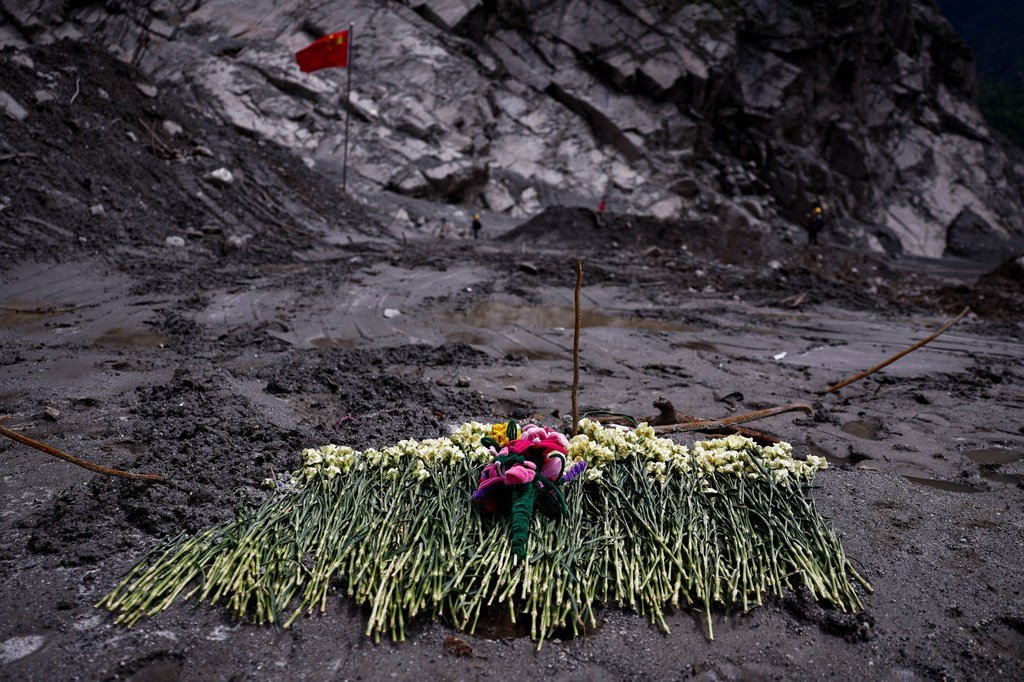
The catastrophic flood that struck the Tibet-Nepal border region on August 26 has ignited a bitter dispute over the true death toll and renewed scrutiny of Beijing's aggressive hydropower expansion in the world's highest mountain range. While Nepali authorities report 1,453 dead and 5,200 missing on their side of the border, China's official count stands at just 43, a figure that critics say is deliberately understated.
According to a source in Kathmandu, the Kyirong County administration in Tibet launched a WeChat-based system for residents to report missing family members on the day of the disaster. However, after 219 people were registered as missing, the system was abruptly shut down. Social media posts have been blocked, and residents who contradict the official death toll face fines of up to $150 or ten days in detention. These information controls, critics argue, are designed to shield the root causes of such disasters from public scrutiny.
Dam Construction Under Fire
The flood has intensified long-standing criticism of China's construction of mega-dams on Tibetan rivers. Chinese researchers and environmental activists have repeatedly linked such projects to regional instability, citing the fragility of the Himalayan ecosystem. Despite these concerns, Beijing continues to expand its footprint, financing more than a quarter of Nepal's 570 hydropower projects. This is widely seen as a geopolitical strategy to break Nepal's traditional energy reliance on India, with China also promoting its electric vehicles in the Nepali market.
However, the environmental risks are severe. Himalayan glaciers are warming at twice the global average, and the construction of massive reservoirs directly beneath them creates a localized greenhouse effect. As with natural glacial lakes, these artificial reservoirs absorb intense high-altitude solar radiation, acting as heat sinks that accelerate glacial melt. Scientists have long warned that such conditions increase the likelihood of glacial lake outburst floods, a threat that now hangs over communities across Tibet, Nepal, India, and Bhutan.
Cultural and Historical Context
The disconnect between Beijing's centralized policies and the ecological realities of the Tibetan Plateau is not new. A 9th-century treaty between Tibet and China proclaimed, "Tibetans shall be happy in Tibet, and Chinese shall be happy in China," echoing the traditional proverb, "Those living near mountains live off the mountains; those living near water live off the water." Yet, critics argue that China's approach has consistently ignored Tibetan voices and traditional ecological knowledge, from the disastrous terracing of highland barley fields during the commune era to the forced relocation of nomadic herders.
In contrast to open societies that increasingly incorporate indigenous knowledge into climate adaptation strategies, China has intensified efforts to assimilate minority cultures. This year, Beijing codified policies that critics compare to the Indian residential school system, which was dismantled in North America decades ago and widely condemned as a tragic mistake. Such measures, the argument goes, dismantle the very cultural framework best equipped to manage the plateau's fragile ecosystem.
Wider Implications
The potential consequences extend far beyond the Himalayas. China has built approximately 95,000 dams, and if any of them were to fail, the resulting floods could dwarf the 1931 Yangtze River flood that killed an estimated 3 million people. The threat is not confined to China; downstream nations, including India, Bangladesh, Pakistan, and Southeast Asian countries, all face similar risks from glacial lake outbursts and dam failures.
As the world grapples with climate change, the wisdom of ancient Chinese poets like Yu Xin, who wrote, "Those who eat the fruit think of the tree; those who drink the stream cherish its source," seems increasingly relevant. Beijing's leaders, instead of viewing Tibetan culture as a threat, might find that the very traditions they are trying to erase hold the key to mitigating the coming environmental crisis. The flood of August 26 is a stark reminder that what happens in Tibet does not stay in Tibet—it flows downstream, affecting millions.