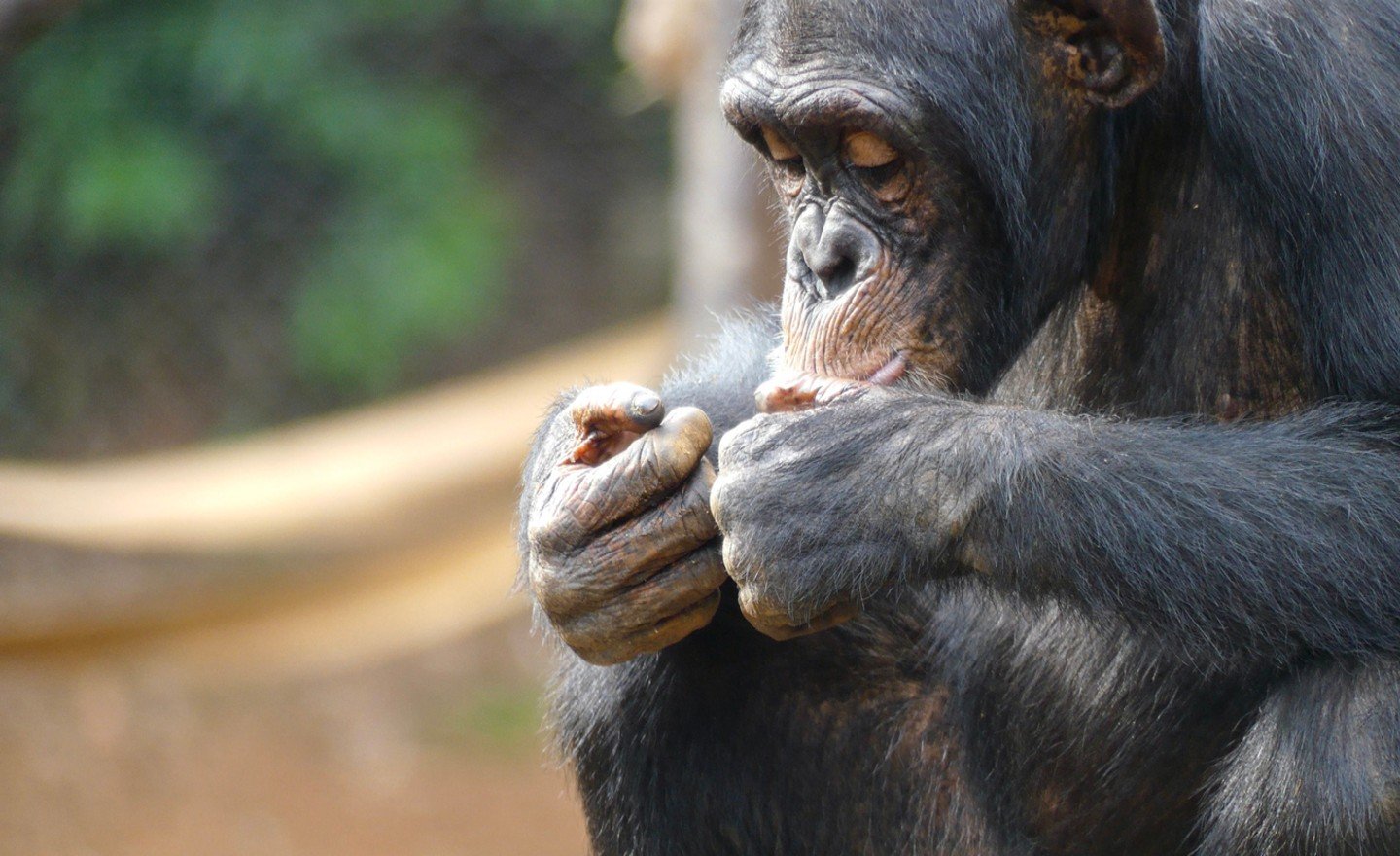
A landmark 30-year study of wild chimpanzees in Uganda has documented a lethal civil war resulting in a permanent political fracture within the largest-known primate group, offering profound insights into the evolutionary origins of human conflict. Published in the journal Science, the research tracked the Ngogo chimpanzee community in Kibale National Park, observing a decisive shift from social cohesion to violent polarization beginning in 2015.
The Fracture of a Primate Society
The Ngogo community, once numbering around 200 individuals, began to splinter in 2015 when chimps from the Central and Western clusters, which had previously coexisted peacefully, engaged in a hostile territorial confrontation. Central group males chased Western chimps away from a central meeting point, initiating a complete breakdown in social and reproductive ties. This event marked the start of a formal separation, with Western males subsequently conducting regular patrols into Central territory to expand their domain.

By 2017, the conflict escalated to lethal violence. Western chimpanzees launched targeted attacks, beginning with the Central group's alpha male. Researchers estimate that between 2018 and 2024, the Western faction killed at least seven adult males and 17 infants from the Central community, cementing a permanent and bloody schism.
Catalysts of Collapse
The study's authors identified several interconnected factors that catalyzed the group's fracture. According to co-author John Mitani, a primatologist at the University of Michigan, "The Ngogo chimps were victims of their own success." He explained that the community's sustained growth to an unusually large size made social cohesion unsustainable, as "individuals couldn't pull together anymore."
Heightened competition for food and mating opportunities, exacerbated by the new reproductive isolation between clusters, further fueled the split. Researchers pointed to three specific triggering events: the deaths of five key adult males in 2014, which weakened social bonds; a change in the alpha male leadership in 2015; and a devastating respiratory epidemic in January 2017 that killed 25 chimpanzees. "Taken together, these events suggest how networks may fracture in the face of multiple demographic and social changes," the study concluded.
Implications for Understanding Human Conflict
The findings challenge conventional assumptions about the primary drivers of political and sectarian violence. The authors argue that since chimpanzees—humanity's closest living relatives—lack human cultural markers like ethnicity, religion, or complex language, their descent into lethal civil war indicates that deeper relational dynamics may be at play. "If chimpanzee groups can polarize, split, and engage in lethal aggression without human-type cultural markers, then relational dynamics may play a larger causal role in human conflict than often assumed," they wrote.
This perspective suggests that the foundations of collective violence, such as the political fractures seen in modern geopolitical standoffs or even domestic political polarization, may have ancient evolutionary roots shared with other primates. The research implies that human conflicts, from tribal warfare to modern civil strife, might stem not solely from ideological differences but from fundamental social dynamics surrounding group size, resource competition, and leadership stability.
The study provides a stark, natural-world parallel to human political fragmentation, suggesting that the capacity for intraspecies war predates humanity itself. As researchers analyze the breakdown of primate societies, the lessons may inform our understanding of the persistent and often intractable nature of human political division, where institutional splits and coalition collapses follow predictable patterns of social stress.