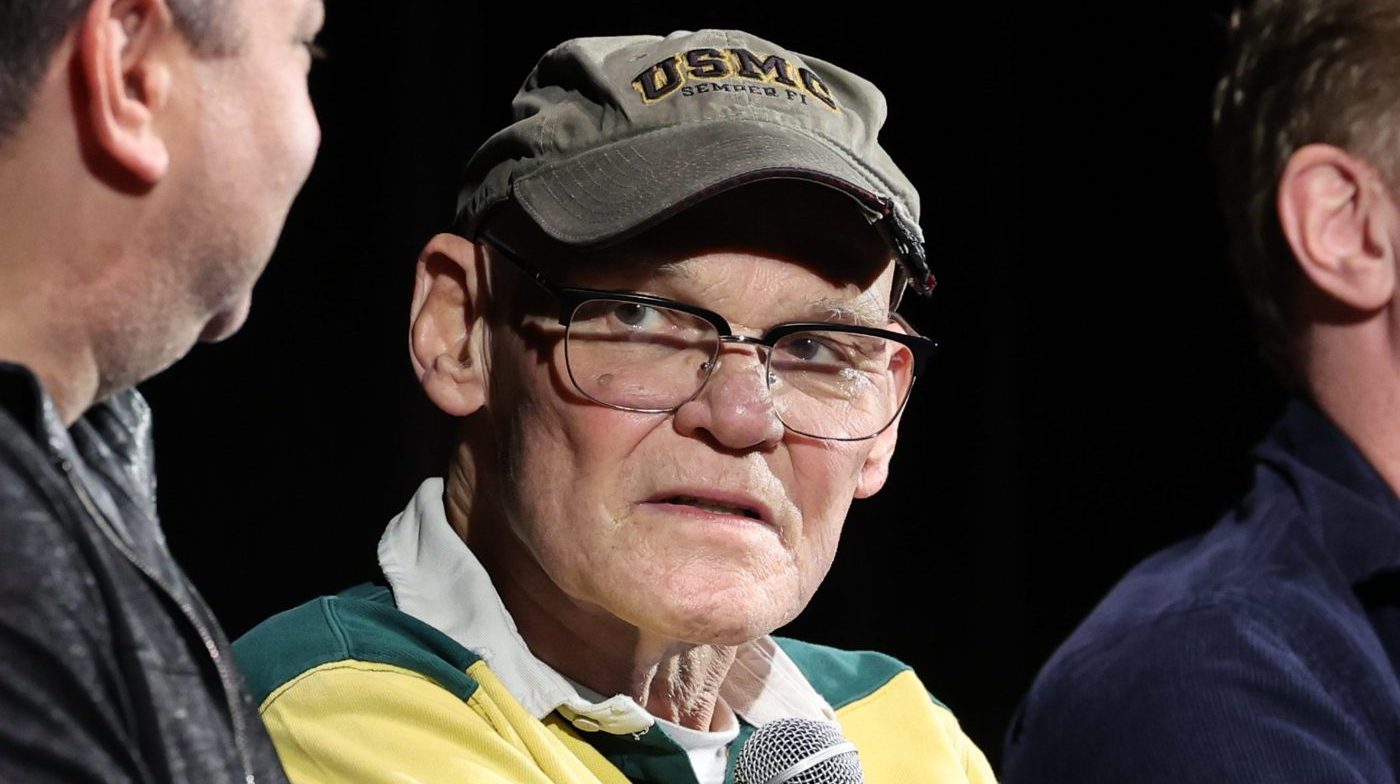
Democratic strategist James Carville has sharply criticized the memorandum of understanding (MOU) the Trump administration signed with Iran, calling it an “instrument of surrender” and declaring that the United States effectively lost the war just as the country prepares to mark its 250th anniversary.
In an interview Thursday night on NewsNation’s “Cuomo,” Carville offered a nuanced take that mixed condemnation with grudging credit. He acknowledged that President Trump did what previous commanders-in-chief failed to do: exit a costly conflict.
“Let’s give Trump credit where credit’s due,” Carville said. “He did what Lyndon Johnson did not do in Vietnam. Just get out. He didn’t do what Bush and even Obama did in Afghanistan. Just get out. You understand?”
The longtime Democratic strategist compared the Iran MOU—which reopened the Strait of Hormuz and ended hostilities while setting up new negotiations over Tehran’s nuclear program—to President Joe Biden’s withdrawal from Afghanistan. Carville argued that signing a document with the Iranian regime was less humiliating than evacuating troops under fire.
“Well, we had troops. So it’s harder when you have to have actual visual of soldiers, of Marines, of airmen being evacuated,” he said. “That’s more humiliating than just signing an instrument with the regime.”
But Carville contended the real damage runs deeper. He argued the deal betrays the opposition inside Iran and drives a wedge between the United States and Israel, a long-sought goal of the Iranian regime.
“They’ve always wanted to drive a wedge between Israel and the United States,” Carville said. “Mission accomplished. The regime cares about one thing and holding domestic power in Iran. They did that. We really, the people that really lost were the opposition in Iran. There were actually a lot of people that were opposed to this government. I don’t know if they could have succeeded or not, but they’re done now, and they’re even saying that.”
Carville described the MOU as a betrayal of Iranian dissidents. “They’re very smart people. They’re very talented people, and we didn’t treat them with any respect, and we hurt the opposition in Iran by this. It’s not even as stupid as it was, no it doesn’t do justice to just how stupid it was,” he said. “We lost. Happy 250th, America. You just lost a war.”
The Trump administration has pushed back forcefully. Trump argues the deal was necessary to avoid an economic depression, while Vice President Vance has accused critics of wanting endless war. Officials also point to the killing of much of Iran’s former leadership and heavy blows to its military and economy as evidence the conflict left Iran weaker.
Nevertheless, Israeli voices have condemned the MOU, and fighting in Lebanon between Israel and the Iranian-backed Hezbollah could unravel the agreement. Trump has touted a rising stock market and falling oil prices as proof the deal works.
Carville warned that Iran now knows it can choke the global economy by closing the Strait of Hormuz, through which 20 percent of the world’s oil flows. “There’s going to be a risk premium in a barrel of oil for the foreseeable future,” he told Cuomo. “I mean, I can’t, I’m not smart enough to tell you what it is, but I don’t think anybody could deny that. These oil traders are going to demand a premium because now they know, and Iran knows, they got a choke point, and they can bring it out anytime they want to.”
For more on the political fallout, see our analysis of how Trump's Iran deal compares to Obama's pact and the latest on negotiations and Israeli strikes in Lebanon. The broader implications for America's legacy as it approaches its 250th birthday are explored in this piece on Juneteenth and the 250th.