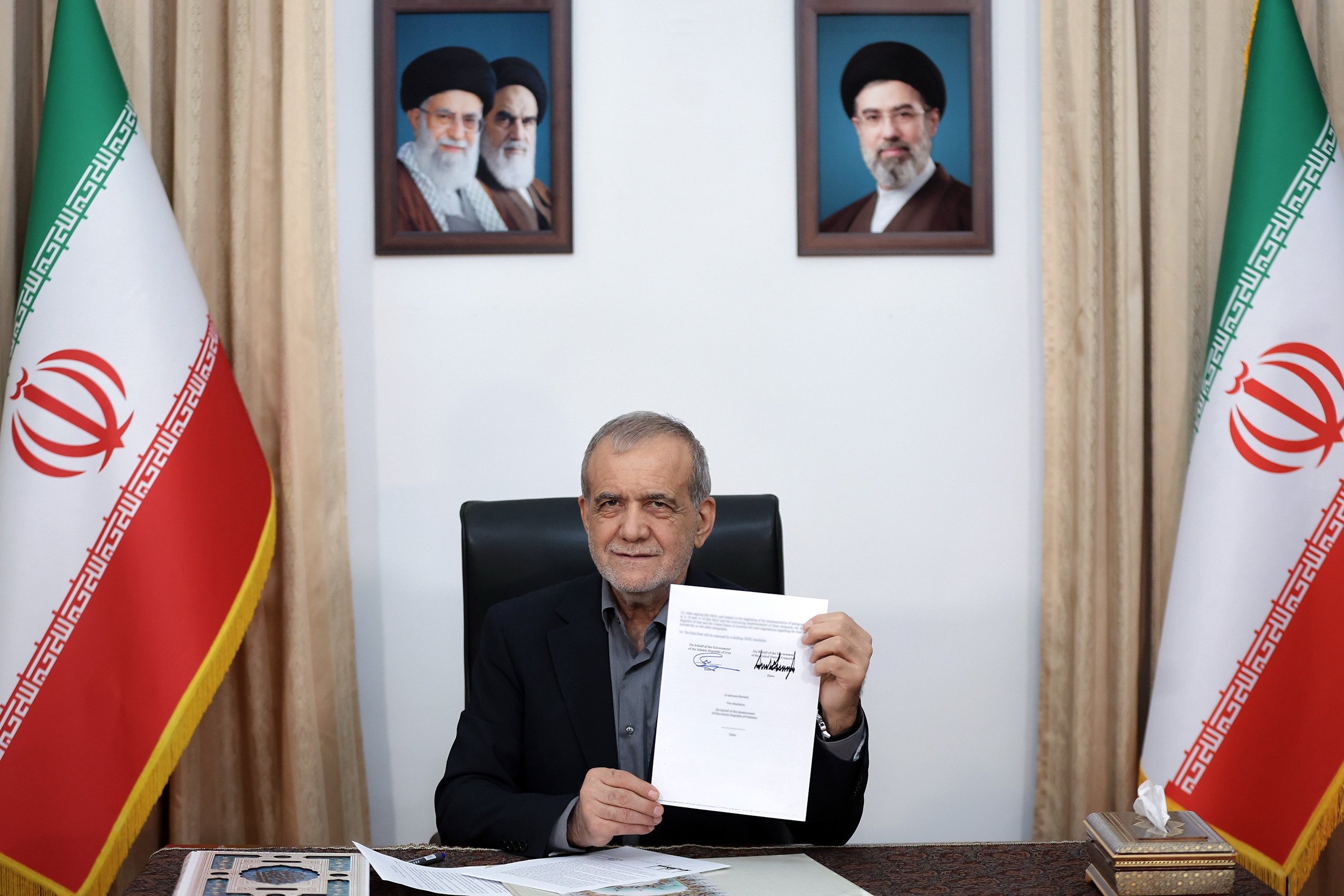
President Trump's long-promised Iran deal has turned into what critics are calling one of the worst foreign policy disasters in decades. Under the agreement, Iran secures immediate sanctions relief, access to tens of billions in frozen assets, and effective control over the Strait of Hormuz—all in exchange for a commitment to forgo nuclear weapons that Tehran had already made in the 2015 Joint Comprehensive Plan of Action.
In 2015, Iran signed the JCPOA with the Obama administration, pledging: “Iran reaffirms that under no circumstances will Iran ever seek, develop or acquire any nuclear weapons.” Trump's new deal extracts a nearly identical promise: “The Islamic Republic of Iran reaffirms that it shall not procure or develop nuclear weapons.” The core concession Iran made to end Trump's military campaign was simply agreeing to something it had already agreed to 11 years earlier.
In return, Iran gets immediate relief from some of the harshest economic sanctions, billions in unfrozen assets, and de facto recognition of its control over the Strait of Hormuz. There is a theoretical, though unlikely, possibility that all sanctions could be lifted and Iran could gain a $300 billion investment fund—a far richer package than what Obama offered in 2015.
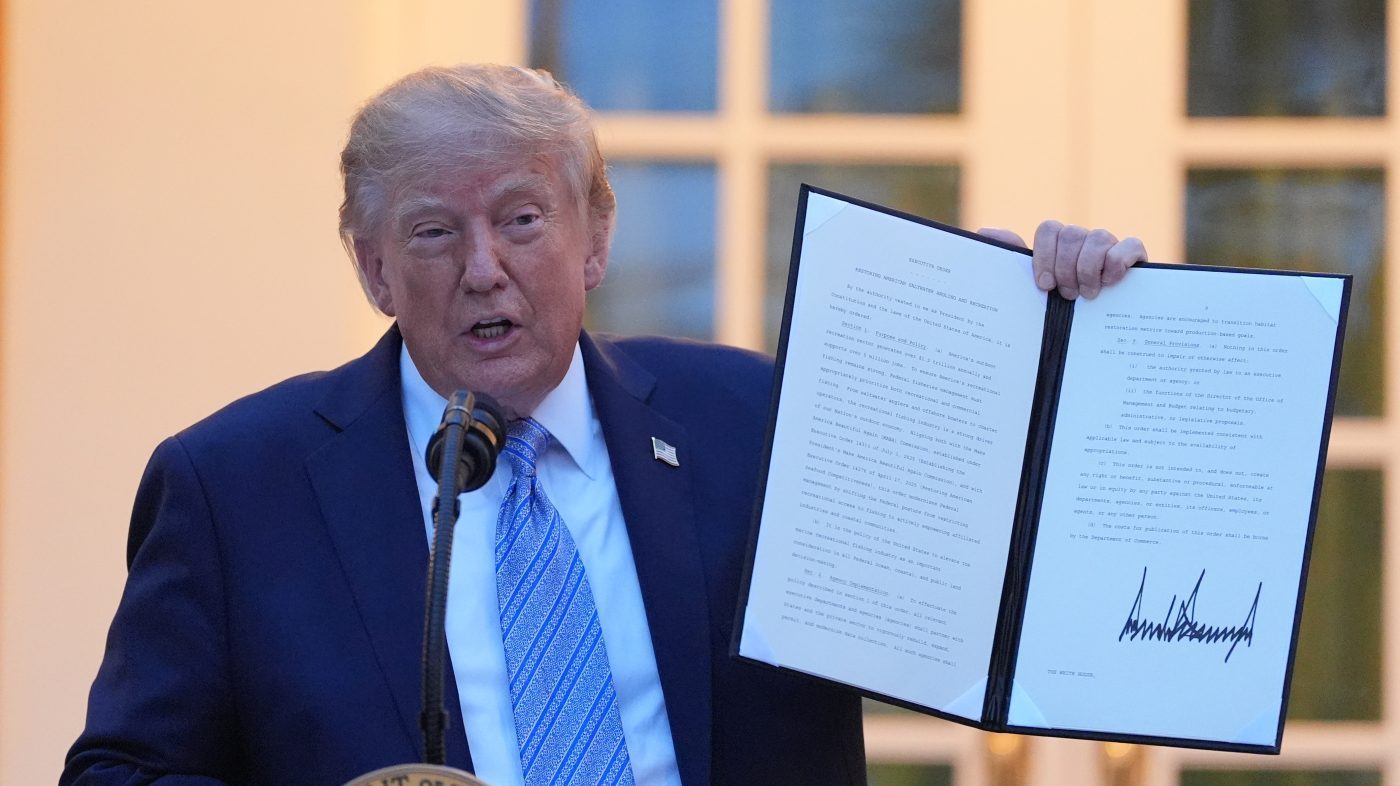
Trump himself once declared: “There will be no deal with Iran except UNCONDITIONAL SURRENDER!” He was correct—he just failed to see that he would be the one waving the white flag. The 14-point agreement is even thinner than it appears: only five provisions take effect immediately, including a ceasefire (explicitly covering Lebanon), lifting the naval blockade, reopening the Strait of Hormuz under Iranian and Omani supervision (with Iran able to charge fees after 60 days), easing oil sanctions, and unfreezing Iranian assets. The only immediate benefit for the U.S. is reopening a strait that was never closed before Trump escalated his war.
Trump has repeatedly railed against Obama for supposedly handing Iran $150 billion (in reality about $50 billion) for a nuclear pledge and IAEA inspections. Now, Trump has agreed to give Iran more than $100 billion for a promise to negotiate—something Iran was already doing for free. As one GOP senator noted, “If this is Trump's idea of a brilliant deal, it's no wonder he's got six business bankruptcies.”
The deal's structure is fragile. Negotiations are supposed to conclude in 60 days, but that timeline can be extended by mutual consent—a loophole both parties have incentive to exploit. If talks never finish, Trump can pretend an amazing deal is just around the corner. More troubling is a clause that requires U.S. forces to withdraw from proximity to Iran within 30 days of a final deal. This could force the Fifth Fleet to abandon its base in Bahrain, effectively ceding the Strait of Hormuz to Iranian control. Senator Chuck Schumer slammed the agreement as “the Art of the Surrender.”
Conspicuously absent from the agreement are any provisions addressing Iran's missile program or its support for regional proxies like Hamas, Hezbollah, and the Houthis. The deal leaves Iran with undiminished power to destabilize the Middle East, an end to its financial and diplomatic isolation, and control over a key global chokepoint—all for a promise it had already made.
This disaster was avoidable. The blame, however, does not rest solely with Trump. His enablers—from Marco Rubio, who remained silent to earn a political endorsement, to congressional Republicans terrified of the MAGA base—voted repeatedly to let the war continue while the American economy bled. They are not leaders but time-serving sycophants who abandoned the country when it needed them most. As Trump's unprecedented era of graft continues, these enablers will not be forgotten.