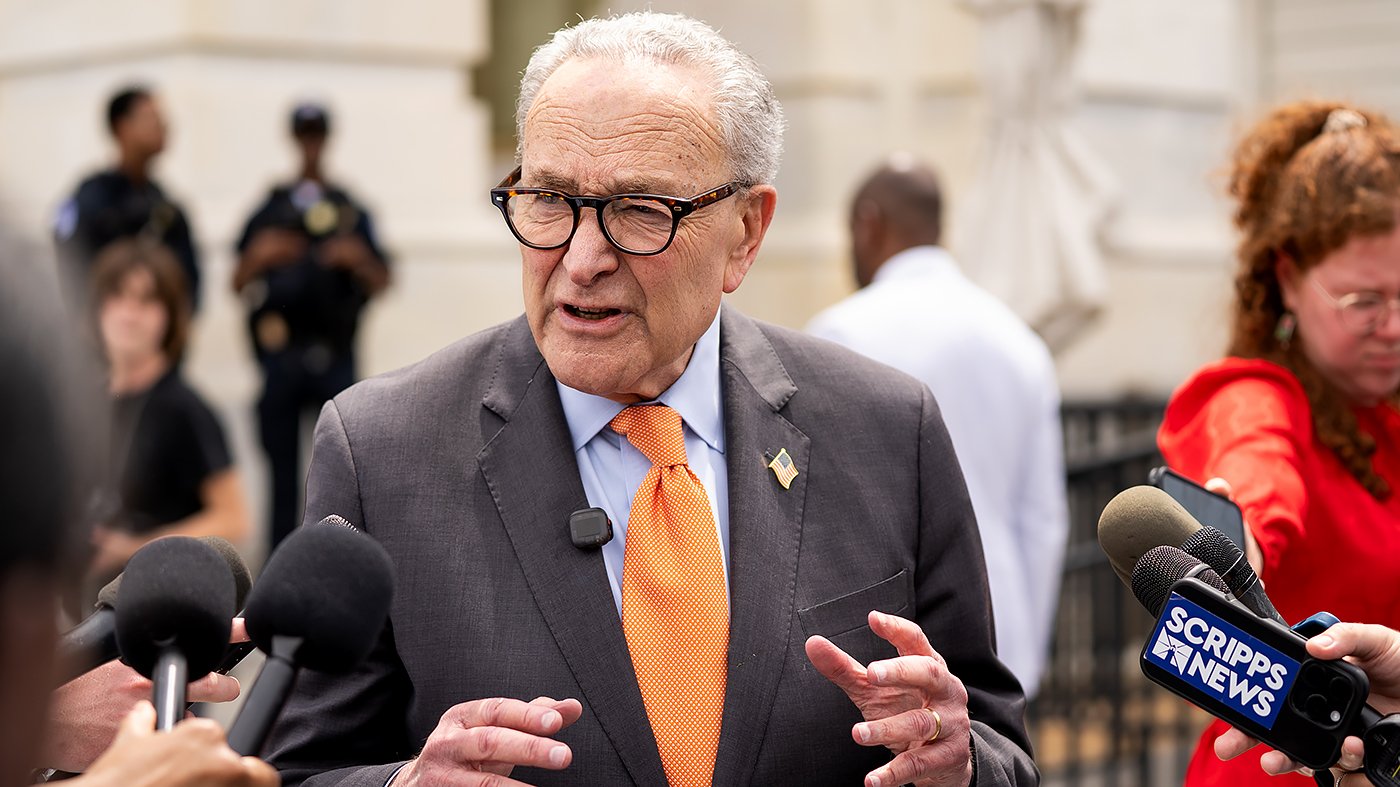
Senate Democratic Leader Chuck Schumer (D-N.Y.) on Thursday delivered a blistering critique of President Trump's agreement with Iran to reopen the Strait of Hormuz, calling it a strategic giveaway that hands Tehran a major victory while leaving the United States in a weaker position.
In an appearance on MSNBC's The Last Word with Lawrence O'Donnell, Schumer derided the deal as "the art of the surrender"—a direct jab at Trump's self-cultivated image as a master negotiator, famously chronicled in his 1987 book Trump: The Art of the Deal. "This is not the art of the deal. This is the art of surrender," Schumer said. "It's not peace through strength. It's payoffs through weakness."
The New York Democrat argued that Trump's military campaign against Iran, launched with strikes on February 28, has cost tens of billions of dollars, led to the deaths of 13 American service members, and driven gas prices up by more than $1.50 per gallon. "He has no plan. He has no goal. He has no endgame," Schumer charged. "So now we have 13 Americans dead. We have hundreds more wounded. We have oil prices at four dollars. We have a strengthened Iran and the world is laughing at America."
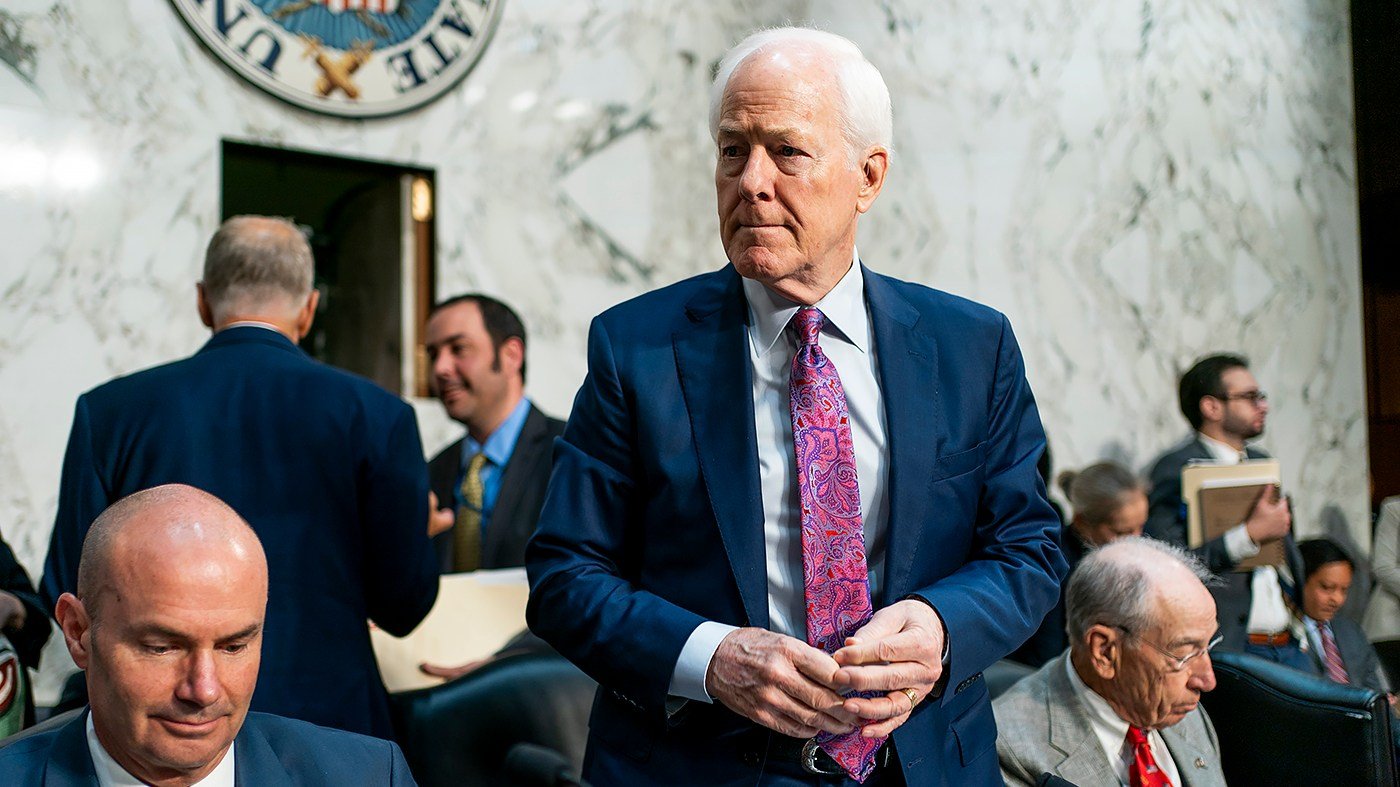
Schumer placed significant blame on Senate Republicans, who he said repeatedly refused to back Democratic-led war powers resolutions that would have forced Trump to withdraw U.S. forces from hostilities unless Congress authorized the conflict. "We gave them eight times to vote against this damn war," Schumer said. "They were so afraid of Trump that they refused. They could have joined us in a War Resolution, and we could have actually stopped this damn war."
Only four Senate Republicans have voted for such resolutions: Sens. Rand Paul (Ky.), Susan Collins (Maine), Lisa Murkowski (Alaska), and Bill Cassidy (La.). Paul was the sole GOP defector in earlier votes. The war powers measure requires only a simple majority to pass the Senate, but Trump could veto it.
The agreement, a memorandum of understanding to reopen the critical waterway, has sparked a fierce debate within the administration and on Capitol Hill. Trump told Axios's Marc Caputo on Thursday that the deal amounts to an "unconditional surrender" by Iran, claiming, "We defeated them totally militarily." When pressed that the terms did not appear to reflect unconditional surrender, Trump insisted, "Well, it really probably is unconditional surrender."
Schumer dismissed that framing, noting that Iran will receive an immediate economic windfall from the lifting of oil sanctions and the unfreezing of its assets worldwide. He warned that Tehran's leaders would use that money to further oppress their own people, who faced a violent crackdown during protests earlier this year that left thousands dead. "We're giving them money so they can oppress you further," Schumer said. "I have never seen such a disaster. And it was predictable."
The deal's critics on both sides of the aisle have expressed alarm over its implications. GOP senators have voiced dismay at the potential $300 billion windfall for Iran, while hard-liners within the regime itself have pushed back, threatening to split the regime's loyalists. The MOU also sets a 60-day clock on negotiations over nuclear, missile, and Lebanon-related issues, as detailed in the agreement's framework.
Schumer's broadside underscores the deepening partisan rift over Trump's Iran policy, with Democrats accusing the president of abandoning the U.S.-led maximum pressure campaign for a deal that rewards Iranian aggression. The senator's critique also highlights the political risk for Republicans who have largely stood by Trump, even as the conflict's human and economic toll mounts.